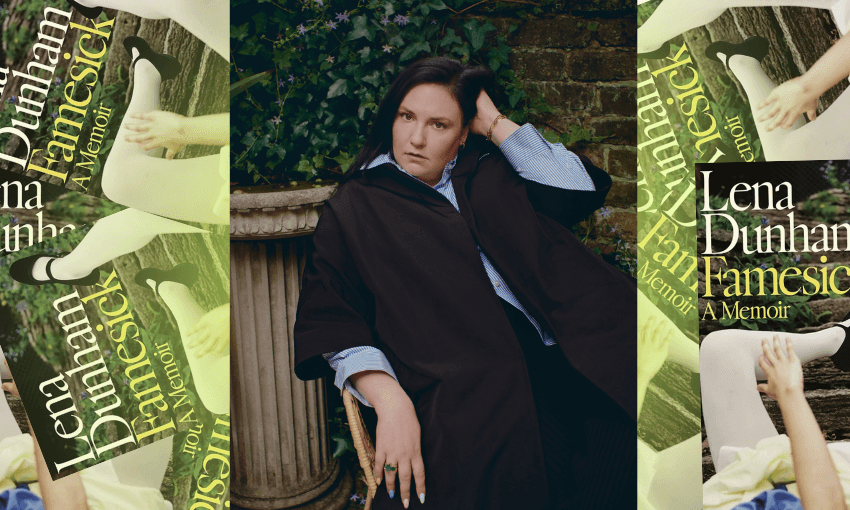




Mad Chapman and Claire Mabey get stuck into Lena Dunham’s much talked-about new memoir, Famesick.
Claire Mabey: Hello, Mad – we are both huge fans of the TV show Girls and have now both read Famesick by Lena Dunham which covers the years she created, wrote and starred in the show. Overall impressions?
Mad Chapman: Hi Claire! I have many, many thoughts that we can get to but overall impression is that I’d forgotten how well Dunham writes and, more specifically, how much her writing in the mid-2010s completely shaped how I write and what I consider to be the gold standard of “millennial personal essay”. This book took me right back there and reminded me how to write about yourself for an online generation. There were some structural wobbles and some (I assume accidental) repetition that should’ve been more closely edited but I sat and read it in a day and loved falling back to 2015. You?
CM: That is fascinating re: Dunham shaping how you write. I loved Famesick. It’s a hectic read and there were moments I felt it needed some slowing down, but it was so easy to be absorbed into and there is nobody else quite like Dunham in terms of total “honesty”. Let’s get into your many thoughts! My major takeaway was that Dunham’s parents (Lauris Simmons, Carroll Dunham) are absolute legends: always there, always taking care of her, so supportive.
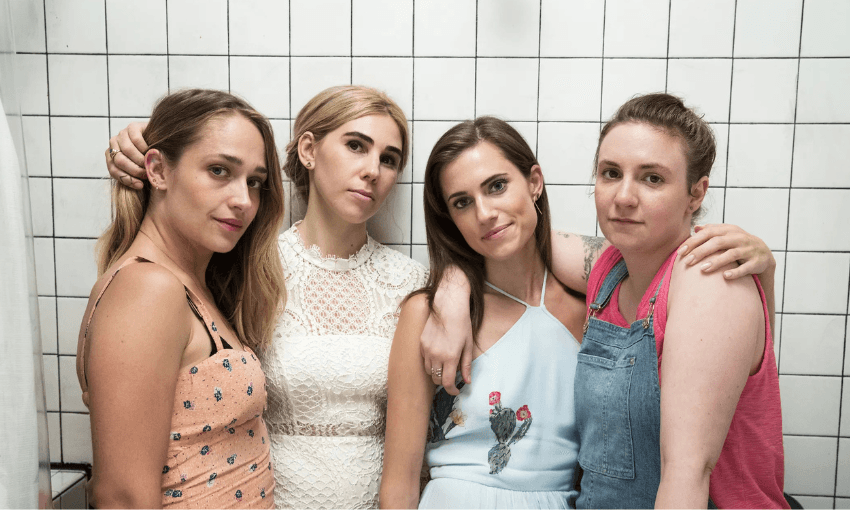
MC: Before we dive in, I have to admit that I despised Girls when it first aired. The first season came out during my first year of uni. I was earnest and self-serious and watched the pilot and hated everyone in it (this was before I realised you can enjoy a piece of art without loving the people in it). But I was extremely online and followed Dunham on Twitter and when she launched her newsletter Lenny Letter a few years later, I was a devoted reader. I didn’t watch Girls until I was 28 (the perfect age for it IMO) and absolutely loved every second of it – have since watched the full series four times in four years.
CM: As an elder millennial I’m the exact opposite: I was very offline when Girls first aired and never read the Lenny Letter and wasn’t on Twitter. But Girls stunned me. I’ve just started my fourth (or even fifth) re-watch and it gets better and better every time. Reading Famesick made me see that maybe Lena Dunham and Hannah Horvath are extremely similar people?
MC: Yes, when the show aired – and she covers this in the book a bit – people really struggled to differentiate between Hannah and Lena. And Dunham didn’t help the matter by constantly doing very Hannah Horvath things in real life. If you’re a Girls fan, you’ll delight in reading all the real-life people and interactions that were transplanted wholesale into the show. Which is actually what makes the show, and the book, and Dunham all the more impressive. How many 24-year-olds would be able to present a lightly fictionalised version of themselves on TV in such a self-aware and brutal way?
CM: It’s astonishing – Dunham hasn’t managed to create anything as brilliant as Girls since (Too Much isn’t a patch on Girls). Famesick exposes the behind-the-scenes of making that show and it is pretty horrifying at times how much responsibility Dunham had all the while she was dealing with undiagnosed illness and what seems to me like a very scary world of grown-ups with deep ambition for which Dunham was a vehicle. Having said that, I don’t think any one person came off that badly in the book? Dunham is judgemental at times (even, I would say, petty in moments) but she isn’t bitching and implicates herself in every gnarly episode, too.

MC: Which brings us to Jenni Konner, co-showrunner of Girls and best friend/mentor of Dunham for nearly a decade. The book passes through a number of “relationships” (Adam Driver, stereotypical intense and rather boring actor; Jack Antonoff as cutesy, conflict-averse boyfriend for way too long) but to me, it’s mostly about Dunham’s relationship with Konner, and I think Konner does come off badly in it. Even while reading chapter after chapter of Dunham’s illnesses and Konner’s at times dismissive and unfeeling reactions, I knew how infuriating Dunham must have been as a collaborator. So where Dunham often attempted to paint Konner as the unfeeling, ambitious villain to Dunham’s genius, nervous, unwell heroine, I didn’t buy it. BUT, the key detail is given in passing: “she was 14 years older than me”.
Dunham was a woman in her early 20s, clearly a massive creative talent with little real-world knowledge or abilities, and Konner was in her mid-30s, self-appointed as Dunham’s mentor and guide. Instead, it appears, like manipulators of all stripes, Konner believed she was on the same level as Dunham, potentially even below her (Konner wasn’t world famous), and behaved accordingly. To me, that’s the true “crime” of the book. An emotionally immature mentor unable to see the woods for the trees.
CM: The “friendship” arc was definitely brutal to read – it read to me like a hugely mismanaged relationship that thrived off project intensity (Girls; then Lenny Letter was a business collaboration between them) that failed as soon as Dunham couldn’t keep up when her health interrupted. But I couldn’t help but feel some sympathy for Konner at times – I think Dunham would have been maddening, which was absolutely not her fault a lot of the time (health) but also… Dunham’s Horvath tendencies, as endearing as they are, would have taken up energy and time for someone as ambitious as Konner. I mean, you’re right – Konner was the adult and Dunham was the child and the “friendship” sounded like it meant different things to each of them. Great fodder for a book, though.
But we can’t not talk about Dunham’s health – that’s really what I think Famesick is about – the utter failure to understand, diagnose and support a woman going through absolute hell.
MC: Yes, throughout the book, Dunham suffers from a true nightmare list of ailments. Multiple ovarian cysts, endometriosis, broken bones, digestive issues and eventually a hysterectomy at 32. This is essentially the backdrop to the height of her fame. She collapses at the Met Gala, develops a dependence on Klonopin and largely seems miserable throughout the making of Girls and beyond. It’s a fascinating juxtaposition and works to somewhat colour in some at-times bewildering behaviour. It also, though, led to my least favourite part of the book, which is Dunham’s very light account of, as she puts it, the Big Bad (when Dunham and Konner released a statement defending Girls writer Murray Miller from sexual assault allegations during the height of #MeToo).
CM: Yes, I was so perplexed by her swerving on this! Particularly as Konner’s judgement, as far as we know, was not clouded by drug addiction and pain as Dunham’s was. I thought that episode was the true flash of Konner’s colours above all else – where was Konner’s wisdom then? Dunham’s part in it is the more understandable, even if not forgivable, given how distracted she was at the time by what was happening to her body.
MC: I disagree! I found Dunham excusing herself for her very real role in it to be distasteful. Yes, she had just come out of surgery and was probably not in her right mind, but as far as an apology (which she has attempted to frame this as), leading with “but I was sick” is not considered a great approach. I found this particular saga to be the most egregious instance of Dunham’s tendency to take control of her narrative while at the same time framing her actions (real, felt by others, caused harm) around her internal battle with her health. The book is called Famesick so I guess it makes sense they’d be placed alongside each other but at times – once I thought about it long enough – it felt like a very long “let me explain” from Dunham that conveniently glanced over a lot of the specifics of the behaviour she’s trying to explain.
CM: I think that’s exactly what this is, which is why I think some readers will hate Famesick because it will uphold the view that has hung about Dunham from the beginning that she is self-centred and, at times, painfully flippant. There’s no doubt that this book is another production from a very flawed individual but I think that’s why Dunham, at the same time, holds such an interesting and compelling place – the flaws are aired and exposed, including her circular “but this happened and so that’s why” narrative loops. I still think someone, Konner at the top, should have said to her: “let’s not respond now, let’s wait till your anaesthetic has cleared and you’re out of hospital”.
MC: Lol “let’s wait till your anaesthetic has cleared” is always good advice. Despite all this, I couldn’t help but love rushing through this. Dunham is an assured and very funny writer – always has been – and when she wasn’t trying to appear the bigger person in a dynamic, Famesick was so fun! As I said, Dunham’s “extremely online personal essay” abilities are second to none. And I positively giggled when her predecessor in self-indulgent-but-crack-up-and-excellent essay writing, Nora Ephron, made an extremely Nora Ephron appearance (instructing Dunham on how to renovate her first apartment tastefully).
CM: So fun! I loved having Dunham’s voice in my mind and riding the highest highs and lowest lows with her. I loved the name dropping and I loved the punchy Dunham-isms like when she got her first paycheque and could finally buy some outrageous undies. What I could not make my mind up about at the end is whether Dunham is supremely self-aware, or not self-aware at all. Or if that even matters. I think what the lovers love is that shaky ground Dunham treads and the sense of burning bridges (or re-burning them) for the joy of writing about it.
MC: I honestly don’t know. I think Dunham is the truest example of a specifically millennial creative who is self-aware enough to exploit their life for the work and the attention, and not self-aware enough to know when to stop. And in that way she is, hold your breath, the voice of a generation.
CM: Or at least a voice, of a generation.
Famesick by Lena Dunham ($40, HarperCollins) is available to purchase at Unity Books.