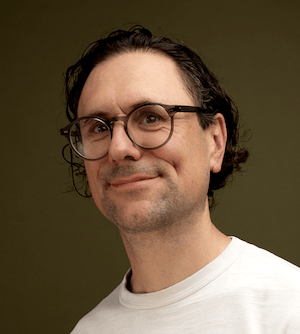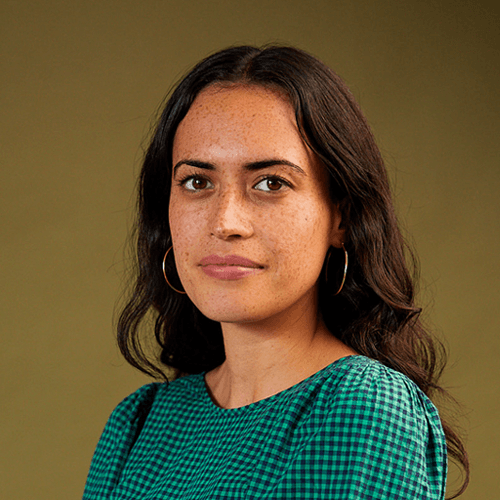

Welcome to The Spinoff Books Confessional, in which we get to know the reading habits of Aotearoa writers, and guests. This week: Mahyar Amouzegar, co-author with Mahbod Amouzegar of the novel Tomorrow Brings Joy: Elysium.
The book I wish I’d written
The Sun Also Rises by Ernest Hemingway. It’s one of those books that stays with you, not because it explains everything, but because it doesn’t. The language is clean and direct – Hemingway’s famous restraint – but the emotion is all there, just below the surface.
I’ve always connected with Jake Barnes: quiet, observant, trying to hold things together while everything around him unravels. And I’ve always had a soft spot for Brett Ashley, even though she’s often judged more than understood. She’s messy, but also deeply human.
I think a lot of what drew me to The Sun Also Rises shows up in my own writing, even if my new novel, Tomorrow Brings Joy: Elysium, is set 200 years from now and features androids. At its core, though, it’s still about people – or beings – dealing with loneliness, memory, grief and the need to connect. Whether it’s postwar Paris or a future utopia coming apart at the seams, those questions don’t really go away.
Everyone should read
The Sellout by Paul Beatty because it’s one of the most fearless, uncomfortable, and sharply funny books I’ve ever read. Paul Beatty somehow turns satire into a scalpel – cutting into race, identity and the absurdities of modern society without flinching. The book is set in Los Angeles, but the themes are global. In fact, it’s hard not to think about race relations here in New Zealand when reading it.
The story is outrageous by design – a man (a Black person) attempts to reinstate slavery and segregation in a fictional neighbourhood – but it’s never just provocation. Beatty forces the reader to confront the contradictions we all live with, especially when it comes to history, guilt and collective forgetting.
The book I want to be buried with
Shahnameh (“The Book of Kings”) – especially the beautiful edition on special paper that my father gave me.
Shahnameh is an epic poem written by Ferdowsi around the 10th century. It tells a mythic and imagined history of Iran, filled with kings, warriors, betrayals and heartbreak. But beyond the stories, it holds enormous cultural significance: it helped revive the Persian language after 200 years of Arab rule – a period many Iranians refer to as “200 years of silence,” when the native language and identity were at risk of disappearing.
There’s something profound about a book that doesn’t just tell history but helps restore it.
I think that idea stayed with me. In my novel Tomorrow Brings Joy: Elysium, set two centuries in the future, there’s a different kind of silence – one caused not by conquest, but by technology. When digital archives fail, memory and history begin to fade away. The echoes of Shahnameh are there, in a different form: the fear of losing who we are, and the hope that stories help us find our way back.

The first book I remember reading by myself
The Lion, the Witch and the Wardrobe by CS Lewis. It may not have been the very first book I read, but it’s definitely the first that stayed with me. Like many children, I completely missed the Christian allegory – but that hardly mattered. What I saw was a doorway into another world, and like most kids, I wanted nothing more than to walk through it.
Narnia wasn’t just magical – it felt possible. That blend of ordinary and extraordinary lit something in me that, honestly, probably never went out.
The book I wish I’d never read
Leaving Las Vegas by John O’Brien. I’ve only ever thrown away two books in my life – and I don’t say that lightly. Books are sacred to me. But Leaving Las Vegas was one of them (American Psycho by Bret Easton Ellis is the other).
The novel follows Ben Sanderson, a man who goes to Vegas to drink himself to death, and Sera, a sex worker who forms a connection with him despite his complete refusal to be saved. The writing is sharp and honest, but the emotional toll was too much. The way Sera is treated, and the way Ben gives up entirely – it left me feeling hollow and unclean, as if I’d seen something I wasn’t supposed to.
I know the film adaptation (with Nicolas Cage and Elisabeth Shue) made the story more widely known, but the book hits even harder. Knowing that the author, John O’Brien, died by suicide not long after selling the film rights only adds to its weight. It’s not that I think it’s a bad book – just that I wish I could unread it.
If I could only read three books for the rest of my life they would be
Bel Canto by Ann Patchett. This book stays with me for so many reasons – the elegance of the writing, the surprising tenderness, and the way it holds beauty and violence in the same breath. It’s a quiet novel about connection in unlikely circumstances, and one I always return to when I need to believe in small, human moments.
The Sun Also Rises by Ernest Hemingway. No surprise here. I’ve already said how much this book means to me – not just the language, but the emotional weight behind the restraint. Every time I read it, I notice something new in what’s not said.
Never Let Me Go by Kazuo Ishiguro. A slow ache of a novel. Ishiguro writes with such quiet control that the heartbreak sneaks up on you. It’s a meditation on memory, identity, and the fragility of what makes us human – all themes that resonate with me deeply, especially in the context of my own work.
The book I pretend I’ve read
Ulysses by James Joyce. I know – it’s probably a cliché answer. I’ve started it twice, maybe three times. And every time, I get about 20 pages in before I quietly set it down and move on to something else – usually something with fewer footnotes and more verbs.
It’s not that I don’t admire it. I do. I know it’s a masterpiece, a groundbreaking work of modernist literature. But reading it sometimes feels like being trapped inside someone else’s very dense dream, with no map and no guarantee of waking up.
Utopia or dystopia
Both – especially a utopia with dystopian undercurrents just beneath the surface.
That’s the model that Tomorrow Brings Joy: Elysium follows. On the surface, it looks like an ideal society: no money, no poverty, no leaders, no scarcity. All your needs are met, you can be whoever you want to be, and you’re celebrated for it. Who wouldn’t want to live there? But the cracks are there if you look closely. What happens to memory when everything is digitised? What’s lost when discomfort is erased for the sake of harmony? In Tomorrow Brings Joy: Elysium there’s a darkness in close proximity to the light – and the society’s biggest threat might not come from the outside, but from what it has chosen to forget.

It’s a crime against language to
Honestly? I’d reverse the question.
I don’t think there is a crime against language. Like most human inventions, language rules are essentially arbitrary – we created them, then made them sacred. I’ve always admired writers who thumb their noses at convention and reshape the form to suit the story they want to tell.
Split the point of view mid-chapter? Go for it. Use sentence fragments for rhythm? Absolutely. Abuse semicolons if you’re making a point – just commit.
Creative writing isn’t a grammar exercise. It’s for artists trying to say something new, sometimes by breaking the old. There’s a kind of honesty that comes when a writer pushes against the rules – even if it makes a few editors twitch.
The book that haunts me
American Psycho by Bret Easton Ellis. It’s one of only two books I’ve ever thrown away. The violence and misogyny were so relentless that it left me feeling disturbed rather than enlightened – like I’d stepped too far into a world I didn’t want to know existed. I respect the satire he was going for, but the images stayed with me in a way I didn’t want. (Perhaps I shouldn’t have watched the movie either.) Even now, I can recall scenes I wish I couldn’t.
Most overrated book
Infinite Jest by David Foster Wallace. I know it’s a cult classic and admired by many readers, but seriously: the footnotes, the tangents, the endless layers of cleverness – it felt more like a performance than a story. I know it already had a following when it came out, but I think Wallace’s death amplified its reputation beyond reason.
I respect his intellect and ambition, but at some point, I stopped feeling engaged and started to feel like I was doing homework.
There’s brilliance in there, no doubt. But for me, a book that demands that much from the reader should offer more emotional payoff.
Greatest New Zealand book
For me, it’s Once Were Warriors by Alan Duff. I read it shortly after moving to Palmerston North from San Francisco. As a new immigrant, it was an eye-opening experience. The book pulled back the curtain on a part of New Zealand I hadn’t encountered – raw, painful, complex and entirely real.
It’s not a comfortable read, and it’s not trying to be. However, it captures something essential about this country: the profound impact of colonisation, the struggle for identity, and the resilience of people living on the margins. Duff doesn’t soften anything, and that’s why it matters.
What I’m reading right now
I’m re-reading Sorrow and Bliss by Meg Mason. It’s one of those books that lingers. The voice is sharp and funny, but the emotional honesty sneaks up on you. I admire how it handles mental health without turning it into a plot device – it’s just part of the character’s texture, like memory or grief.
Tomorrow Brings Joy: Elysium by Mahyar Amouzegar and Mahbod Amouzegar will be available in bookshops from January 27.