New Zealand’s productivity problem: All the things that have been blamed

Five of the prime suspects (Image: The Spinoff)
The lengthy Christmas shutdown period is just the latest in a long line of suspects.
If the OECD was a workplace, New Zealand would be the dead weight – the colleague who turns up each day, switches on their computer, makes a cup of tea and manages to achieve sweet fuck all for the next eight hours. We might even stay on in the office after everyone else goes home, yet still have little to show for it.
What’s going on? Productivity, in the driest of terms, is how efficiently production inputs (capital and labour) are used within the economy to produce output – basically, the measure of how smart we’re working, rather than how hard we’re working. It’s vitally important, or so economist types say, because it underpins living standards. As Treasury puts it, the long-term prosperity of New Zealand depends in large part on its productivity, and raising it is the biggest economic challenge facing the country. If your eyes have glazed over already, think about it like this: lifting our productivity will make us richer, happier, funnier, more fulfilled, more attractive, better at sports… you get the idea.

But New Zealand’s productivity is consistently rubbish. Over the past 30 years we’ve increased the hours we work and the number of people working them much more rapidly than comparable countries, and yet still we produce less. The last decade in particular has sent alarm bells ringing: there’s been “a significant and persistent slowdown in productivity growth”, according to Treasury.
We’ve been trying to figure out why this is and how to fix it for decades, but no one’s quite managed it. It’s not surprising, then, that when a new potential scapegoat emerges, we jump on it. The latest culprit is our extended summer holiday period. In a much-discussed column for The Post, business adviser Toss Grumley argued that the “circle back in February” mentality kicks in by late November/early December, thus setting in motion 10 weeks of bugger all being done, even if workers are physically present at their place of employment.
Does he have a point, or could something else be to blame? Here’s a quick run-through of everything that’s been singled out as a cause of Aotearoa’s productivity crisis over the past 65-odd years.
Our ‘she’ll be right’ attitude
New Zealanders’ laidback nature has been repeatedly pointed to as an explanation for why we’re so unproductive, with a management consultant identifying the issue way back in 1959, before our true productivity shitness had even kicked in: “‘We cannot afford to use the stock New Zealand phrase, ‘She’ll be right’,’” said Mr AM Walker at a New Zealand Institute of Management discussion in April 1959, reported The Press. “Mr Walker said that in a changing world manufacturers must be ready with the latest and best, or be left behind in the race to markets.” He also reckoned stop-watches and financial incentives should be used to get workers working faster and better.
Fast-forward 64 years and Sir Peter Gluckman made a very similar point regarding a lack of investment in research and development. “We’re paying the price for a rather casual, she’ll be right approach to knowledge … rather than investing for the future.”
We’re a bunch of work-shy layabouts
Or “a country of lotus-eaters to whom pleasure in all its aspects takes precedence”, as one writer put it in 1977, in a foreshadowing of Grumley’s summer-hols-are-too-long column. Our “vast holiday-camp atmosphere”, as Peter Isaac described it in the journal of the Manufacturers’ Federation, doesn’t appear to have improved since then. Just this week, while telling Stuff that Grumley had a point, Auckland Business Chamber head Simon Bridges said he’d spoken to international business types who saw New Zealanders as “lifestylers” more interested in work-life balance than in growing the economy.
A few months ago, University of Auckland economics professor Robert MacCulloch didn’t sugarcoat the situation, telling The Post (probably with tongue firmly in cheek), “We’re getting lazier. We’re just scrolling the web.” Interestingly, MacCulloch pointed to Christopher Luxon’s much-criticised “I’m wealthy, I’m sorted” comment as an example of New Zealand’s collective DGAF attitude – because in other countries a mere $20-something-million net worth would not be seen as grounds for such claims.
“In Silicon Valley, when you are worth what Luxon is worth, you don’t consider yourself sorted,” said MacCulloch. “I’ve lived in London and New York, in London there are bankers with hundreds of millions of pounds, they get up at 5am … They just want more, and it’s never enough. I don’t find that in New Zealand. Like Luxon said, ‘I have enough’.”
He doesn’t think that’s the crux of the issue, though. That, in MacCulloch’s view, is…
Underinvestment in key infrastructure
And he’s not alone there. “Persistent large infrastructure gaps” were pointed to in an IMF report on New Zealand’s productivity challenge released earlier this year, as “infrastructure quality is critical for reaping the benefits from innovation into overall economic growth”.
Infrastructure includes everything from crappy roads and public transport (can’t get much mahi done when you’re stuck in a traffic jam) to crappy internet (the IMF report points to nearly half of New Zealand firms experiencing internet disruptions, pointing out that “gains from digitalization are larger for firms located in regions with better digital infrastructure and faster internet speeds, implying public investment in such infrastructure can help amplify the effect of advanced digital technology in boosting productivity”).

We’re so damn small and so damn far away
Or, as a 2017 OECD working paper put it, “Economic geography is an important factor in New Zealand’s poor productivity performance, as the small size and remoteness of the economy diminish its access to global markets, the scale and efficiency of domestic businesses, the level of competition, and the ability to benefit from innovation at the global frontier.”
Red tape and bureaucracy and stuff
Before the RMA was even a twinkle in Geoffrey Palmer’s eye, people were complaining about overregulation dragging down productivity. “Today’s visit to Wellington was a typical example of the loss of productivity going on in New Zealand at present,” said Christchurch mayor Ron Guthrey in 1971, having gone to the capital to make a submission about Hagley Park on some bill or other. “A full day was wasted by eight people from Christchurch and half a day by 12 Wellington people through departmental bungling and parliamentary red tape.”
By 1984, a forestry boss was pointing to “large-scale, prolonged disputes” slowing down projects. “In such a small society I never cease to be amazed at the incredible number of unproductive organisations which wasted effort by indulging in duplicated activities, pushing parochial causes, and egotistically seeking publicity,” Mr WA Hunt of Forest Products Ltd told The Press, adding that he reckoned a 5% boost in national productivity would go a long way towards solving New Zealand’s economic problems in the next three years.
In more recent years, there has been the RMA, of course. “The Resource Management Act has been the worst handbrake on New Zealand’s productivity bar none,” said Taxpayers’ Union spokesperson James Ross when the replacement bills were introduced this week.
So our productivity’s gonna go through the roof soon, right?
Well, maybe, but then there’s…
The tax system
Complaints about New Zealand’s tax system discouraging productivity have been floating about since at least 1963, and attempting to explain them all here would be an exercise in futility. But it’s clear that there’s no easy fix. “When it comes to significant changes that would truly shift the dial, there are relatively few tax options available in the short run to support productivity growth,” according to a recent speech by Struan Little, Treasury’s chief strategist.
The main problem is that “Our tax system incentivises putting savings into housing, penalises certain types of saving when inflation is high, and encourages work and saving through entities like companies,” he said. To solve that we need to move towards “a more comprehensive and coherent income tax”. That includes taxing capital gains, yes, but a CGT would be “just one part of a broader package of reform to tackle the inconsistencies in our income tax”. It would have to include looking at “alternative income tax systems, such as a Norwegian-style dual income tax, which allows for different rates to apply to labour and capital income”.
Incentivising the wrong sort of investment is something highlighted by the aforementioned IMF report in its discussion of “gazelles” – the name given to young, high-growth firms. Our gazelle birth rates have been lower than our peers and concentrated in the financial and real estate sectors. “These trends suggest investment and innovation incentives may be misaligned between sectors in New Zealand,” said the report. “Trends could also be a symptom of the high propensity to save in real estate.”
In his analysis of the report, tax expert Terry Baucher said, “This is where I think the issue of our lack of capital gains tax and a general lack of capital taxation comes home to roost. The incentives to invest in businesses have been trumped by the investment and lending practices in real estate.”

Insufficient competition
This was pointed to in the OECD’s economic survey of New Zealand last year, wrote economist Cameron Bagrie in BusinessDesk: “Limited competition dilutes pressures to innovate, become more efficient, and provide better services and cheaper prices to consumers.” The OECD’s proposed solution is a strategy of gradual escalation of intervention, or, as Bagrie puts it, “put some bullets in the chamber and fire one”, ie stop putting them “on notice” and actually break up the major players.
Bad bosses
The greatest barrier to productivity growth was “conservative management”, a former industrial relations manager said at a productivity seminar in 1972, “pensively reacting to factors which it believed were beyond its control.”
University of Auckland Business School professor Rob McNaughton said much the same thing a few weeks ago, pointing to a survey of business leaders that found most of them blamed the productivity problem on others. “We know there’s a problem, but we tend to think it’s someone else’s fault: the government’s, big business’s, or ‘the system’s’. In reality, productivity begins with the everyday choices made within firms.”
We’re not happy enough
Writing for The Conversation earlier this year, a clinical psychologist from Victoria University pointed to “a substantial body of evidence showing poor mental health is related to poor productivity”. Measures taken by employers to improve workers’ mental health could therefore boost productivity, and the “most promising appear to target leadership capability, health screening and psycho-socially healthy working environments”, said Dougal Sutherland. One of those is the four-day work week pioneered in New Zealand by Perpetual Guardian. Another is when a packet of biscuits appears in the kitchen of The Spinoff office.
We don’t have industry bargaining
This was suggested by union brains Edward Miller and Craig Renney in a piece for The Spinoff in 2023. Countries with industry bargaining, where key terms and conditions of work are coordinated across entire industries, don’t face the same “race to the bottom” to deliver competitiveness, they reckoned. “Taking wages out of competition helps force firms to compete on other issues – such as efficiency, quality or product innovation. Overseas, industry bargaining has also made it easier to manage training across industries, helping with the problem of “free-riding” employers who don’t train any staff and steal them from others who do. A big part of New Zealand’s chronic productivity problem is essentially a skills problem.”
Speed limits
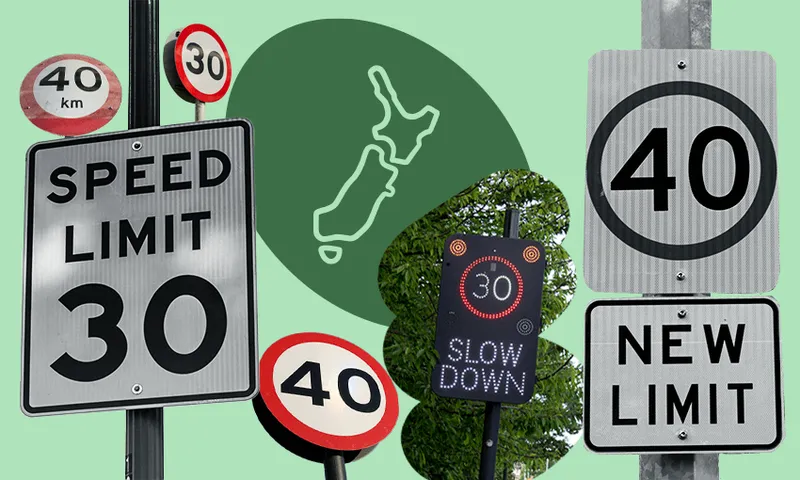
Letting commuters zoom to work in no time by increasing speed limits was part of the coalition government’s grand plan to boost productivity. Some holes were quickly picked in this argument by the likes of urban planning lecturer Timothy Welch, who pointed out that simply changing the number on the sign would not magically clear congestion, while also increasing the likelihood of crashes, which are famously not that helpful in terms of making that 9am meeting.
In sum, then, New Zealand’s productivity problem is because of our long Christmas shutdown period, our she’ll be right attitude, the fact we’re a bunch of work-shy layabouts, underinvestment in key infrastructure, because we’re so damn small and so damn far away, red tape and bureaucracy and stuff, the tax system, insufficient competition, bad bosses, because we’re not happy enough, because we don’t have industry bargaining, and speed limits. Hope that clears things up.

Alice Neville
Alice Neville is The Spinoff's deputy editor. Her interests include politics, food and data-driven deep dives of all kinds.


