How oysters became Aotearoa’s environmental whistleblowers

Images: Supplied, Getty Images
From Mahurangi to Bluff, the state of our oyster fisheries is revealing a marine system under strain.
It was around 2013, some seven years after Tom Walters first started farming oysters in the Mahurangi River north of Auckland, that he experienced his first sewage spill. Those early spills from council-owned processing facilities tended to be around 20 cubic metres or so, and almost exclusively occurred after heavy rainfall of more than 100mm. In 2025, a rainfall of just 10 to 20mm would lead to a spill of more than 150 cubic metres of sewage.
“We’re kind of like the canary in the coal mine,” Walters says. If it wasn’t for the oyster farmers in the river who rigorously test the quality of the water they’re farming in, the alarm may never have been raised on the sheer amount of sewage being pumped into the waterways in the Rodney region. When water pollution levels rise above a particular point, oyster farmers can’t harvest their catch for 28 days, giving the water time to clear and the oysters time to flush out any pollutants. No oysters means no income. In 2025, Walters’ company Matakana Oysters was closed for 180 days of his harvest season, which generally runs between April and Christmas, meaning he was only able to operate at around 10% capacity. “We had our leases re-signed a couple of years ago,” Walters tells me. “We paid a lot of money to Auckland Council for that. So it’s like our landlord is poisoning us.”
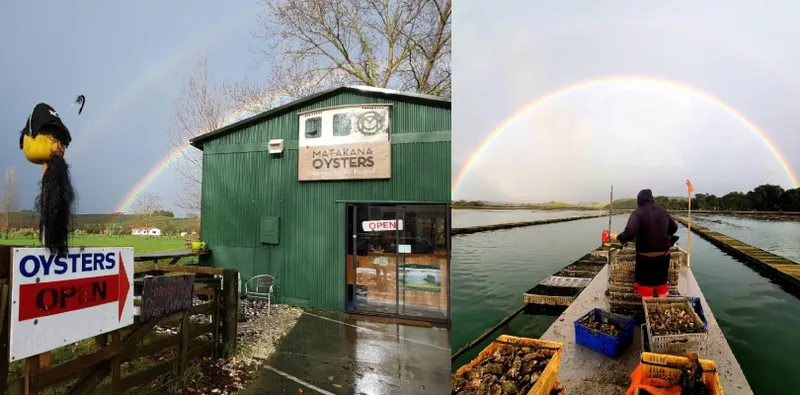
Anyone who regularly does the drive out to Omaha Beach, Leigh or Pakiri will be familiar with the big green shed that houses Matakana Oysters on Leigh Road. It’s a key part of the pilgrimage for ostreophiles, pulling in to grab a dozen of Walters’ oysters as the sun beats down and the cicadas chirp from the surrounding trees. I did just that after speaking with Walters, grabbing a tray of shucked bivalves to go, and eating them half an hour later, dressed in his house-made red devil sauce, a punchy, umami mix of soy, mirin, lemon juice and chilli. They were delicious; creamy and saline, rich with the flavour of the ocean.
For Walters, the damage hasn’t just been in the many, many days of closure and the loss of stock. It’s in the reputational hit to his business. People are, rightfully, wary of buying oysters from a region that they now know has been hit with multiple sewage spills. The Ministry for Primary Industries has strict guidelines for the water quality around oyster farms. They are regularly and rigorously tested and oysters can only ever go on shelves if they exceed these standards which are, Walters says, “very, very conservative”. Plus, as Walters tells me, “You’re not here to get people sick. You’re here to make people’s eyes light up with happiness when they eat an oyster. It’s really lovely to give people a moment like that.”
The Mahurangi Harbour isn’t the only area struggling with its oysters at the moment – and sewage spills aren’t the only threat, either. At Auckland’s Depot, owner Al Brown announced the restaurant would not be serving Bluff oysters for the 2025 season, writing that his “oyster-centric business” had a role to play in “alleviating the stress” of the Bluff oyster seabeds. The iwi-owned Ngāi Tahu Seafood decided not to fish for Bluff oysters last year, while Barnes Wild Bluff Oysters finished up two months early with just 50% of their 4.5 million annual quota.
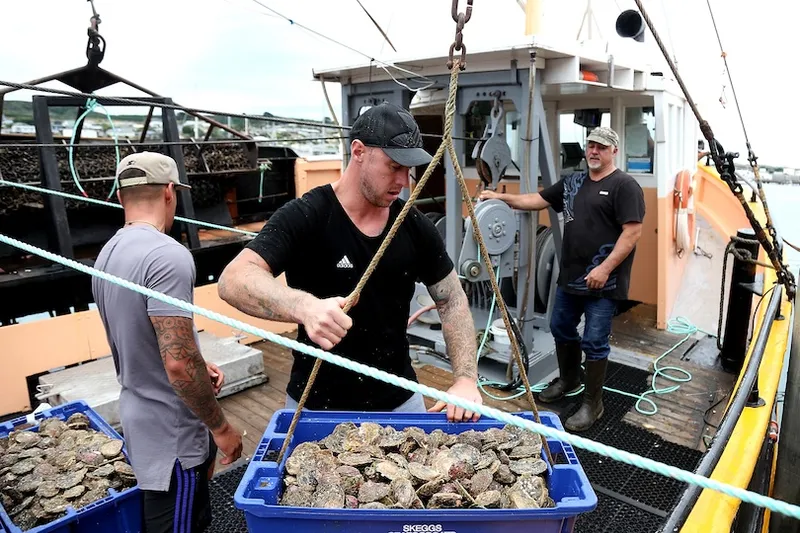
The problem is a parasite, bonamia exitiosa, which has heavily depleted oyster stocks in the Foveaux Strait in recent years. While not harmful to humans, the parasite is lethal to oysters and spreads quickly throughout the population. The 2025 season’s catch statistics paint a negative picture, but reports from fishermen suggest that it showed promise for upcoming years, with many young oysters and adult oysters hosting larvae – one adult can hold up to 70 larvae – thrown back. This suggests that the fishery may be slowly but surely replenishing itself.
“What drives the fishery is disease, and the other main element is reproduction, and these things always seem to run in cycles,” Graeme Wright, general manager at Barnes Oysters tells me. “We’ll have eight to 10 or eight to 12-year cycles where we don’t get any reproduction, and then suddenly it all happens at once. So at the moment we’re seeing huge numbers of juveniles in the fishery which we haven’t seen for a long time, [even as] we’re also seeing increased levels of mortality from bonamia exitiosa.” As New Zealand’s oldest fishery – Bluff oysters have been fished in the Foveaux Strait since 1860 – bonamia has existed in the population for a long time; data stretching back to the early 1900s suggests other periods of mortality caused by bonamia, or a similar disease.
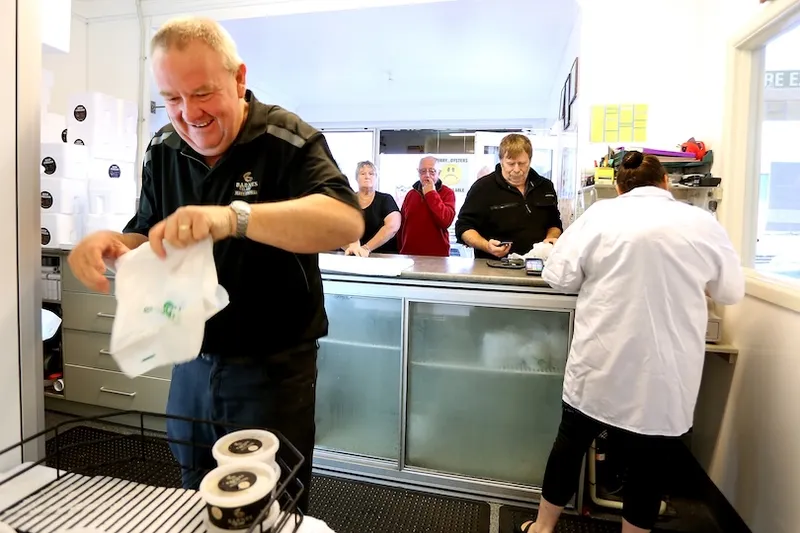
There are, however, more factors at play. In the 30 years he’s worked on the fishery, Wright says the number of oysters being put into a second-grade category – meaning they don’t size or quality requirements – has spiked, suggesting the population may be struggling. “In my early years when we were opening and grading oysters we’d be putting maybe 10, maybe 15% into the second grade,” he says. “The past three to four years, we’ve put in anywhere from 35 to 55% into that second grade category.” He says that without the reproduction that they have been seeing he would be “a bit nervous” about the future of the fishery but that, ultimately, “you have to be optimistic”.
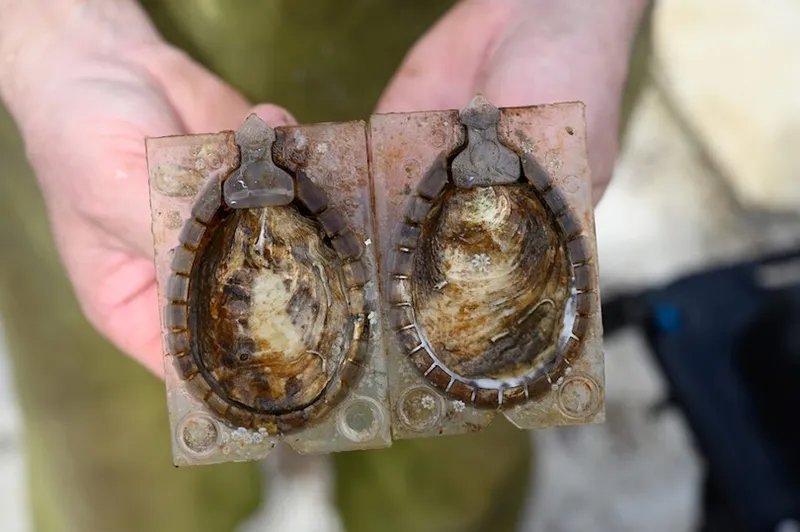
At Depot, Al Brown may have put Bluff oysters on hold, but he’s still serving some of the country’s finest bivalves on his menu – grown in areas like Marlborough, Waiheke Island and Clevedon. He’s also trialling a new product, the “Qyster”, a farmed oyster grown in the Bay of Islands in Aqua Mould Systems, newly developed pods that ensure oysters grow uniformly, protected from predators. Seeded into the pods at 8mm, the oysters develop smooth shells that are safer to handle, with a Q symbol grown into each shell as a result of the moulds. With fisheries like those in the Foveaux Strait facing issues with quality assurance, the Qysters offer up a far more reliable alternative.
Is that what we want the future of our oyster industry to be, though? Uniform oysters grown to specified shapes and sizes, all because we aren’t able to properly look after our oceans and waterways? Part of the unique appeal of oysters is their distinctly unappealing appearance. They are tough to crack, sharp-edged, and almost snotty when you open them up. They are, as Anthony Bourdain put it, “food at its most primeval and glorious, untouched by time or man”. They taste of our oceans, of salt and brine and a clean, crisp minerality. It’s why oysters from New Zealand have always been so prized.
And yet, these tasty little morsels have also become unassuming environmental warriors in recent years. Without the oyster farmers in the Mahurangi Harbour, the scale of the sewage spills in the area may have gone unnoticed, ultimately posing far greater risk to swimmers and local marine life. Equally, the precious nature of the Bluff oyster means that fishermen in the Foveaux Strait work closely with Niwa and other government agencies to monitor the environment in the region. They have discovered, for example, that in the last two years water temperatures in the strait have actually been cooler than the two years prior.
Oysters may have started as a cheap, fast food option for those living in big cities like New York and London back in the 19th century, but these days the bivalves have undeniably become one of life’s greatest culinary luxuries. They’re also carbon sinks, natural filtration systems and key instruments in keeping our waterways healthy – which means that issues facing the oyster industry are more than just champagne problems for the diners who like them served shucked on ice at long lunches across the country. They serve as a litmus test for what’s happening to our marine systems around Aotearoa, and if the state of play right now is anything to go by, things are looking more than a little concerning.
But it’s not too late to turn the situation around. As Wright says, there is hope that the Bluff oyster population in the Foveaux Strait is in a period of self-regeneration, while new infrastructure systems in the Rodney area due to be completed later this year should alleviate pollution in the Mahurangi Harbour. I ask Walters if he has hope that his business will survive long enough to benefit from the new sewage plant being built. “I often say hope will let you down,” he says. “I shouldn’t say that, but I don’t know how I made it to the end of this year. So I hope we make it through. I really do.”

Molly Codyre
Molly Codyre is an award-winning food, drink and travel writer who has recently returned to New Zealand after eight years in London.


