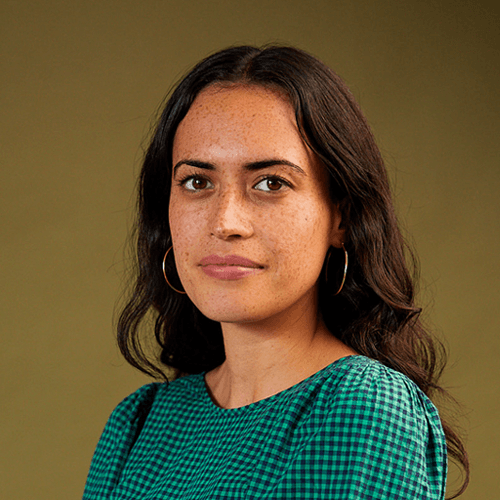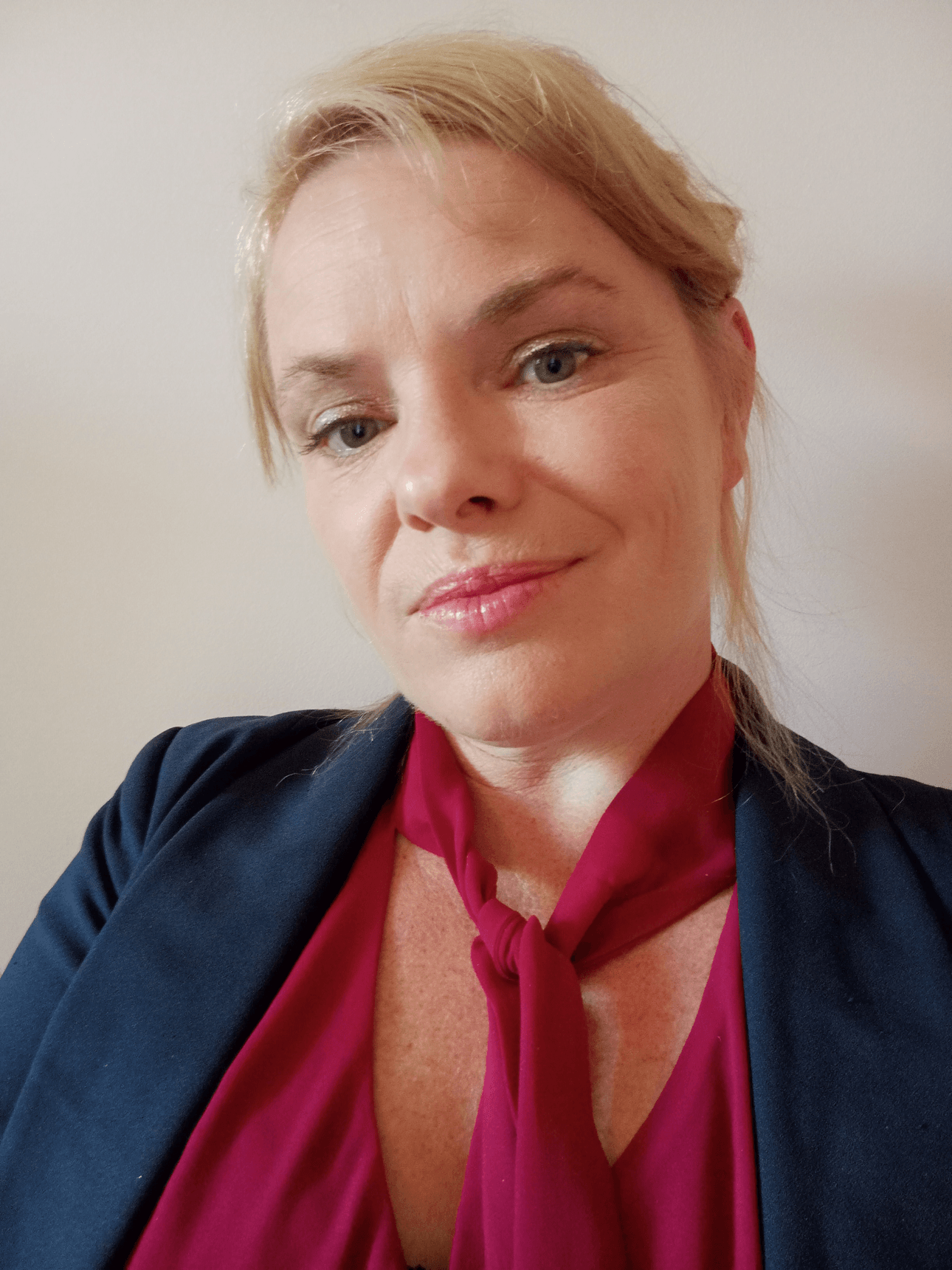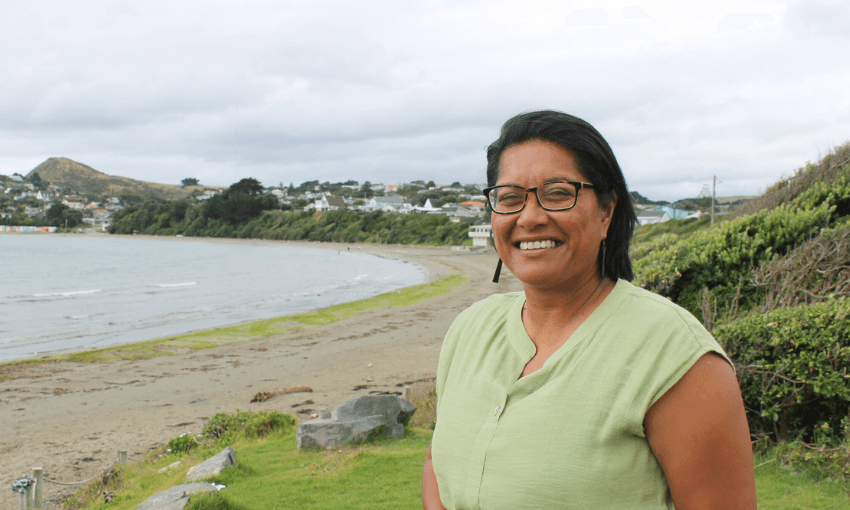


Barbara Edmonds doesn’t look like any finance minister that has gone before her, doesn’t speak like the others, and says if someone else ends up with the portfolio, she’ll be just fine.
The question itself wasn’t particularly controversial. Asked by Labour’s finance spokesperson Barbara Edmonds to finance minister Nicola Willis in a typically rowdy Question Time, it sounded like a classic supplementary question designed to get a reaction.
“Does she take responsibility for the loss of 10,000 jobs in Wellington alone, and is that the real reason why she won’t stand in a Wellington seat?”
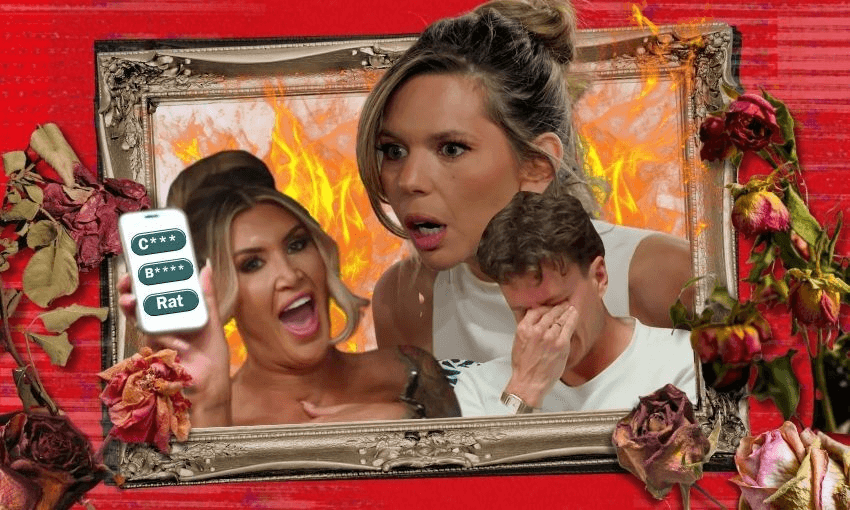
There was an audible, if quiet, gasp from backbench MPs on both sides, and speaker of the house Gerry Brownlee interjected immediately to ask Edmonds to reword the question – inferences within questions are not allowed. But before he could finish, there was yelling from the government side.
“You’re better than that, Barb,” called National minister Chris Bishop, as the speaker told him to be quiet. “Or maybe you’re not. Maybe you’re just as nasty as your mate next to you.”
Brownlee eventually gained control of the house and Edmonds asked the question again (this time without mention of Wellington electorates). Willis was ready.
“I see that the member is taking tips from Craig Renney, the Labour Party finance spokesperson outside caucus,” she says. “She also seems to be taking a tip from the nasty book… I think she should differentiate herself from Craig Renney with a bit more class.”
The interaction was telling. On its own, the question was not out of place during a Question Time, but the fact of Edmonds asking it, was. The likes of Labour leader Chris Hipkins, Willis and Bishop are debating veterans, known for being quick and cutting in the house. But not Edmonds, and her opponents’ message was clear: We would expect that behaviour from other politicians, but not from you.

Three days later, the interaction is still playing on Edmonds’ mind. Without prompting, she makes three different references to the question she asked and why she asked it, and alludes to “masks” and “different sides” of politicians that have started to come out. She seems genuinely disappointed to have been on the receiving end of debating chamber insults.
But Edmonds is not a rookie MP. The electorate MP for Mana since 2020, she’s been touted as a rising star and the future of the Labour party. In 2023, Edmonds became the government broom, sweeping up portfolios left right and centre as her colleagues were either fired, made to resign or resigned in protest. By the time the election rolled around, she was chair of the finance and expenditure committee, minister of internal affairs, minister for Pacific peoples, minister for economic development, minister of revenue and associate minister of finance. Then leader of the opposition Christopher Luxon, when asked in 2021 who from Labour he’d like to have on his own team, he chose Edmonds. “She’s very, very smart, she’s very, very considered and I really admire her work,” he said.
So when Grant Robertson announced his retirement from politics shortly after the election, no one was surprised to hear Edmonds would be his successor as Labour finance spokesperson.
All of this suggests a person made for politics, someone who fits right in at parliament and wouldn’t bat an eye at a bit of snark in the house, might even enjoy it. But that’s not Barb.
Born Rachel Fati Poe, Barbara Edmonds is the youngest of four, the only child in her family to be born in New Zealand after her parents and siblings migrated from Samoa in the 70s. Having arrived in Ponsonby, the young family were soon placed in a state house on Chingford Crescent in Māngere. Before long, they made use of the family benefit – which at the time could be collected as a lump sum for the express purpose of a house deposit – to buy their first home in Glenfield. Why Glenfield? Father Saleni believed the education opportunities were better there, “which was the sole purpose of them coming to New Zealand”.
When Edmonds was four, her mother, an aged care worker whose patients included the mother of David Lange, died of cancer at just 35. She was buried on Edmonds’ fifth birthday and young Rachel was gifted her mother’s name, Palepa, or “Barbara at work”. So Rachel Fati Poe became Barbara Rachel Fati Palepa Poe, and Saleni became a single stay-at-home parent on the benefit.
The Poes were model immigrants and model beneficiaries. Despite their financial constraints, Saleni insisted on his children attending the more expensive Catholic schools – Carmel for the girls, Rosmini for the boy. Oldest sister Sopo was a prefect on the student council. Next in line Nive did one better and became head girl. Lui followed suit as head boy at Rosmini, and Barbara finished the set as head girl of Carmel College in 1998.

Edmonds knew she wasn’t in the same tax bracket as her friends “because they had nicer houses and nicer lunches”, and her father was paying off the school fees on a payment plan for another 10 years after she graduated – no handouts there, not even for the head girls on the benefit.
Outside of school, “sports was huge”. Edmonds recalls her dad never discouraging it, despite the cost, “because he wanted us out of trouble and he knew sports was one way to do it”. As a Pasifika teenager, staying out of trouble is always front of mind – “you’ve got to be compliant, you’ve got to be good kids, you’ve got to go to school, you’ve got to go church”.
Edmonds was very good at staying out of trouble, until she wasn’t. At her 16th birthday party, she met her now husband Chris and they dated secretly for years. “My dad was strict. It was ‘no dating until you leave school’. And then when I went to uni it became ‘no dating until you leave uni’.”
While Edmonds worked for a bit before going to uni fulltime, the rule still applied. And in 2004, aged 23, while at uni, she experienced every Samoan Catholic girl’s nightmare. She got pregnant to her boyfriend. She insisted on breaking the news to her dad alone, who “was really disappointed”. When she told him, he simply left the room, but “he got over it pretty quickly”.
“If it was more back in the day, he would’ve given me a hiding but he was a social worker by then and learned better.”
Not one to do things by halves, Edmonds kept studying (“I remember having really bad morning sickness during my criminal law exam”) and moved in with Chris and his parents, who could help with childcare while Chris worked. Acacia was born, and Edmonds promptly got pregnant again. The next year, Arkaid was born. Then Agape, Patience, Prayer, Salem, Yahzel and Harmony. A biologically impressive eight births in nine years.
When not pushing out babies, Edmonds graduated with conjoint law and arts degrees and landed a job at Inland Revenue in Wellington as a tax policy analyst. Was this an early sign of political ambition, or even interest? “No, no, it was a job.” With four children and another on the way, Edmonds took the guaranteed path of a fulltime job rather than the more sought after summer clerkships at the big law firms. She says she barely paid attention to politics at all before working in parliament.
Having relocated to “a tiny house” in Titahi Bay, Edmonds’ husband Chris continued in his role as primary caregiver while Edmonds moved from policy analyst to IRD revenue advisor, first for then minister Judith Collins, then Michael Woodhouse. She’d been encouraged to apply for the secondment by then deputy commissioner of policy Robin Oliver. He says she had, and has, a secret ingredient, rare among tax experts: social skills. “Tax people, technical tax people, they tend to be introverts,” he says. “[Edmonds] had technical skills combined with those social and networking skills, which is why she was very, very good in the ministers’ offices.”
Outside of work, Edmonds put her energy into her children and, by extension, her community. She joined school boards, offered pro bono legal advice to local sports clubs, and started a Porirua tag rugby club with some other parents that now hosts more than 400 players.
When Labour got into government in 2017, Edmonds noticed “a real change in diversity” around the Beehive, and was soon in a party political role as ministerial advisor for Stuart Nash. She soon earned a reputation as a no-nonsense advisor who knew how to manage up. Nash, who decided not to stand in 2023 following a series of scandals, is effusive on the phone when asked to describe her work. “The best in the building,” he says. “She protected me from myself, which is what I needed. She was exceptionally good at that. In my second term I did not have that.” We enjoy a healthy moment of silence at that.
Nash had no one to protect him from himself in Labour’s second term because Labour minister Kiri Allan suggested to Edmonds in the Beehive lifts that she put herself forward for the soon-to-be-vacant Mana candidacy in 2020. That alone didn’t persuade her but two friends dying did. Porirua stalwarts Willie Taurima and Randall Hippolite died about a year apart and Edmonds saw how much they had done what they could for their communities. So she did what she could, and after attending Hippolite’s tangi in February 2020, put herself forward for the candidacy. Becoming the Mana MP, she jokes, just meant “finally getting paid for all the work I’d done for free in Porirua the past 13 years”.
The move from backstage to onstage surprised Edmonds’ mentor Oliver. “She hadn’t been political, really,” he says, having been impressed by her ability to collaborate across governments and departments. “Some people want to go to the ministers’ office because they want to be involved in politics. I don’t think Barb saw it as a stepping stone for a political career.”

“We don’t have to get KFC, you know,” she says, the most ridiculous thing she’s said since we met up earlier in the day. We’re in her electorate office in Porirua, which shares a carpark with the Ministry for Pacific Peoples as well as KFC. “It’s a bit on the nose, isn’t it,” she says drily. A zinger meal for me, a two-piece quarter pack with coleslaw ($4.69 for that?!”) for her.
Edmonds is very at home here. Just this morning, she visited Porirua College to speak to a group of students and was already familiar with the staff there through other community activities, including guiltily greeting the students’ trainer – “he’s my nutritionist and I’m his worst customer”.
But soon, the Mana electorate will be no more, with Edmonds confirmed as Labour’s candidate in the new Kenepuru electorate. It means campaigning to thousands of new voters in Tawa and Johnsonville but Edmonds is confident, only disappointed that if she were to win Kenepuru, she’d have to move her office south.
What is less easy for Edmonds is campaigning to be the next minister of finance, the most important job in government besides the prime minister.
There have been 25 finance ministers in New Zealand since 1906. All but two have been men. All of them have been white. Every National and Labour finance spokesperson in opposition has also been white, barring a three-month stint by Simon Bridges in early 2022 before he retired. In other words, it’s a bit on the nose, isn’t it.
When she took over the Labour finance spokesperson role in 2023, the first woman and/or brown person to do so, Edmonds said she felt very comfortable with the work itself – the economy, the budgets, the numbers – but wasn’t sure she would be able to do “the politics side” – the debating, the speeches, the press conferences. Two years later, Edmonds thinks she’s come a long way but still struggles with “the comms side of things”.
She’s not just being self-deprecating. Yesterday, Edmonds was in Hamilton at the New Zealand Economics Forum, where she gave a speech and answered panel questions. In her speech she criticised the government for a lack of direction and pitched Labour as the party for economic stability. She referenced Labour’s capital gains tax policy – announced last year and so far yet to receive the outcry of past elections – and said what will surely be the policy’s campaign slogan: “nine out of 10 kiwis won’t pay a cent”.

She was clearly nervous, but aside from a few stumbles in her delivery (“I struggle with what the palagis call prepositions”) the speech sounded exactly like a finance spokesperson’s speech – solid and a little bit boring. Then came the panel questions. They weren’t difficult but Edmonds lost her track a few times, and, in attempting to hammer home her CGT slogan, said the exact opposite: “only nine out of 10 New Zealanders will be affected by it”. Everyone in the room knew what she meant, but it was still a slip.
Back in Porirua, Edmonds is not happy with her performance. “I was so rusty yesterday,” she says, shaking her head. She’s still working on sticking to the key lines and hammering them home, and thinks she talks too long to make her point. In the same way, she struggles with hyperbolic statements, the ones that get the news lines, because “I’ve been in government and I’ve worked at IRD so I know it’s never that simple”.
It’s almost as if she views her role in politics less like a calling and more like any other back-office job. In fact, she says as much, while discussing the “stakeholder engagement” she’s undertaken the past two years. In the 2025 Mood of the Boardroom survey of CEOs, 53% said they saw Edmonds as a credible future minister of finance, with many specifically pointing to her “composure and pragmatism”.
Edmonds isn’t convinced. She says the sentiment she’s getting is that “they’re not too pleased with their blue team”, but does that mean they’ll vote Labour? “Possibly not. But is my job to still stand there and provide them with an alternative and try to convince them? Yes, that is my job.”
So what is the alternative? Well, nothing much yet. The oft-cited “policy vacuum” continues, with the 2025 announcements of a Future Fund (details tbc) and a capital gains tax (see: 2011, 2014 and 2017 elections) the only full policies Labour has. Two weeks after we talk, Labour leader Chris Hipkins will deliver his state of the nation address and not announce any new policies either.
Edmonds stresses patience, promising “big policy to come” once the government releases its Budget at the end of May. In other words, voters need not hold their breath for new Labour policy until June at the earliest. And when it comes? “They will be big to some sectors and not so big to some people.” There goes that pragmatism again.

Attend any Pacific leadership event and you’re likely to hear these words: O le ala i le pule o le tautua. The path to leadership is through service. It is a foundational concept in Samoan culture and is evident in how Edmonds lives her life, and even her future aspirations: she plans to retire in Northland so that she and her husband can “finally” give back to his iwi and hapu, and her dream job would be to provide tax and legal advice to Ngāpuhi.
Edmonds says she lived her earlier years always with the knowledge of how young her mum died. “I’d hoped I’d survive to 35 but life was short,” she says. (Possibly related: her youngest child was born when Edmonds was 33.) “When I got to 36 it was a huge life moment for me. But now I’ve realised, over time, I’m a bit slower in what I want to achieve, like I realise actually I might have more time.”
A service-first approach in a capitalist society, however, has been listed as a factor – alongside the many systemic issues – in the Pacific pay gap, and helps contextualise Pacific women as the lowest paid workers in New Zealand. If the path to leadership and authority is through service, one shouldn’t need to ask for it.
But not everyone’s Samoan, and others are already rumoured to want Edmonds’ job. Former New Zealand Council of Trade Unions economist (or, as Willis suggested, “Labour’s finance spokesperson outside of caucus”) Craig Renney is a confirmed Labour candidate in 2026 and the Green Party is expected to include the finance portfolio (for Chloe Swarbrick) in any potential coalition negotiations.
Any suggestions of Edmonds being replaced in the role have been swiftly quashed by Hipkins, yet Edmonds herself can’t help but answer honestly when I ask what she makes of the competition.
“Chris has emphatically said to me and to media that there’s only two roles that are basically set in stone, no matter what the coalition, that’s him as prime minister and me as minister of finance.” I assume that’s the end of her answer but she continues. “If, hypothetically, I was ever asked to do something by my leader, including if I was asked to step down from finance, I’d do it because it’s not actually about me, it’s about what’s best for our team.”
There is a second of silence while she clocks what she’s said. “And maybe some people will be like, ‘Oh, you shouldn’t really say that’, but I’m there for as long as Labour sees my skills as useful for the team, and as long as I am a strong voice for my community.
“The day that either one of those stop being true, then that’s time for me to haere ra.”

As she drives through her neighbourhood, Edmonds points out random houses and explains which notable families live there. She tells stories of the area during lockdown, and the strangeness of occasionally being picked up on her street by a Crown car while she was a minister. She shows me her genuinely tiny home (the tour takes all of 10 seconds and it’s a wonder how they have raised eight children there) and points out houses she and Chris looked at buying “but we can’t really be bothered”.
The family is ready for Edmonds to be fully committed to campaigning this year, and she is confident her offering and delivery is “only going to get stronger and stronger”.
What about the other, sharper side of politics? Will she be working to get stronger at that too? Yes and no. “You’re never going to please everybody, I know that,” she says. “I am not too worried about what other people think of me. Ultimately, it’s going to be my kids that’ll be the judgment of my character.”
Edmonds drops me back to my car and is back on the road. She’s late picking her kids up from school.