‘Reckless and unachievable’: A tired teacher critiques the proposed NCEA overhaul

‘In reality, we don’t have two and a half years to deliberate and prepare for this change – we have less than a few months.’
The proposed changes to NCEA under the qualification overhaul has been presented as a solution to long-standing issues within our education system. However, a critical analysis of the proposed changes reveals a deeply flawed and contradictory plan that risks doing more harm than good. The minister’s stated goal of creating “a national qualification designed for our unique context… with students’ pathways tailored to their strengths and interests”, stands in stark contrast to the substance of the 44-page proposal, which seems to do the opposite. This plan is not a carefully considered reform; it is a hasty, politically motivated intervention that lacks a foundational understanding of both the current system and the realities of the classroom.
An ill-timed and unrealistic rollout
The proposed timeline for this overhaul is reckless and unachievable. The government’s plan to fully implement this by 2028 is a ludicrously short timeframe, especially considering that the current curriculum refresh, which began in 2021, has already taken years to barely produce half a curriculum and a set of year 11 assessments. We’re four years in and it’s still incomplete. To propose a parallel large-scale reform in the middle of this ongoing process, while many learning areas still lack a national curriculum, is irresponsible. It’s an approach that goes beyond simply putting the cart before the horse. It puts the cart before the entire damn road.
You cannot expect teachers to design new assessments for a curriculum that does not yet exist. In fact, this seems to be one of the major motivations cited by this report for the qualification overhaul. Teachers have been chastised for “teaching to the assessment” when in many cases, they have been given nothing but the assessment. The government has promised that these changes will not matter until 2028, ignoring the fact that teachers begin preparing secondary school students for NCEA from the moment they begin year nine.
In reality, we don’t have two and a half years to deliberate and prepare for this change. We have less than a few months from the period for feedback closes in September until 2028’s year 11s begin their journey through high school. You cannot in good faith argue that this is “careful phasing” when you are giving teachers so little time to prepare and implement this new set of qualifications.
This rushed process shows a complete disregard for the wellbeing of both kaiako and ākonga. For instance, the plan to eliminate study leave in year 11 will not incentivise students to learn; it will demotivate them and will place an added burden on teachers who are already facing a staffing crisis. Expecting teachers to implement a new qualification while simultaneously navigating an incomplete curriculum refresh, with inadequate pay and support, is not only insulting but also a recipe for failure.
A superficial understanding of education
One of the most glaring contradictions lies in the government’s claim that student success will be independent of their background or school. This assertion is fundamentally wrong. Systemic inequity isn’t a flaw in the NCEA framework itself. It’s a symptom of broader societal issues and a lack of adequate resourcing in our communities and schools, and these proposed changes won’t address the root cause of the problem. Instead of providing the increased funding, staffing and support that schools desperately need, the government is introducing another reform that will strain our limited resources and divert attention away from things that actually matter.
The true path to addressing educational inequity lies in ensuring children are safe and healthy enough to regularly attend school, or in making sure they have access to financial aid for books, clothes and school events. Unfortunately, helping people is something this government has consistently proven woefully unprepared to do.
The government’s rationale for the overhaul is built on a series of simplistic and naive assumptions. The proposal’s focus on eliminating “credit counting” (the process of tactically prioritising completing just enough assessments to earn the credits needed to pass) is a distraction from the reality that students will always seek the most efficient path to success, regardless of the grading system. By replacing credits with a percentile score, all this proposal has done is replace credit counting with percentage counting. Students will still avoid assessments if they know they have done well enough elsewhere. They will still settle for the bare minimum needed to achieve their goals. Changing the number students need to aim for from 60 credits to 50% will not prevent students from strategically disengaging from work.
The proposed Foundational Award is presented as a replacement for NCEA’s Level 1 for year 11 students. However, it has been stripped back to focus exclusively on literacy and numeracy. The government has argued that too many year 11 students are leaving high school with only a Level 1 qualification, and that this does not adequately prepare them for post-school life. On this, we agree. However, NCEA Level 1 has long been viewed as a stepping stone towards NCEA Level 2. It is the low-stakes trial run for ākonga to safely attempt formal assessments. The main feedback students have provided in the past about Level 1 is that it does not adequately prepare students for the sharp difficulty spike into Level 2. Removing assessments from year 11 (or perhaps earlier if a student manages to pass their literacy and numeracy assessments in year 9 or 10) risks making the jump to year 12 even harder. You will not persuade young people to stay and complete the new New Zealand Certificate of Education if they have no hope of passing.
Vibes-based politics instead of reasoned leadership
When addressing the supposed problems with NCEA, the report states that “all students deserve the chance to succeed and gain a national qualification that is highly regarded”. However, the greatest threat to that is constant meddling motivated by political nonsense that confuses educators, students and employers about what skills are assessed and what the qualifications represent.
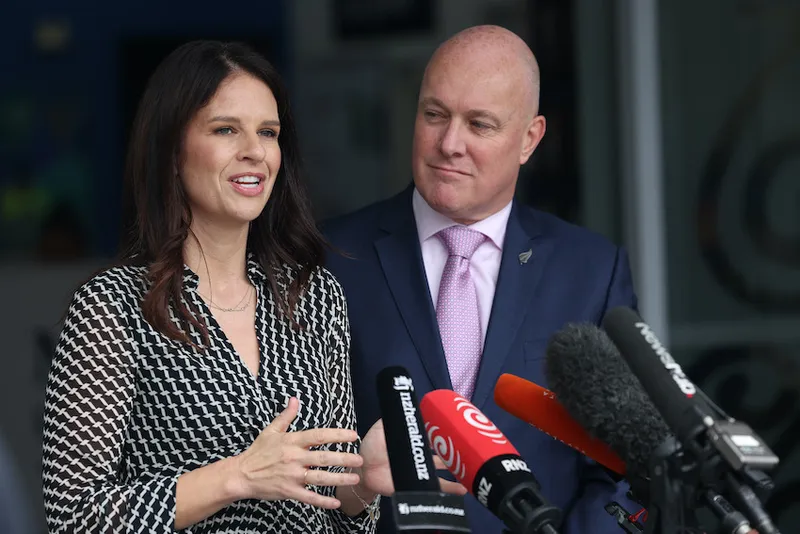
During the announcement of these changes, education minister Erica Stanford argued that it didn’t make sense for Excellence, a word beginning with E, to be considered better than Achieved, a word beginning with A. However, I would argue that changing how the qualification is presented back to a letter grade matching our old bursary system doesn’t meaningfully change outcomes for our students. I can sympathise with wanting to make our national qualification easier for whānau to understand, but I worry it is a bit of a lost cause. Nobody can easily explain how their qualification system works to someone who has not participated in that system. I would encourage any parents to try to explain the exact nature of how their school qualification worked to their children. You will find that they find your system just as confusing as you find theirs.
The government has developed this new proposed qualification under the assumption that a group of subject-centred assessments is somehow superior to our current system. However, they have no evidence to support this. They insist that this will force students to sit more external assessments. However, they have ignored alternative solutions like a minimum number of external credits needed to obtain an NCEA qualification. This would be more intuitive for current students and educators, without limiting student subject choice or qualification flexibility. In fact, there are countless different minor tweaks that could be applied to patch up NCEA’s perceived issues, but none of them feel quite as impactful as destroying it completely.
Subject-centred assessments will also risk students having to limit their options drastically more than it appears. Forcing students to sit all assessments in a subject risks significant harm against indecisive students who change subjects halfway through the year. Under current NCEA, the credits they earned in the first half of the year are already theirs. But under the new proposed system, the student would be forced to start from scratch, having wasted the last six months of learning.
The proposed qualification overhaul attempts a scattershot approach to solve all issues with NCEA through a nostalgia-fuelled return to “simpler times” like New Zealand University Bursary. However, there is a reason we moved away from our old qualification systems. Ignoring this history and the lessons of the past in favour of seeking out emotion-driven solutions only dooms us to repeat past mistakes.
Conclusion
This new qualification overhaul is a deeply flawed, rushed and poorly conceived plan. It is based on a superficial understanding of educational practice and a naive belief that a new system can fix long-standing issues without addressing the fundamental problems of resourcing and inequity. By incessantly meddling with the system and spreading educators’ limited resources across two separate redesigns, the government isn’t achieving its goal of a coherent, consistent and credible qualification. It’s undermining the credibility of New Zealand’s education system and jeopardising the success of an entire generation of students.

Connor Murphy
Connor Murphy (They/Them) is a secondary school teacher based in Tāmaki Makaurau. They are also very, very tired.


