What a landslide victory in Tāmaki Makaurau means for Te Pāti Māori (and Labour)

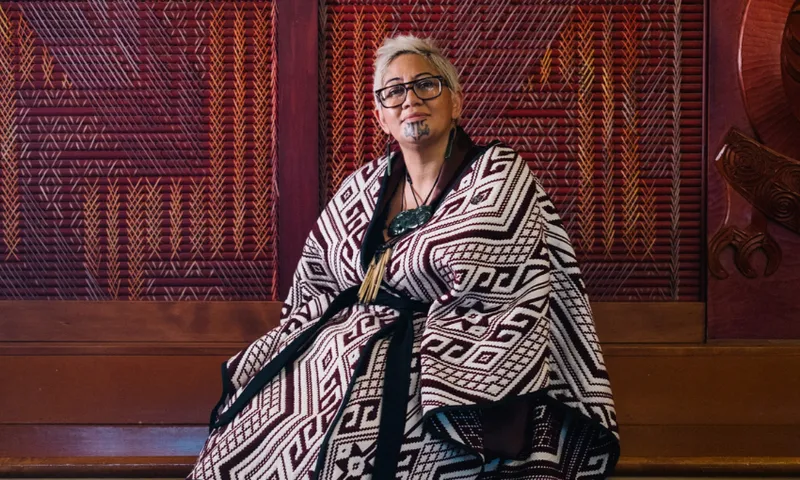
Oriini Kaipara has won Tāmaki Makaurau. (Design: The Spinoff)
It wasn’t just a personal triumph — it exposed Labour’s increasingly fragile relationship with Māori voters and the momentum behind Te Pāti Māori.
Perhaps most surprising about the political newcomer’s victory is not just that she beat Peeni Henare – who has held the seat for three terms in his career – but just how wide the gap was. Oriini Kaipara won the Tāmaki Makaurau seat by almost 3,000 votes, nearly doubling the total amount of votes Henare received. In political terms, it was a hiding. But with turnout low and questions over Kaipara’s readiness, the result is more complicated than it looks.
Similar to the victory of Kaipara’s predecessor, the late Takutai Moana Natasha Kemp, such a massive result was unexpected. As Te Pāti Māori John Tamihere told media after the victory: “The result is just astonishing.” Tamihere also highlighted the discrepancy between the resources of Labour compared to Te Pāti Māori. As for Kaipara: “We’re the poor cousins with no money but a lot of passion, a lot of energy, and a lot of belief,” she said in an interview on TVNZ’s Marae programme. And: “Thank you Tāmaki Makaurau for giving me, and us, the mandate that you entrusted Takutai [with],” she told supporters gathered for party celebrations.
Speaking to his own supporters from Te Mahurehure Marae on Saturday, Henare was visibly distraught, as was the rest of the Labour Party’s Māori caucus in attendance. The result is a(nother) wake up call for Labour, who are desperate to win back the Māori electorate seats after Te Pāti Māori won six of the seven in the last election – five of which were previously held by Labour.
Kemp’s victory over Henare by just 42 votes was arguably the most surprising of the lot. Her victory was undoubtedly aided by the decision of Green Party co-leader Marama Davidson to not contest the seat, as she had in the two previous elections. Instead, Darleen Tana – who had a low profile compared to Davidson – was the Green Party candidate. The Greens chose to not stand a candidate in this by-election, which likely bolstered Kaipara’s support as well.
In the two years since the general election, support for Te Pāti Māori has only increased. The coalition government of National, Act and New Zealand First has been attempting to wind back a plethora of pro-Māori legislation. In response, some of the largest displays of solidarity the country has witnessed have taken place – many, such as the Toitū Te Tiriti movement, have had prominent Te Pāti Māori figures at the centre.
Such movements have galvanised a lot of voters, particularly supporters of Te Pāti Māori, but civic engagement remains an ongoing issue for the wider Māori population, with only 27% of registered voters voting in the by-election.
While Kaipara and Henare remained civil on the trail, some party colleagues went into bat for them. The first to fire shots were Te Pāti Māori co-leaders Rawiri Waititi and Debbie Ngarewa-Packer, who criticised Labour’s decision to stand a candidate at all. They then questioned the ability of Henare and Labour’s Māori caucus to be “unapologetically Māori”, given they are part of a major party. Labour MP Willie Jackson was quick to fire back, calling the critique “nonsense”. Then, late last week, Te Pāti Māori MP Tākuta Ferris posted on social media criticising non-Māori for supporting Henare’s campaign. “Indians, Asians, Black and Pakeha campaigning to take a Māori seat from Māori,” he wrote over a photo of Labour volunteers. Te Pāti Māori leaders apologised for the post, claimed it did not represent the party’s views, and instructed Ferris to remove it.
When it came to policy and political nous, Henare and Kaipara were like chalk and cheese. At first, Kaipara’s years of broadcast experience were evident. In initial debates and media appearances, she spoke confidently and presented well. However, as time went on, the questions became harder and Kaipara began to unravel. I tuned into the first widely livestreamed kōrero between the two frontrunners and immediately noticed differences in the way they responded to questions. Despite controversially contradicting his party’s stance on a repeal of the gang patch ban, Henare tended to provide succinct answers. Kaipara gave long-winded responses that often veered away from the issue at hand.
The first big red flag came during a live debate co-hosted by Māori current affairs show The Hui and Whakaata Māori. Throughout the debate, Kaipara continually looked to her party leaders for information or reassurance before answering questions. While she attempted to mask it as “a Māori approach” to responding, it illustrated a lack of understanding of party policy and positions on key issues – this will be an issue for Kaipara to work on as she enters parliament heading into an election year.
Another key campaign moment came courtesy of TVNZ’s political current affairs programme Q+A. Both Kaipara and Henare were interviewed by journalist Jack Tame. Kaipara became unstuck when asked a seemingly straightforward question about Te Pāti Māori’s ability to influence change while in opposition. She began talking about repealing legislation and a visibly confused Tame asked if Kaipara was referring to the government repealing legislation. However, Kaipara said she was speaking about Te Pāti Māori, before stopping to look for her phone and then apologising for not having it on her to look at her notes.
The interview made for grim viewing and Kaipara went to ground the week following, which also happened to be the last week of the campaign. The decision was strange, especially given most candidates would usually be working overtime on the campaign trail at this point. However, Kaipara reemerged on Thursday evening via Instagram, stating she had taken a break from media to focus on “being on the ground”. Whatever the reason, it clearly didn’t impact her ability to win over voters.

If this result is anything to go by, it seems likely Te Pāti Māori will continue to hold a majority – if not all – of the Māori seats following the next election. That is unless the likes of Labour’s campaign manager Kieran McAnulty and current Māori caucus leader Willie Jackson can devise a miracle turnaround. “This sends a message to the Labour party that we’ve got work to do,” Henare said.
“We have to look at new strategies,” conceded Jackson.
Those new strategies will have to be found and enacted incredibly fast. Unfortunately for Labour, their inability to win the Māori vote seems to go beyond just effective use of social media. Kaipara and Henare were not too dissimilar in many ways – both are children of the kōhanga movement, steeped in te ao Māori and strong advocates for Māori. However, it would appear that a lot of Māori voters – if not a majority – genuinely doubt the ability of Labour’s Māori caucus to be unapologetically Māori while they remain answerable to a major party. Were Peeni Henare to be promoted to leader of the Labour party – a topic that arose several times during this by-election campaign – it might just help to appease some of those concerns.
Despite the criticisms levelled against each other during this by-election, current polling suggests it is inevitable Te Pāti Māori and Labour will have to work together if they are to have a chance of being back in government. Given just how influential New Zealand First and Act have been in this term, Te Pāti Māori and the Green Party will likely look to exert similar influence in any left bloc coalition arrangements. Labour, who will want to remain appealing to the critical central bloc of swing voters, will have to tread carefully.
At Koroneihana celebrations in Ngāruawahia on Friday, Henare was sitting on the stage in Kimiora – the wharekai at Tūrangawaewae Marae – for the hākari following the maiden public address of Te Arikinui Kuīni Nga wai hono i te po. However, despite being a member of Tekau Mā Rua (the 12-member group selected by the late Kīngi Tūheitia to determine who would succeed him), Henare was quietly asked to vacate his seat before the feast began so someone else could sit there. On Saturday, Tāmaki Makaurau voters asked him to leave the seat again, in not such a quiet manner.

Liam Rātana
Liam Rātana (Ngāti Wairupe/Ngāti Kurī) is editor of The Spinoff's Ātea section. He is passionate about indigenous and minority issues. Liam enjoys cooking, poetry, photography, and exploring the outdoors.


