A day of reflection, and a day of shame

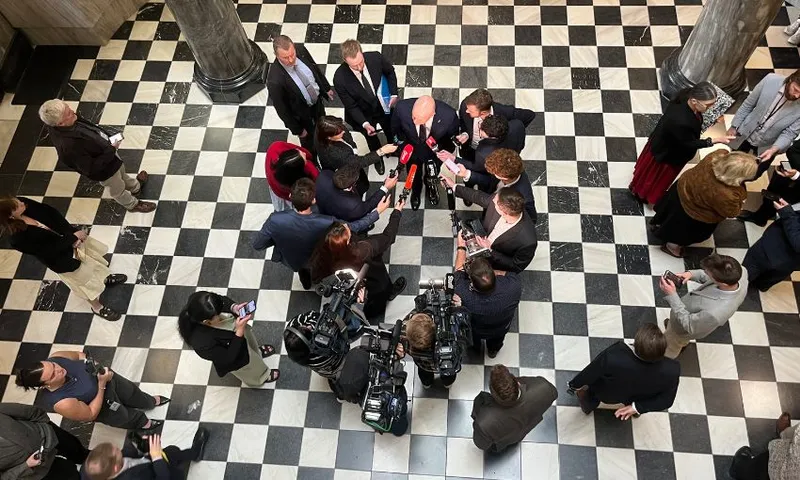
Police minister Mark Mitchell.
It’s one thing to make an apology, and another thing to actually change the behaviour being apologised for.
The last time the police had so much attention in parliament’s debating chamber, it was by way of song. There was justice minister Paul Goldsmith, chest puffed and Ngāti Epsom dialect in full throttle, asking police minister Mark Mitchell whether the government intended to “defund da police”. The laughter that rippled throughout the House came at the expense of Green MP Tamatha Paul, who was in the midst of weeks of backlash for having the gall to suggest that not all New Zealanders enjoy a police presence.
Fast forward seven months to November, and the government’s tone on backing the boys in blue was far more meek. A last-minute press conference with Mitchell and public service minister Judith Collins held on Tuesday evening pulled journalists out of the parliament bar and into the theatrette, where they heard of the efforts made by top cops to cover up complaints against former deputy police commissioner Jevon McSkimming.
In a matter of truly unholy timing, it just so happened to be the eve of the one-year anniversary of prime minister Christopher Luxon’s apology to survivors of abuse in state and religious care. So before the House began its debate on the findings of the Independent Police Conduct Authority (IPCA) on Wednesday, National MP Erica Stanford – in her role of the minister for the government’s response to the Royal Commission’s abuse in care inquiry – rose first to acknowledge the national day of reflection, and the estimated 250,000 children, young people and adults abused between 1959 and 2019.
No apology can ever undo “the harm or trauma and disenfranchisement inflicted upon tens of thousands of people who should have been protected and cared for”, Stanford told the House. “Every member across this parliament is committed to [work] to ensure that such terrible events can never happen again so that the wrongs of the past are not repeated.” When the House rose to observe a minute of silence, it was punctured by intermittent beeps sounding off from a security guard’s handheld radio.
Shortly after, speaker Gerry Brownlee invited Mitchell to speak about the “utterly disgraceful” IPCA report. There were “significant flaws” in the handling of complaints against McSkimming, he said, and an effort by former police commissioner Andrew Coster “to influence the nature and extent of the IPCA’s investigation” was a “clear attempt to ensure the investigation did not impact McSkimming prospects of being appointed his successor”.
Mitchell said he was told by Coster that McSkimming was a victim, and “the only action taken was to persecute the complainant under the Harmful Digital Communications Act”. There were “repeated failures” and “inadequacies” by Coster to disclose information related to allegations against McSkimming to the Public Service Commission when he was being vetted as a potential replacement for Coster. “We cannot forget that at the very core of this is a woman who was severely let down,” Mitchell said. “I cannot express how frustrated and disappointed I have been since becoming aware of the situation.”
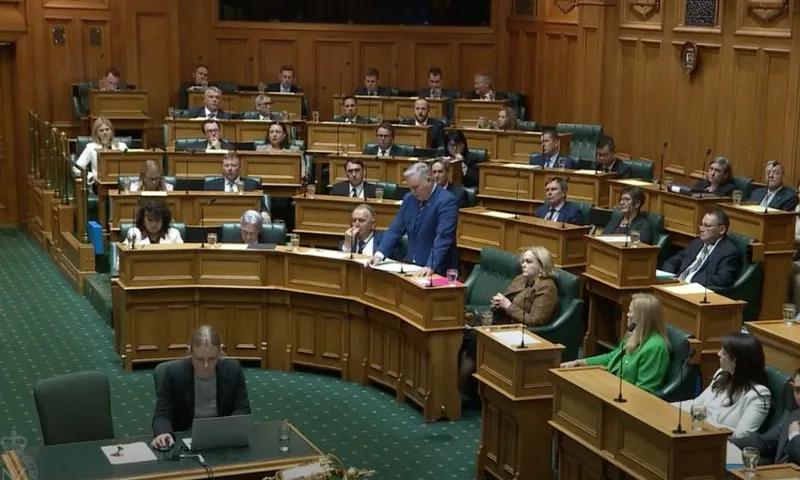
Former minister of the justice and police portfolios, Labour MP Ginny Andersen was the next to rise. The integrity of police was built on “public trust”, Andersen said. “That relationship only works if people believe the police act impartially, regardless of rank, regardless of reputation.” Andersen called on the culture within NZ Police to change: “when leadership fails, it damages the morale.”
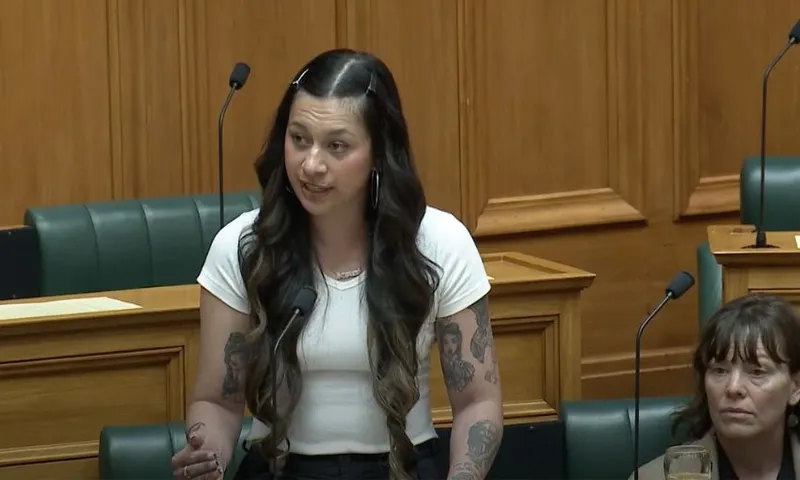
Tamatha Paul, as the Greens justice spokesperson, began her speech to the House by acknowledging the survivor at the heart of the report, and those whose day had been overtaken by news of continued abuses of power by the state. The timing of it all was “stinging”, it was “disturbing” to read of how the allegations were covered up, and there was a “clear power imbalance” between McSkimming and the survivor, Paul said.
“I want to quote from a meeting I had this morning with survivors about this very case,” Paul said. “”Silence protects those who cause harm,’ and more importantly … Police can be obstacles to justice.”
Despite the pair’s past tension, questions from Paul to Mitchell were productive. The government accepted all of the IPCA’s recommendations, that there will likely be new legislation to address the creation of further oversight by an inspector general, and that there would be cross-party collaboration on police oversight. “I guess the one thing that I leave you with, Mr Speaker and anyone watching our parliament today, is that we are going to work as hard as we can … [to make sure] that we deserve to retain their confidence and support,” Mitchell said.
And that was it: no one spoke for New Zealand First, Te Pāti Māori, or the Act Party. And the circus of parliament carried on, with bickering between Luxon and his opposite Chris Hipkins through oral questions, and laughter from the benches and public gallery unpicking the tension that had sewn the House’s mouth shut.
But later, Greens leader Marama Davidson seemed to bring on a collective amnesia. When she asked Luxon about redress promised to survivors of abuse in care (which will not be available for survivors with a history of violent or serious offending), and recommendations the government would take on from the Royal Commission’s report, a senior minister seemed to think the questioning wasn’t worth it.
Winston Peters had risen to his feet. Does Luxon suspect, Peters asked, that no matter what he gives, the questions will still be the same? In other words: is the prime minister concerned that people will still complain about the status quo, even if you tell them everything’s fine?
It was an ironic school of thought on a day that was supposed to consider the experiences of victims silenced by forces bigger than them. As Peters and many others in the House will know, it’s one thing to say you’re sorry, and another thing to be willing to listen to what you have done wrong – you might find that an apology made a year ago no longer carries its weight.

Lyric Waiwiri-Smith
Lyric is an award-nominated politics reporter at The Spinoff. She covers parliament from the press gallery, pens the weekly column One MP, One Pint and is endlessly curious about what makes our decision-makers tick. Off the clock, Lyric loves a live gig, a cold brew, and being a Wellingtonian (on a good day).


