Hyefu 2025: Economic recovery? I hardly knew ye

Nicola Willis.
The return to surplus slipped even further away in Treasury’s 2025 Half Year Economic and Fiscal Update, but the finance minister saw cause for optimism.
The economy has suffered a “deep cyclical downturn”, splitting into two speeds that saw the South Island outperform the North, and a “sluggish” labour market will likely keep our unemployment rate at 5.5% until May. When Treasury opened its books today, tales of fiscal woe drowned out any signs of hope, but economic recovery is still on its way – though a surplus will take longer to arrive than you earlier predicted.
While last year’s Half Year Economic and Fiscal Update (Hyefu) predicted green shoots from early 2025, most New Zealanders will know the real story has been less wealthy and sorted, and more broke and desperate. Secretary to the Treasury Iain Rennie told a room of journalists, economists and industry experts on Tuesday morning that “elevated levels of global uncertainty”, a “significant slowdown in growth” and “increase in unemployment”, among other things, were the “core economic story”.
New Zealand needs a rise in consumption, heightened export prices, a rise in house prices and increased migration to boost our economic upturn, Rennie said. But despite the downturn, he promised that economic recovery would be on the way, with this quarter’s gross domestic product (GDP) figures to be revealed on Thursday. “Like most market commentators, we are expecting GDP to be somewhat higher than we forecasted,” Rennie said. Although, “we have a lot of humility about trying to forecast the quarter that has just been.”
In terms of where we’re at right now, however? Reality will bite for a little while longer. The government’s financial indicator measuring the operating balance before gains and losses (Obegal) took a different appearance last year, with Willis removing ACC deficits from the equation (a measurement now known as Obegalx). In 2025/26, Obegalx is forecast to “deteriorate” to $13.9bn, the largest Obegalx deficit since 2019/20. It remains in a 3% structural deficit, pushing a forecasted return to a surplus of $2.3bn to 2029/2030 – a year later than predicted in Hyefu 2024. Measured with the traditional Obegal, a surplus now won’t be reached until after 2030.
And while nominal GDP has recovered, real GDP hasn’t returned to levels forecast at the budget update in May. Over the forecast period, net core Crown debt increased by $72bn. It’s predicted to peak at 46.9% of GDP in the year to June 2028, rather than the 46% previously predicted. New Zealand Superannuation continues to be the largest driver of core Crown expenses, increasing to $8.6bn in 2024/25 – more than housing ($1.4bn) and education ($6.6bn) combined. Rennie said the number of people receiving super will rise from 928,000 this year to 1.1 million in the forecast period.
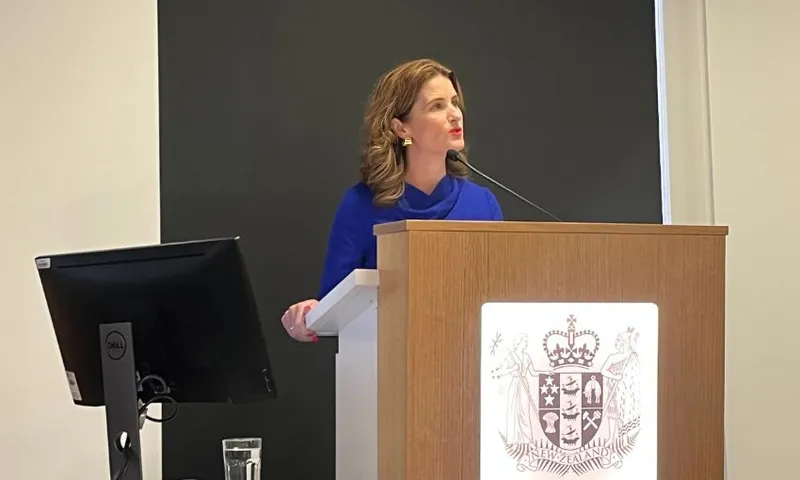
If you ask finance minister Nicola Willis, the big picture story is all good news. “With fresh air in its lungs, the economy is picking up,” Willis promised the crowd at Treasury’s Hyefu release. She lauded the government’s saving of $11bn yearly, though recognised Treasury’s previous forecasts had been “far too optimistic, and some of the assumptions made at the time have since been unwound”.
So, does the government go harder, or go softer? “Apologies for the double entendre,” Willis said, but austerity to the tune of the Taxpayers’ Union’s demands, like scrapping the likes of Working for Families tax credits, isn’t in the government’s plan. “It would create a level of human misery that I, for one, am not prepared to tolerate,” Willis said.
Delivered alongside the Hyefu is the finance minister’s 2026 budget policy statement, which sets out the goals for next year’s budget. Like previous budgets presented by the current coalition government, spending will not exceed $2.4bn, and will focus on targeting funding to health (with $1.3bn expected for Health NZ), education, defence and law and order. “Tight control of spending has to continue, and it will,” Willis said, with a push to digitisation expected to deliver a “leaner public service”.
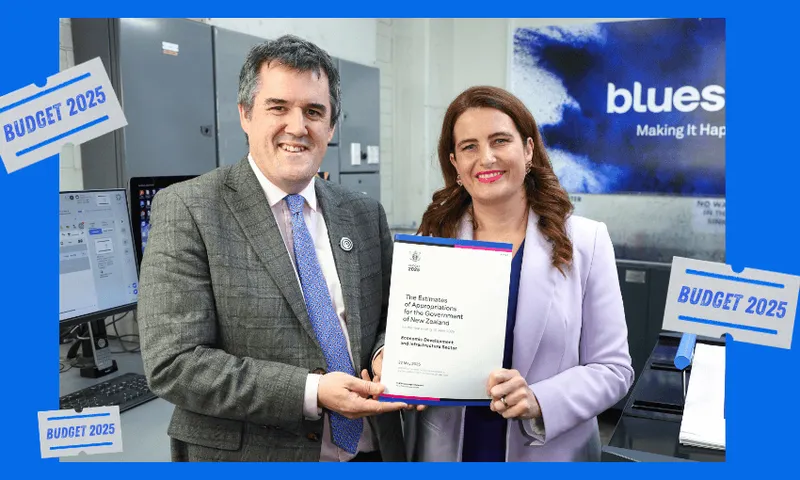
Asked whether the finance minister would take the blame she loaded on Labour and Treasury for the poorer economic outcomes in Hyefu, Willis didn’t bite. “I take responsibility for keeping on target to return to surplus in 2028/29,” she grinned. “I take responsibility for setting out books which show that path is credible and achievable.”
Hang on, while we’re here: what about that debate Willis was supposed to have with former finance minister Ruth Richardson? Would these latest figures make her position harder in face of pushback from the Taxpayers’ Union, which has railed against its traditional conservative allies in the government to criticise their lack of hardcore austerity measures?
“What I would put to them and others is that it’s one thing to cut spending,” Willis said. “It is another thing to set out who would be impacted by the changes you propose and how.”
More jobs, bigger incomes, lower interest rates, and confidence in the government is on the horizon, Willis promised: “2026 is going to be better than 2025.” Only time will tell if that turns out to be too optimistic.

Lyric Waiwiri-Smith
Lyric is an award-nominated politics reporter at The Spinoff. She covers parliament from the press gallery, pens the weekly column One MP, One Pint and is endlessly curious about what makes our decision-makers tick. Off the clock, Lyric loves a live gig, a cold brew, and being a Wellingtonian (on a good day).


