CEOs, ‘secret deals’ and rising rates: a night at a Queenstown mayoral debate

Five of the six QLDC mayoral candidates (Image: Shanti Mathias)
At the tail end of the election campaign in Queenstown, five of the six mayoral candidates made their cases to a room of undecided voters.
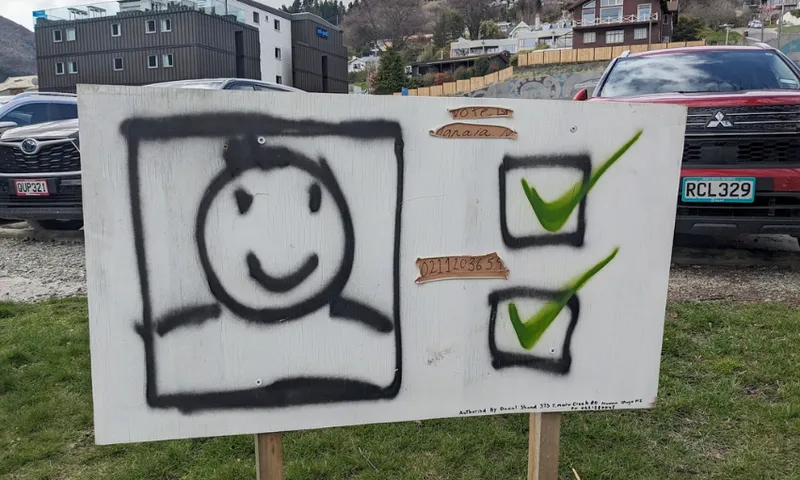
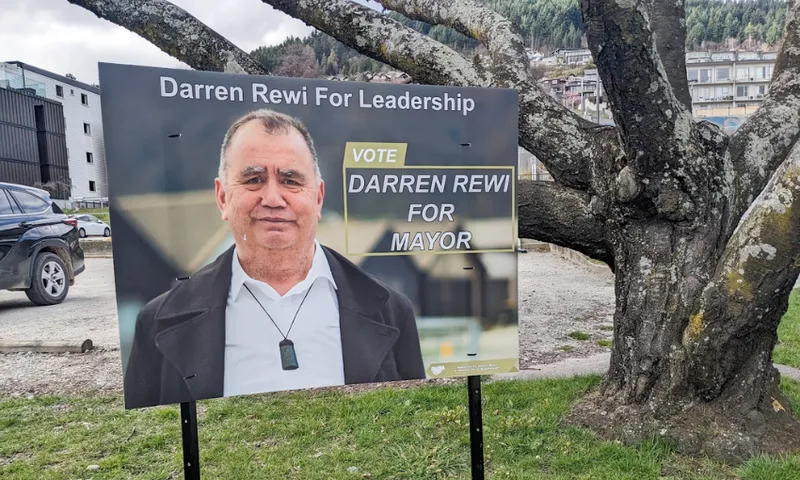
The first question at the Queenstown mayoral debate, held in the Arrowtown hall on Monday night, was an obvious one: who knows who they’re going to vote for? Candidate Al Angus was the first to put his hand up, followed quickly by the four other men on stage. (Darren Rewi, the other of the six running for mayor of Queenstown Lakes District Council, was stuck in Sydney after a delay in the flights returning him from a work trip to Taiwan.) There were about two people in the audience who had made up their minds: the rest of the full village hall were ready to be convinced (or not) by the candidates.
Asked why they wanted the job, Angus said he was running because of how expensive rates were for him as a pensioner, and for thousands of others in Queenstown facing the same challenge. John Glover runs a wilderness retreat and is going for mayor after three unsuccessful efforts to get onto council. He said he was motivated by the “absence of leadership” following the Shotover River wastewater discharge controversy in March, when QLDC used emergency powers to put treated effluent into the river after concerns about bird strike from the airport – the disposal field being used previously was attracting too many waterfowl.
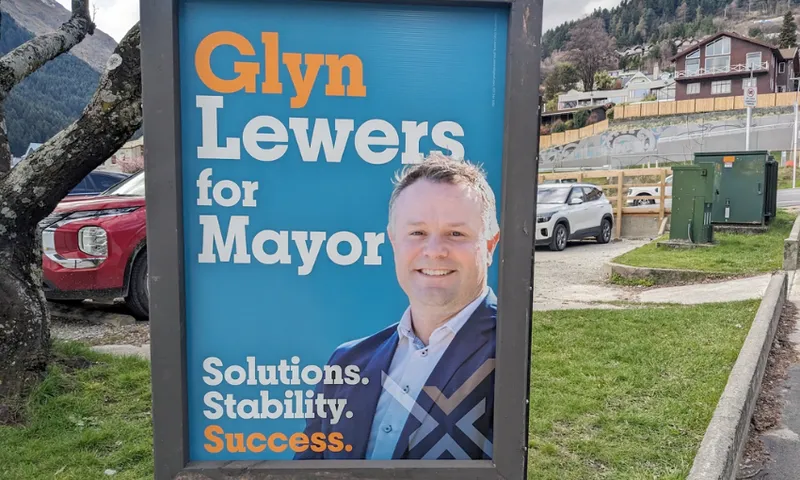
Current mayor Glyn Lewers said he was motivated by the possibility of “really grasping” opportunities for Queenstown, and feeling he was the best-placed person to do that. Daniel Shand, a direct democracy advocate, said he didn’t want votes, just the opportunity for citizens to have their say. But if it came down to it, “even Australia has more direct democracy than us – so I’m motivated by having a better system than Australia”. Rewi, who answered some questions by email, was motivated by the “lack of leadership and governance skill of mayor Lewers”.
Queenstown, along with Central Otago District Council and Otago Regional Council, has been selected as one of the early candidates for a regional deal, where councils can negotiate directly with the government for a long-term agreement to create infrastructure, housing and economic growth in a region. The regional deal is happening because “of the advocacy I’ve done in the last three years”, insisted Lewers, who was elected in 2022 after one term as a councillor.
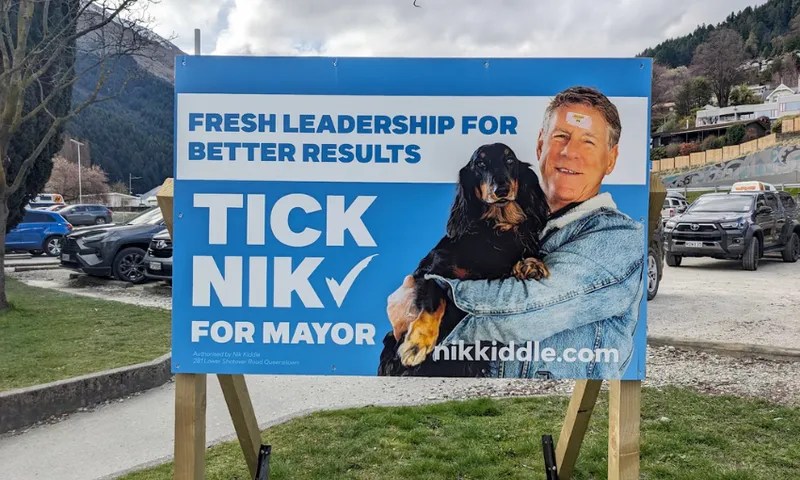
But while Lewers said the deal was an asset, it was also one of the key sources of criticism from his opponents. “The mayor’s gone behind the scenes and got a consultant… it’s all behind a cloak of smoke and mirrors,” said Nik Kiddle, a former diplomat and property manager who said his experience with bureaucracy would serve him well as mayor. Getting a share of the international visitor levy and GST to support tourism in Queenstown should have been considered, he said. Lewers got the mic back and said that “Nik clearly hasn’t read our proposal” – the levy and GST ideas had already been suggested. Glover was more vague: he said that when negotiating with central government, “the key thing we need to carry with us is your hopes and aspirations”.
Lewers continued to catch strays throughout the night, even though he had more specific examples of what council was doing and could do than any other candidate. This could reflect his low popularity: he’s currently fourth on Crux’s latest (self-selecting) poll. A Taxpayers’ Union poll conducted over the phone showed that while Lewers had the highest support, 71% of people were undecided. Many are dissatisfied with council: 49% in a recent residents survey, while only 17% said they thought the mayor and council made decisions with the best interests of community in mind.
QLDC’s CEO has resigned, with his term ending in February 2026. Lewers has said that appointing a new CEO would be a priority for him in a second term. Other candidates criticised the process, where a recruitment company has been appointed; Glover was particularly vociferous, asking for some of absent Rewi’s time to talk about how “the wrong process has been followed” to recruit a new CEO. “There’s hot air and alarmist views from one person,” said Lewers; at this point in the campaign, he had heard this line several times before.
Lewers’ facial expressions were a frequent source of amusement: when Shand said “if wages show importance, the CEO is far more important than the mayor”, Lewers smiled sardonically. (The CEO is paid $479,486; the mayor is paid $143,734.) Shand continued: “That is why we should elect the CEO,” and Lewers leaned back and shook his head.
Glover thought his biggest challenge with not having previous local government experience would be “understanding all the secret deals”, getting one of the biggest laughs of the night, even if Lewers was rolling his eyes. Angus, after being reminded of the question, said that the opportunity to be mayor “wasn’t the first plane I’ve built while flying it”.
In the audience questions section, someone called Lisa asked why rates were rising 10% a year. Lewers said the council was countering underinvestment by funding depreciation. “If we don’t start doing that, we’ll end up with what you see in Wellington,” he said. “I can tell you the current rating system for local government is broken.”
“The rates burden is outrageous,” said Kiddle; he wanted to look into user charges, including congestion charges. Another audience member called Jenny asked why there wasn’t a tourism tax. Lewers said that despite cross-party support, this would not be an option until after the 2026 general election. In the meantime, the regional deal might help. “The government tripled the International Visitor Levy, then walked off with the money – it doesn’t require a law change, that money needs to come back here,” Kiddle said, to applause.
Housing is a key concern in Queenstown. “Only half of the buildings the council consents each year are for people to live in, it distorts our entire housing market,” said Kiddle. “I would pull back on short-term visitor accommodation so people who build here want to live here.” Lewers, again on the defensive, said the council had a legal requirement to process consents and limited powers to deny a consent based on its intended purpose. Angus suggested the council was “forward paying the next leaky home crisis” with low build quality, and that much of the new housing was a “disgrace”. Glover said growth, including medium- and high-density housing, should be concentrated in areas with infrastructure like wastewater and public transport already in place.
(Shand answered this question in a roundabout fashion: “I’ve noticed that one thing politicians do is that they answer a question by changing the topic. What I would do about infrastructure is get two consultants from Switzerland and consult them about direct democracy.”)
Since the debate was in Arrowtown there was some discussion of the unique issues facing this part of the district: the tug between ever-growing property prices and the historical village vibe Arrowtown has, which is reinforced by design guidelines. “There’s going to be no 10-storey developments in this beautiful town,” said Kiddle, who is from Arrowtown. While all the candidates supported Arrowtown’s special characteristics, playing to the crowd, Glover acknowledged the cost. “Celebrating the heritage costs more, grants will be required,” he said. Lewers agreed that maintaining heritage buildings came at a price. “I’ve got a list of all the schools in this district, and Arrowtown is the only one where the roll is falling – why is that?” The crowd shifted and muttered, disquieted.
At the end of the night, it was again asked for everyone who had decided who to vote for to raise their hands. Only a handful went up. As the Arrowtown hall emptied, two people walking down the street with its cute historical buildings discussed their favourite candidate, Shand. “He says he doesn’t want to be elected, but he’s really smart,” said one person. “Maybe we should just vote for him, instead of one of those muppets,” replied her friend.

Shanti Mathias
Shanti is a contributing writer at The Spinoff with a focus on Christchurch and the South Island. Email her at shanti@thespinoff.co.nz


