A brief history of parliamentary dress-code dramas in Aotearoa

Image: The Spinoff
As the speaker threatens a clothing crackdown, we take a look at nearly 90 years of sartorial storms in teacups in the House of Representatives.
The fashion choices of our elected members are back in the headlines, with the speaker of the house promising to toughen up on dress standards after new Te Pāti Māori MP Oriini Kaipara gave her maiden speech sans footwear. It’s nothing new: politicians have been pushing the boundaries of what’s appropriate in the debating chamber for decades, with various degrees of finger-wagging in response. Here’s a whistle-stop tour through some of the debating chamber’s most sizzling sartorial storms in teacups.
1937: A sky-blue blazer causes ‘a mild sensation’
It had been an unseasonably warm few days in Wellington when the Labour MP for W[h]anganui, Joe Cotterill, rocked up to parliament on November 17, 1937 clad in “sports clothes”. If you’re picturing gym shorts and a sweaty T-shirt or perhaps some chic Lululemon lycra, think again: in 1937, sports clothes meant a blazer (sky blue, in this instance) and flannel trousers (a fetching light grey). Cotterill wasn’t cosplaying: outside of his day job he was a sports administrator who indulged in competitive rugby, hockey, swimming and surf lifesaving. Sadly, we have no photographic record of this sweet fit, but I imagine he looked much like one of the blokes below right (but less London toff and more Whanganui trade unionist).
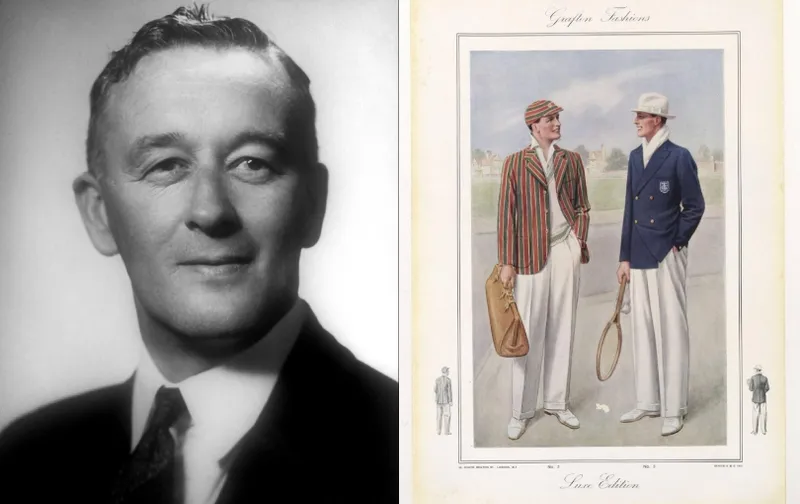
In a brief syndicated widely across the country’s evening newspapers, a press gallery reporter described the “unusual spectacle” of Cotterill taking his seat in this “unexpected garb”. “Possibly it was the unseasonably warm weather that has been experienced at Wellington in the past two or three days that led Mr Cotterill to forsake the ordinary sober garments of a back-bench member for sky-blue blazer and light grey flannels, or perhaps it was a desire to institute a dress reform movement in the House, but the effect it created was certainly unusual.”
Sadly, this “certainly unusual” effect is not actually described. Was there gasping? Shrieking? Fainting? The press, for what it’s worth, seemed firmly in favour of Cotterill’s risque attire. “If brighter dress could be taken as a forerunner to brighter sittings of the House,” concluded the presumably bored-to-the-brink-of-sanity gallery hack, “the lead given by Mr Cotterill would undoubtedly be welcomed.”
An Evening Post reporter agreed. “The House would have presented a very dull aspect if it had not been lightened by the appearance of summer garb in several places, the member for Wanganui taking first place in this aspect by wearing a light blue blazer.”
At least one of Cotterill’s constituents did not share this view, writing to the Wanganui Chronicle to complain that their local MP had worn apparel many believed to be “childish, if not worse”. They concluded: “Apparently Mr Cotterill has little respect for his office or for his fellow members or perhaps, having failed to make an impression in one way, he is trying to gain a little notoriety.”
1947: Slippers ‘defy all canons of orthodoxy’
Just a decade later and the world had changed for ever, but in New Zealand’s parliament, unexpected fashion choices could still raise an eyebrow or two. This time it was the footwear of Labour’s Timaru MP Clyde Carr, who the Dictionary of New Zealand Biography describes as “one of New Zealand’s longest-serving and most eccentric members of parliament”.
On June 30, 1947, his first day in a new role, Carr “made history by being probably the first chairman of committees to carry out that office wearing a pair of brown slippers”, wrote The Press. The Evening Star, describing the slippers as a much snazzier-sounding red, said this gave rise to “amusement, not mixed with horror, among some of the spectators in the public galleries”. It was nothing new to the “hardened observer”, however, as Carr had been rocking these slippers in parliament for a while. “Although he defied all the canons of orthodoxy by wearing carpet slippers, there is no doubt that his resonant voice and clear enunciation admirably qualify him for this position,” noted another reporter.
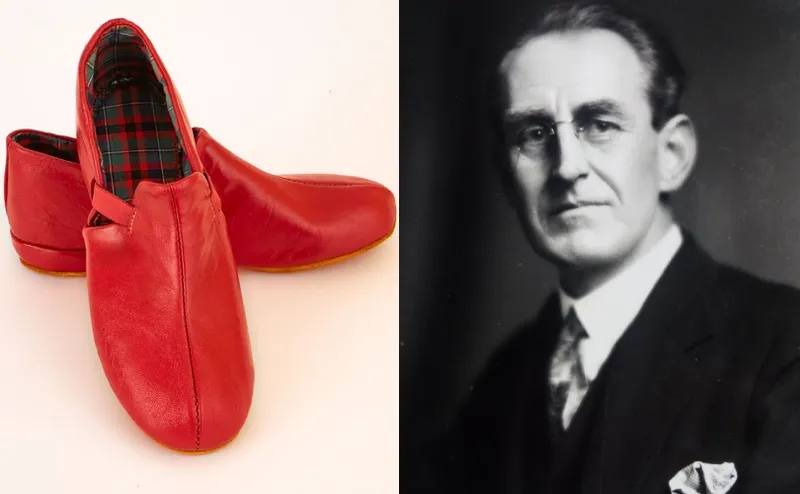
Carr seemed to be something of a trend setter, as three months later, a press gallery reporter revealed that other MPs had joined him in “sartorial idiosyncrasies”. Even the Nats got on board, one rocking a “gaudy scarf” and another sporting a “natty green eyeshade”.
As for Carr, he continued to wear slippers in the House for the next decade or so, at least once paired with green socks. According to the Dictionary of New Zealand Biography, as he got older, “personal eccentricities obtruded: independence of mind became unpredictability, ready speech turned into garrulity. He appeared impecunious, once darned his socks during a parliamentary debate, and often slept overnight in his office, even cooking meals there. Whiffs of scandal about his private life circulated.”
1971: A ‘garish’ towelling bucket hat
The rapid societal change of the 1960s saw more widespread pushing of the dress-code boundaries in parliament, with the younger male Labour MPs sporting colourful shirts and long hair like a bunch of dirty hippies. Things eventually came to a head in 1971 over the issue of jackets: blokes were meant to wear them at all times during sittings of parliament, but a number of rebellious members began to openly flout this requirement.
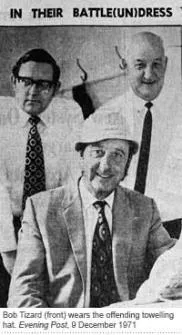
On a warm day in December, a few shit-stirrers removed theirs in unison, with Arthur Faulkner chucking on a pair of sunnies (actually clipping some dark lenses over his specs, which is so uncool it’s maybe actually incredibly cool?) to boot. Bob Tizard stole the show, however, by donning a towelling bucket hat described in one account as “garish orange” and another as “pale apricot”. A photo exists, but for obvious reasons it is not helpful in terms of discerning the exact hue.
By all accounts he got away with it – hats were permitted to be worn while members were seated – though the jacket rule would not be relaxed until the following decade. Even then it was only for summer sittings and didn’t last: jackets were once again mandated in 1993, presumably when parliament got a decent air-con system.
1983: Back on track(suit)
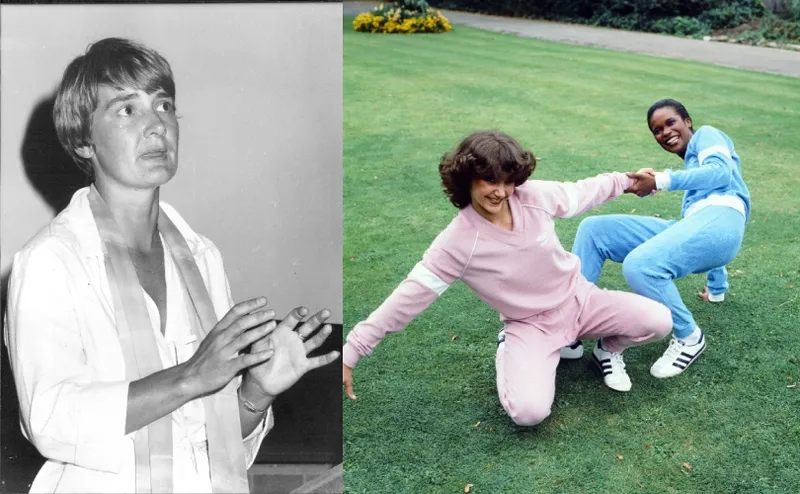
Ruth Richardson and her pink tracksuit has become shorthand for when dress-code boundary-pushing goes too far: in 2000, while advocating for standards to be relaxed in the House, Greens co-leader Rod McDonald referenced it as an example of what not to do. In 2011, calling for the male and female dress codes to be more aligned, Trevor Mallard hat-tipped Richardson’s “regular” appearance in the House in a tracksuit as an example of how out of sync they had become.
It’s true that fashion wise, women have traditionally been able to get away with more than men in parliament, particularly in the early days when there weren’t very many female MPs and the dress code was firmly focused on men in suits. Which brings us to Friday, November 25, 1983, when Ruth Richardson wore a blue (not pink) tracksuit during an all-night sitting early in her parliamentary career. Richardson was a keen runner (or jogger, in the parlance of the time), and was often spotted tracksuit-clad as she pounded the pavements of Wellington into the 90s, but that single night in 1983 appears to be the only recorded instance of her opting for this casual attire in the House.
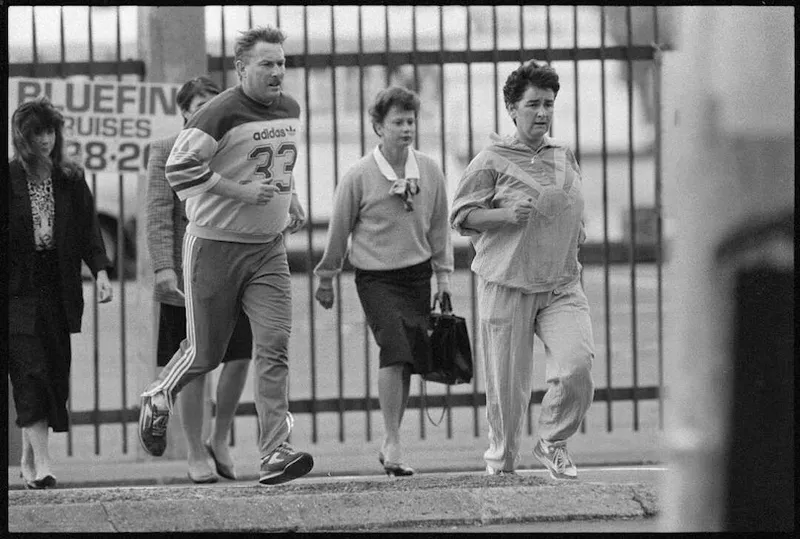
Asked for comment via email, Richardson responded, “Yes I confess to dress-code crimes. I generally ran to work in an awful pink tracksuit. I can recall pulling an all nighter in a tracksuit.” An all-nighter suggests a singular occurrence, in line with The Spinoff’s findings. But in the same email, Richardson dropped a bombshell, alleging her former colleague Marilyn Waring – they were the only two female National MPs in the early 80s – had worn pyjamas in the debating chamber.
Contacted for comment, Waring denied this, but did reveal that Richardson wasn’t the only one to sport a tracksuit during lengthy sessions of parliament. Juggernaut fans will know Waring was a fan of this genre of attire, wearing a tracksuit to that fateful late-night meeting with an irate Robert Muldoon recounted in the first episode. In that instance she changed out of her suit into the comfy get-up knowing it would rile the PM, but Waring confirmed that like Richardson, she too had worn tracksuits during the all-night urgent sittings Muldoon was so fond of. It was her “rebellion about the nonsense of it all”, she said, but it went one step further than clothing choice – Waring would go into full slumber party mode. “I always had a pillow in my seat, and for all nighters I did take in my sleeping bag, and popped into it on the floor, in my tracksuit with my pillow.”
2003: T-shirt troubles
Labour MP Judith Tizard, daughter of Bob-of-bucket-hat-fame, had her own brush with controversy when a few opposition MPs took issue with an NZ Music Month T-shirt she wore in the House on April 30, 2003. According to a Herald story, it wasn’t the tee itself as much as its snug fit across the arts and culture minister’s “rather ample bosom” that drew “shocked gasps, hoots of laughter… and calls for her to ‘take it off’.”
Green MP Metiria Turei complained to the speaker that “some of the comments made, which you may not have heard, were very sexist”, with Act’s Rodney Hide countering with his own accusations of sexism in that women seemed to be allowed to wear promotional T-shirts while men weren’t. A “grumpy” Michael Cullen, in acting PM role, scolded the “adolescent behaviour” and everyone moved on.
2010: ‘Why is this member wearing his raincoat?’
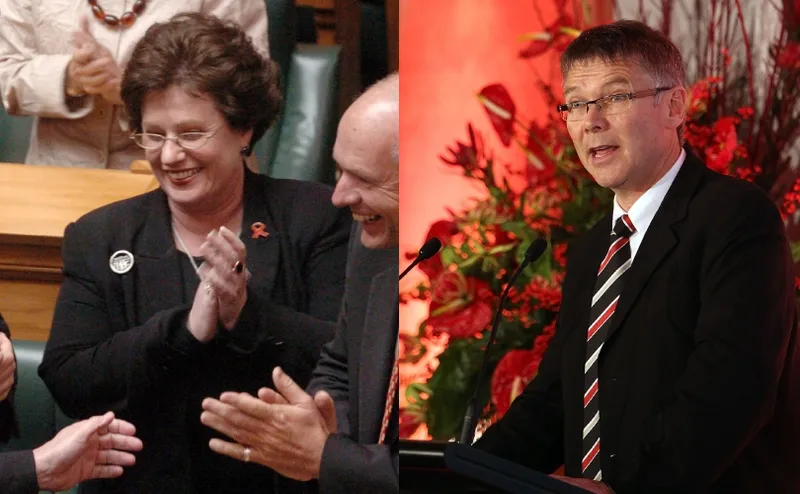
It was August 24, 2010, and Labour MP David Parker was talking about the wage gap between New Zealand and Australia when he was interrupted. “Why is this member wearing his raincoat in the House?” asked National’s Simon Bridges. Parker responded with a dig directed at Bridges’ electorate. “Look, sartorial elegance is obviously something that would be new to Tauranga, but we celebrate it on this side of the chamber occasionally.”
He tried to direct focus back to the Trans-Tasman Proceedings Bill, but government MPs were not having it. “What’s written on the back of the jacket?” interjected Tau Henare. “Cutler, a good brand,” said Parker. “Let us return to the more important issue…” But Act MP David Garrett, who in just a few weeks’ time would resign after his passport fraud came to light, wasn’t having it. “I raise a point of order, Mr Speaker… David Parker appears to be dressed in some kind of safari jacket… I certainly do not see that what Mr Parker is wearing right now is business attire.”
Deputy speaker Lindsay Tisch was unmoved. “I am quite comfortable with his wearing that jacket. That is acceptable.” Case closed.
2011: Welcome to the House of Pain/Representatives
Back in 2011, when rugby players didn’t dress like Marvel bloody superheroes in a desperate attempt to attract youthful fans, a change in kit was a big deal. So when the Highlanders unveiled a ghastly fluorescent green strip, southerners were ropeable. Labour’s Clare Curran, the member for South Dunedin, was no exception, and funnelled her anger into her choice of attire, turning up to parliament in a classic Highlanders jersey in blue, maroon and gold. “The brand is important to the whole region, the team is important to the whole region and the colours the team wear are important to the whole region,” she said later in justifying her decision.
The speaker, Lockwood Smith, was not having it, and asked her to leave the House. Curran demanded to know where in the standing orders a sports jersey was prohibited, thus kicking off calls for the dress code for women to be defined beyond a vague reference to “appropriate business attire”. It wasn’t, though speaker’s ruling 20/2 remains in force: “It is not appropriate, unless the speaker’s permission is sought, to advertise sports teams in this chamber.”
2020-2021: The saga of the ‘colonial noose’
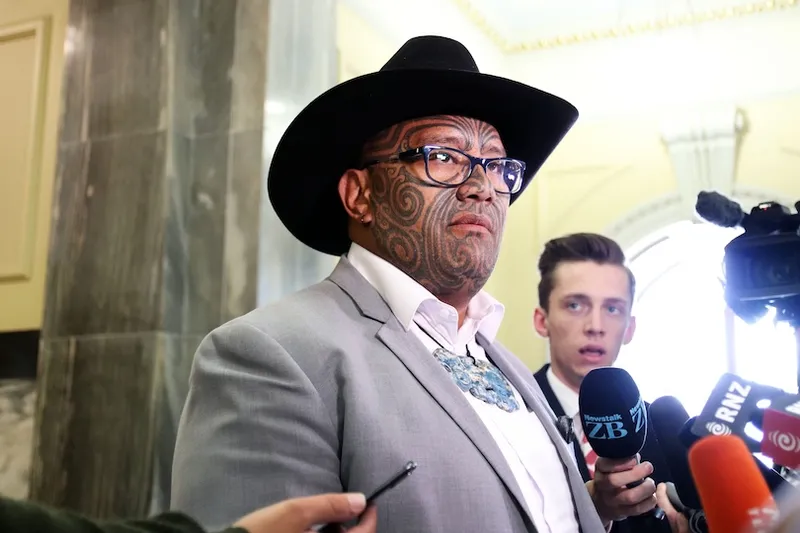
In November 2020, then speaker of the house Trevor Mallard announced he would be spending the summer break reviewing the interpretation of “business attire”, and invited members to write to him with their views. A week later, Te Pāti Māori co-leader Rawiri Waititi concluded his maiden speech by removing his necktie, referring to it as a “colonial noose”. A few days after that, returning to the debating chamber without wearing said noose, Waititi was told he wouldn’t be allowed to speak again until he met the “requirements of business attire”.
Just before parliament returned early the next year, Mallard told media that “a significant majority of members” had opposed any changes to dress standards. “Business attire, including a jacket and tie for men, remains the required dress standard.” On the first sitting day a few days later, Waititi arrived sans tie, arguing that the hei tiki adorning his neck was “Māori business attire”, and pointing out that Green MP Ricardo Menéndez March had been given special dispensation to wear a bolo tie from his native Mexico.
Waititi was promptly booted out of parliament. But that night, the standing orders committee heard a submission from Te Pāti Māori and the majority of committee members decided the tie requirement should, in fact, be ditched. And just like that, it was. Male MPs from Te Pāti Māori and the Greens are now often seen tieless in the debating chamber. Nothing has changed in National, where the caucus has its own requirement for male MPs to wear a necktie, and all the blokes in Act and NZ First still wear them too. As for Labour, the majority of its MPs have stuck with ties, with Damien O’Connor a notable exception.
2021: The Air Jordans
Waititi may have won the tie battle, but the style war raged on. In October 2021, Act leader David Seymour asked Mallard if Air Jordans constituted business attire. The speaker wasn’t willing to make a ruling, but commented, “The business which Air Jordans are normally associated with, in my interpretation, is not quite the business that we expect to take part in these precincts.” As Charlotte Muru-Lanning wrote for The Spinoff at the time, Mallard later told Waititi he was referencing drug dealers and gangsters.

Alice Neville
Alice Neville is The Spinoff's deputy editor. Her interests include politics, food and data-driven deep dives of all kinds.


