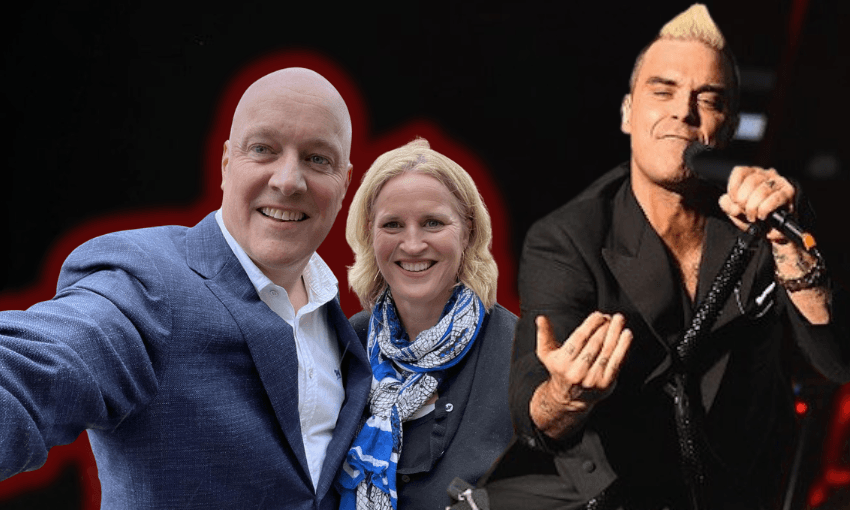



The National minister turned NewZeal leader turned NZ First candidate is just the latest in a long list of politicians who have changed their stripes.
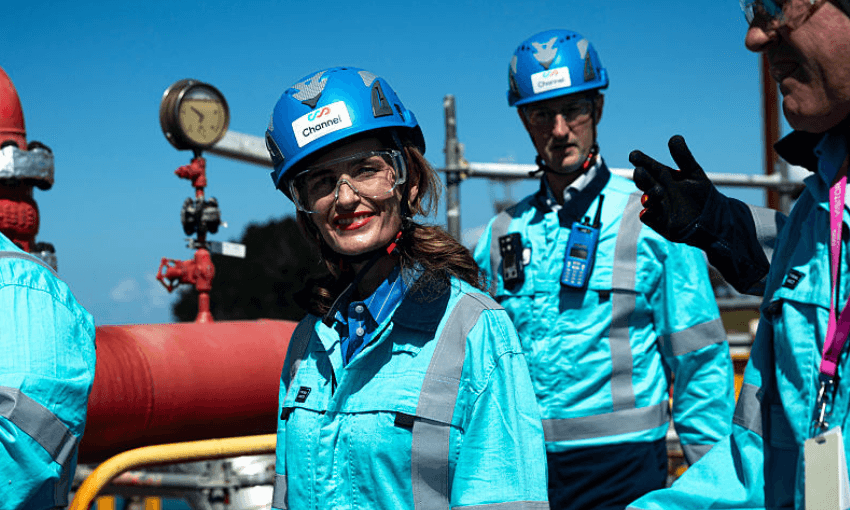
When former National minister Alfred Ngaro opened New Zealand First’s state of the nation event on Sunday by announcing his plans to run for the party, there were a few raised eyebrows in the crowd. Not because Ngaro seemed an unlikely candidate, but because – as those who have spent time in the public eye are wont to do – he didn’t introduce himself. The self-proclaimed Christian Zionist lost his seat in parliament at the 2020 election, having served for three terms, during which time he caused National a few headaches with his strongly socially conservative views. For the last few years he’s been the leader of NewZeal, which managed just over half a percent of votes in the 2023 election, but now Ngaro has moved to a party that has much brighter election prospects, while still waving the socially conservative flag.
It’s yet to be announced where Ngaro will find himself on the party’s list or whether he’ll stand in an electorate seat. Speaking with reporters on Sunday, Ngaro said he was first approached by NZ First about running as a candidate in 2023. At that point, he had already started campaigning for NewZeal – having said National had moved away from some of his values – and declined. But now the time appears to be right. Despite having the opportunity to catch up with former National colleagues at a wedding recently – presumably that of police minister Mark Mitchell – Ngaro said he hadn’t tried to poach any new (old) talent for NZ First.
NZ First leader Winston Peters has hinted on a number of occasions that multiple former MPs – from Labour as well as National – have expressed their interest in running for his party. Despite shooting himself in the foot over comments he made about women on The Platform last year, former Labour minister Stuart Nash is still rumoured to be one of them.

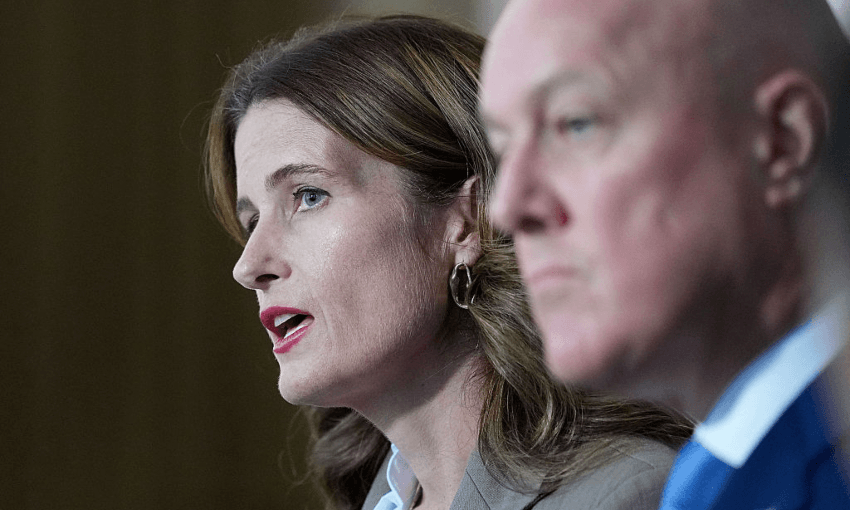
Ngaro isn’t the only candidate at this year’s general election to have switched camps, joining the likes of former National MP Jackie Blue, now a part of the Opportunity Party and a mentor to its new leader Quilae Wong, and former Te Pāti Māori Ikaroa-Rāwhiti candidate Heather Te Au-Skipworth, who is now running for the Greens in the same electorate.
In a statement, Blue, who was a National list MP for three terms from 2005 to 2013, said her switch to the party formerly known as TOP was informed by the “hatchet job” of the Equal Pay Amendment Act. As for Skipworth, she dropped out of the 2023 Ikaroa-Rāwhiti race early, citing personal reasons, and told reporters in early February this year that her mother had convinced her to switch to the Greens.
The revolving door of New Zealand First
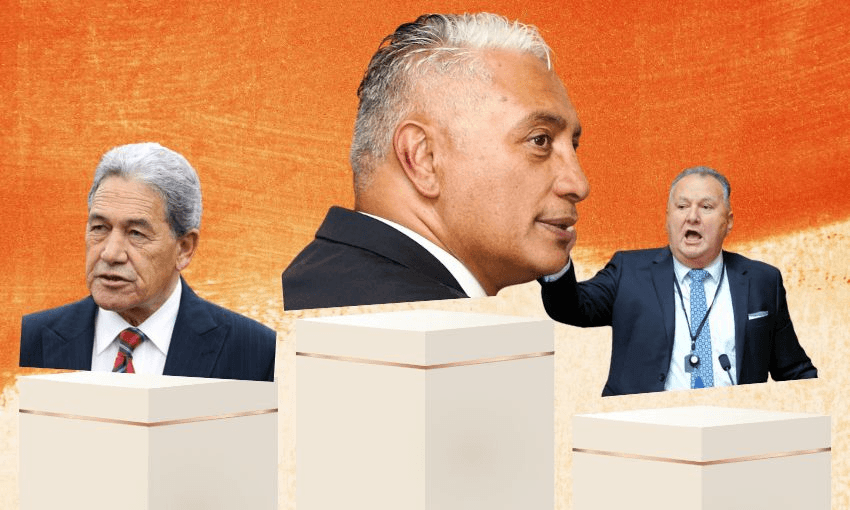
Ngaro, Blue and Skipworth are in good company. There is a long tradition of party hopping in Aotearoa, and NZ First in particular has had more than its fair share of switchers. Ngaro’s new leader, Winston Peters, began his long parliamentary career as a National MP in 1978. Thirteen years later, his vocal criticism of National’s controversial welfare reforms saw him booted out of cabinet. A couple of years later, in 1993, he made cryptic bribery allegations about a National donor and was kicked out of the National caucus. He subsequently resigned from parliament, forcing a byelection that he won as an independent in April. A few months later, in time for the general election in November, he announced the creation of New Zealand First.

New Zealand First has since served as a bastion for other disaffected MPs. Its current deputy Shane Jones began his political career as a Labour MP in 2005, and was promoted to cabinet in 2008. He had his fair share of controversies, eventually breaking away from Labour after unsuccessfully contesting the party’s leadership in 2013. After spending some time away from parliament working as a diplomat, he returned to the halls of power at the 2017 election as an MP for NZ First.
But it goes the other way too – in 1998, there was an exodus of sorts from NZ First following Peters’ (second) sacking from cabinet, which led to the collapse of the National-NZ First coalition. Tau Henare, Tuariki Delamere, Tuku Morgan and Rana Waitai – the party’s “tight five” Māori MPs, minus Tu Wylie – left NZ First, starting a new party called Mauri Pacific (except for Delamere, who joined a small party called Te Tawharau). Mauri Pacific dissolved in 2001, and by 2005 Henare was back in parliament, having switched his allegiance to National.
The long line of Labour leavers
Pre-dating Peters’ party hopping, former Labour MP Jim Anderton left the party he’d served for nearly 25 years over opposition to its controversial free-market reforms in 1989. A month after that, Anderton announced the formation of the NewLabour Party, and in 1990 he became the first MP in Aotearoa’s history to leave a major party and be re-elected as the founder of a new party. It was far from over for Anderton, who’d go on to form a coalition with Labour and serve as deputy prime minister to Helen Clark.
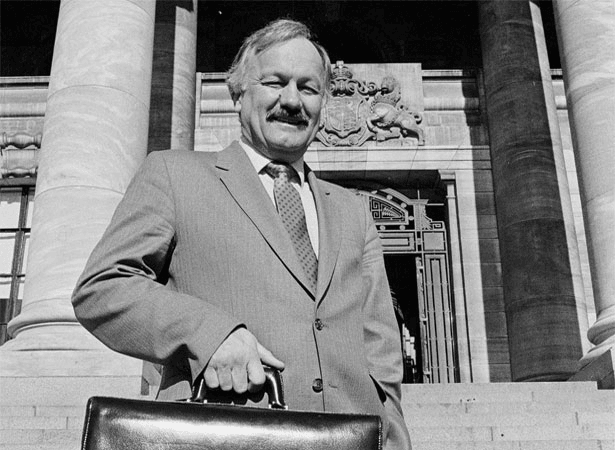
Also in 1990, Roger Douglas – the Labour finance minister responsible for the controversial Rogernomics free market reforms – left at that year’s general election. Three years later he formed the lobbyist group the Association of Consumers and Taxpayers with Derek Quigley. When Aotearoa adopted MMP in 1996, the association became the political party Act, and Douglas’s former Labour colleague Richard Prebble returned to parliament as an Act MP for Wellington Central – he had lost his seat as a Labour MP in 1993.
The 90s were a big time to be a Labour leaver. With the caucus’s right-leaning side thinning out with the loss of Douglas and Prebble, Peter Dunne followed suit, calling it quits in 1994. He served as an independent, before changing his allegiance to Future, then United NZ, then United Future. Despite posing for a public cup of tea with then National leader Don Brash in the lead-up to the 2005 election, Dunne returned to his roots by throwing his support behind a Labour-led government alongside Anderton.
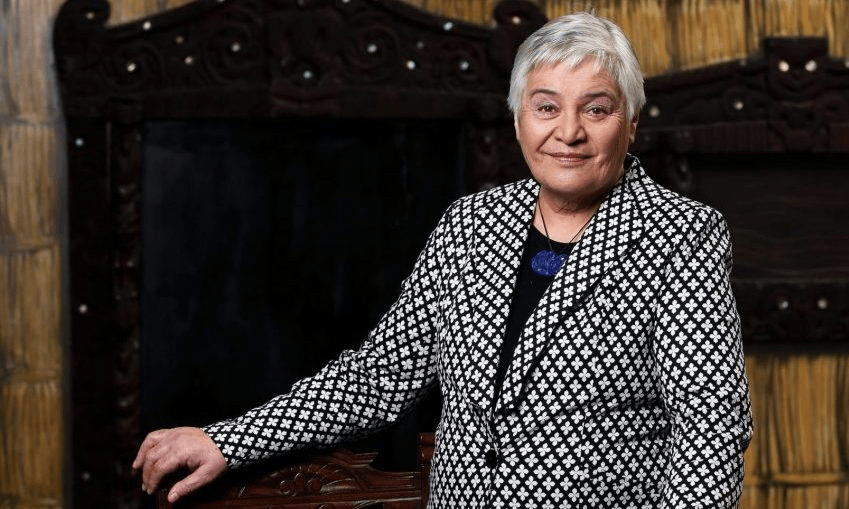
Another outspoken Labour defector was the late Tariana Turia, who left the party as a sitting MP in 2004 over the foreshore and seabed controversy. She won the byelection her departure sparked in Te Tai Hauāuru with her freshly formed Māori Party, and by 2008 had formed a coalition government with National, Act and United Future.
John Tamihere, who was a Labour MP for Hauraki from 1999-2002 and for Tāmaki Makaurau from 2002-2005, also left Labour and joined the Māori Party, though there was a lengthy gap in between. Having lost his seat in parliament at the 2005 election following a series of controversies, he was keen to make a comeback with Labour a few years later, but his regressive attitude to homosexuality put paid to that. After unsuccessfully running for the Auckland mayoralty in 2019, Tamihere announced he would stand for the Māori Party in Tāmaki Makaurau at the following year’s general election. Tamihere lost, but two years later he went on to become the president of the renamed Te Pāti Māori.
The most recent Labour-to-Te-Pāti-Māori convert was Meka Whaitiri, a minister in Jacinda Ardern’s government who resigned in May 2023 to contest that year’s election for TPM. It didn’t work out, as Whaitiri lost her Ikaroa-Rāwhiti seat to the new Labour candidate, Cushla Tangaere-Manuel.

The Māori Party has also seen its own hoppers. There was Hone Harawira, who, having criticised the party’s support of the National government, left in 2011 after two terms to form the Mana Party, and served a single term as its MP for Te Tai Tokerau. At the 2014 election, Mana merged with the Internet Party to form the shambolic Internet Mana, most notable for that one time its press secretary Pam Corkery (a party hopper in her own right, having served as an Alliance MP between 1996 and 1999) called a reporter a “puffed up little shit”.
A cautionary tale
While there are plenty of examples of party hopping working out OK for the hopper, who could forget former National MP Jami-Lee Ross, booted out of his party amid a swathe of allegations about his behaviour. He served as an independent for two years from 2018 before failing to make a comeback in 2020 with the newly formed Advance New Zealand, which had merged with Billy Te Kahika’s conspiracy-driven New Zealand Public Party. His messy campaign failed, leading to former Newshub presenter Tova O’Brien to utter these immortal words after the election: “You are out of National, out of parliament, out of Botany, your political career is in tatters.”