Why New Zealand can’t get a third supermarket chain

Over 80% of food in New Zealand is sold by two supermarket businesses. Image: Tina Tiller.
If you asked a multinational to open 100 New Zealand stores tomorrow, their first question would be: where? Right now, New Zealand doesn’t have the answer.
The most recent Ipsos issues monitor poll from November 2025 found that inflation/cost of living was the most pressing issue facing New Zealanders, with 61% of people identifying it as a concern. Food is one of the biggest costs of living and most people get most of their food at a supermarket, which makes supermarkets politically important.
Two companies, Woolworths and Foodstuffs, control about 80% of the New Zealand grocery market. That’s a duopoly. When customers have only two places to shop and suppliers have only two buyers to sell to, the big two can charge what they like and pay what they like, because where else is anyone going to go?
A 2022 report by the Commerce Commission found that “competition is not working well” in the New Zealand grocery sector and that supermarkets “have been able to achieve higher levels of profitability than we would expect in a workably competitive market”.
Since that report, political parties have offered a range of ideas for how to deal with it. The previous Labour government created the role of grocery commissioner, introduced new rules for how grocery chains deal with suppliers and a whistleblower tool for anti-competitive behaviour. The National-led coalition has introduced stricter penalties and stronger enforcement on fair trading and predatory pricing.
The government’s Fast-track Approvals Act, which passed in late 2025, included a faster consent process for new supermarket chains seeking to enter the New Zealand (super)market. Along with changes to the Overseas Investment Act and Resource Management Act, the government hoped this would encourage a third major supermarket chain to enter the market.
Nicola Willis announced a request for information to hear from potential grocery businesses, but many international chains, including Tesco, Lidl, and Aldi, declined to participate. There are still hopes that something could emerge, but the “express lane” doesn’t seem to be moving very fast, which has prompted some calls for stronger action.

The Green Party’s spokesperson for commerce and consumer affairs, Ricardo Menéndez March, was the first to call for the government to break up the duopoly by forcing Foodstuffs and/or Woolworths to split into two companies. “The government needs to break up the duopoly, force them to divest their subsidiary companies and target the corporate greed costing our communities,” he said in 2024.
New Zealand First released a developed policy last week which proposes to split up Foodstuffs into two nationwide cooperatives: one for New World and Four Square, and another for Pak’nSave. The policy doesn’t mention Woolworths. New Zealand First also wants to empower the grocery commissioner to make binding decisions and impose penalties.
Both Labour and National governments have considered the idea of breaking up the big two but ultimately decided against it. A 2023 analysis by MBIE suggested forcibly breaking up the supermarkets could cost as much as $3.8 billion over 20 years, mostly due to the loss of economies of scale. It could make wholesale and distribution costs higher, which could in turn mean higher prices for consumers.
The problem with breaking up the supermarkets is that it causes a whole bunch of hassle having to create new supply chains and corporate systems and branding and everything that goes into starting a supermarket chain, but in the end you still have the same number of supermarkets.
So what else is there? There has been some discussion about publicly-owned supermarkets in the wake of Zohran Mamdani’s New York mayoral victory but that idea is probably outside the Overton window. However, there is another overlooked option which could be both high-impact and politically feasible: zoning reform.
The reason for grocery high prices isn’t because New Zealand has a shortage of food. We produce a massive food surplus and have no trouble getting access to imports. The problem is a shortage of grocery stores. And the reason for that is a shortage of land to build them on. There aren’t many sites that are big enough for a supermarket and near enough customers to be viable. That makes them very expensive. Whenever a suitably large site does come up, the big two snap it up. If you ask a multinational to open 100 New Zealand stores tomorrow, their first question is going to be: where? Right now, New Zealand doesn’t have the answer.
Zoning rules make it harder to create new supermarket-sized plots of land. You can’t just buy up a bunch of houses and build a supermarket in a residential zoned area. Some councils have aesthetic requirements and others have rules to protect particular shopping districts from competition. For example, supermarkets in Wellington’s mixed-use zones must prove they won’t have “significant adverse impacts” on other shopping centres. Hamilton District Council tried to stop The Base mall by Waikato-Tainui on the grounds it would “adversely impact the important role of the Central City”.
Housing advocate Marko Garlick, writing on his personal Substack, proposed an idea called the National Policy Statement on Supermarket Development.
He argues that with a simple regulatory statement, the housing minister could order councils to make zoning changes that would instantly enable hundreds more supermarket-sized sites in appropriate areas.
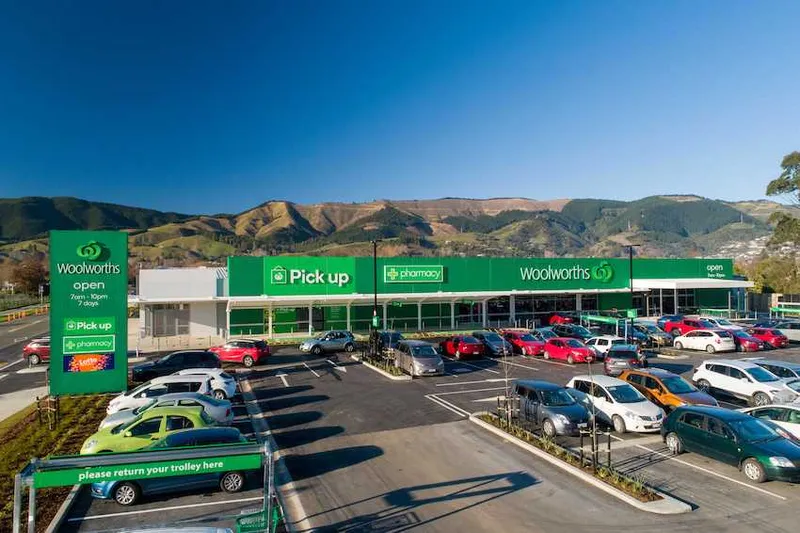
The minister could require councils to zone for a certain number of large-scale retail sites based on growth projections, remove all anti-competitive zoning rules, or allow smaller “metro” supermarkets as-of-right across medium-density residential areas. He could also state that supermarkets are a “matter of national significance” which should be considered in all consenting decisions.
Garlick’s concept essentially copies the architecture of the 2020 National Policy Statement on Urban Development by Labour’s Phil Twyford which required councils to zone for more housing and allow taller buildings in central areas. Outside of obsessive policy nerds, few people could name that policy, but they all saw its impact with increased development of townhouses and apartments.
When it comes to supermarkets, breaking up the duopoly makes a better campaign slogan. Fixing the zoning rules might actually work.

Joel MacManus
Joel MacManus is a senior writer for The Spinoff. He previously worked at RNZ and Stuff, and began his career at Critic Te Ārohi. His writing explores the political, economic and cultural systems that underpin modern New Zealand. He won the 2025 Voyager Media Award for Best Columnist, Opinion or Critique.


