Should we fret about public debt?

Image: The Spinoff
Depending on who you talk to, New Zealand is either drowning in debt or starving the country of the investment it needs because of a self-righteous fixation on driving debt down. Here’s an attempt to get to the bottom of it.
What’s all this I hear about Aotearoa being up to its eyeballs in debt?
Guess it depends how high your eyeballs are – but some reckon so, yes. On latest estimates, the Crown is about $238.8 billion in the red. That refers to the total amount of money borrowed and yet to be paid back (not to be confused with deficit, which is often referred to in debt conversations – that’s the amount by which costs exceed revenue, and is currently $24.7bn).
Holy shit. Are we gonna go bankrupt?
Relax, it’s fine. In fact, Fitch, one of the big three credit rating agencies, last week confirmed New Zealand was keeping its AA+ credit rating. Fitch rates debtors (borrowers, essentially) on how likely they are to pay a debt back. AA+ is not as good as AAA (which Australia, Singapore and a bunch of European countries have), but it’s a pretty safe bet if you want to lend the nation some money.
Why would I want to do that?
Bonds, babe. In extremely simple terms, large banks can lend money to governments (and other entities like councils and companies) through purchasing their bonds, and then on-sell them to fund managers, insurance companies, central banks and pensions companies. Bonds are considered a less risky investment option than shares – you probably already own some in your Kiwisaver. The idea is you’ll be paid back whatever you put in when the bond matures, plus regular interest. Entities with higher credit ratings generally pay lower interest rates, so borrowing costs less for them.
Gotcha. Other than it costing more for the government to borrow money, would a credit rating downgrade for New Zealand have any other effects?
Yep, it would probably mean higher interest rates for your everyday borrower (mortgages, credit cards, that kind of thing).
But the rating stands, so everything’s fine, right?
For now – in its commentary, Fitch emphasised the importance of “a return to surplus to stabilise and then reduce government debt/GDP in the medium term”, adding that “a weakening of the culture of fiscal responsibility would pose risks to the rating”. The commentary hat-tipped both major parties – “the incumbent National Party has emphasised fiscal responsibility, but the previous Labour government also announced some consolidation measures in its pre-election fiscal update” – but Nicola Willis was quick to suggest that a change in government next year would send our credit rating plummeting.
What exactly did the finance minister say?
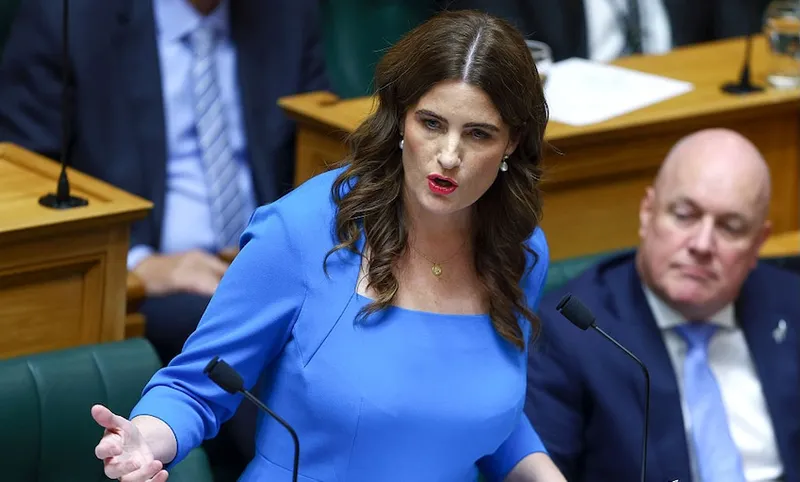
“Those who seek to ramp up government spending and debt should think hard about what that would do to New Zealand’s hard-won international reputation and to borrowing costs that ultimately fall on everyday New Zealand households, businesses and taxpayers,” Willis said in parliament last week.
Speaking to media earlier in the day, she said Labour leader Chris Hipkins had been signalling a “fiscally reckless approach” that departed from the “orthodoxy” of previous Labour finance ministers like Michael Cullen. “This is an altogether different path in which he seems to be walking a lot closer to Chlöe Swarbrick and her team of vandals, who want to gaslight New Zealanders into believing that if we just spent more and borrowed more, everything would be better.”
Goodness. Is she right – do the opposition parties want to ramp up government spending and debt?
In May, Labour finance spokesperson Barbara Edmonds said the current rule – that net core Crown debt shouldn’t exceed 50% of GDP – was appropriate. Hipkins, meanwhile, has not committed to the 50% debt cap, reported The Post, and has spoken favourably of borrowing to pay for infrastructure – though told media last week that “we do need to get the books back into surplus”. National and Willis want the debt-GDP ratio to get down to 40%, and ultimately end up in the 20%-40% range.
Wait, what’s net core Crown debt?
It’s the government’s primary debt indicator, comprising the total amount the Crown has borrowed minus the value of financial assets it owns. At the moment, net core Crown debt is at 42.7% of GDP, higher than it’s been for ages, and Treasury expects it to peak at 46% of GDP in 2027/2028. The current gross ratio, so not offset by Crown assets, is 47.7%.
Is that super high?
Depends on your point of view. It’s below the aforementioned 50% cap* set by then finance minister Robertson on the recommendation of Treasury in 2022, but a hell of a lot higher than it was in 2019 – just under 20%, in line with the Labour-Greens’ pre-2017-election budget responsibility rules. But as you may recall, something unprecedented happened in the intervening years: the Covid-19 pandemic. The Labour government ramped up its borrowing to fund its response and recovery, as did the rest of the world. Given New Zealand went into the pandemic with abnormally low debt levels, the rise was certainly sharp, but whether this borrowing was OTT is a matter of much debate.
*The cap was 30% when the New Zealand Superannuation Fund was included in the measure of the Crown’s assets, which lowered the net figure. The current government has stopped doing this, to some criticism.
I imagine the parties now in government think Labour went too far?
They do. “The previous government’s spending decisions during and after Covid have left New Zealand with a sea of debt and red ink in the government finances,” said Willis before the release of the 2025 budget, adding that almost $9bn a year was being spent on paying interest on that debt. That’s why “ongoing reprioritisation and fiscal restraint” has been a key focus, “because allowing debt to keep spiralling would threaten the livelihood of every New Zealander”.
Of course they’re going to say that, but what do others think?
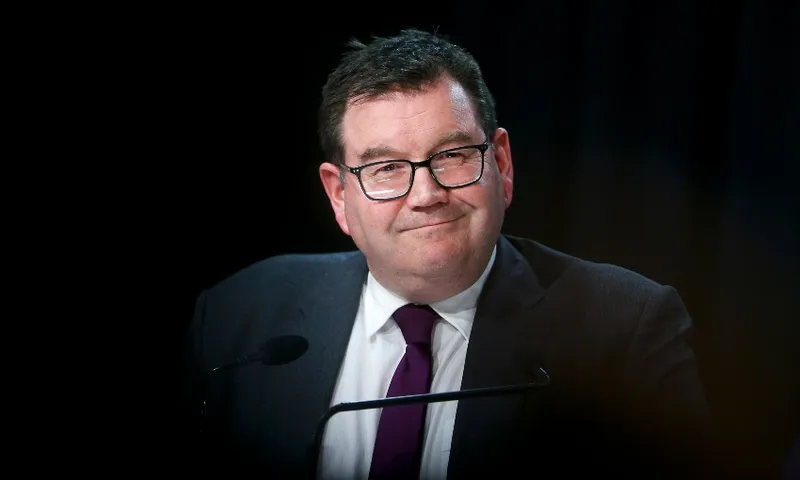
A long-term insights briefing released by Treasury earlier this month suggested the government overspent on the pandemic and ignored officials’ advice to rein in borrowing from 2021 on. “New Zealand is likely to experience further shocks in the future, and we now have less capacity to respond because debt is higher,” said the briefing. Robertson, in his newly released memoir, said he had no regrets – and has since pushed back on the idea that Treasury advised against more spending.
Hmm. So I presume the current government is reining in borrowing?
Not as such – borrowing has actually increased 11% year on year in the past two years, bringing New Zealand’s total debt to $238.8bn, reported the Herald last week. The government says more borrowing is necessary because of the structural deficit left by the previous government. Others say it’s because National backed itself into a corner by promising tax cuts it could only pay for by borrowing more.
Hmmmm. So what’s an acceptable level of debt for a government to have?
There’s a wide range of views among economists and other pointy-headed types. As Bernard Hickey wrote back in 2020, New Zealanders typically have a strong aversion to government debt, which “has underpinned every political debate, every fight over tax, and increasingly the very nature of government ever since Robert Muldoon took the nation to the brink of economic collapse under massive foreign debts”.
Almost everyone agrees that things have changed since then, because interest rates are much lower than the double-digit days of the 80s, and, well, everyone else is doing it. University of Otago economist Dennis Wesselbaum has pointed to research that says debt-to-GDP ratios above about 80% tend to be associated with lower growth, but ratios below that figure tend to be associated with increases in growth.
Another economist, Cameron Bagrie, reckons a 40-50% debt-to-GDP ratio is the new normal, because going any lower would have dire consequences for infrastructure investment.
Wait, what did you mean by ‘everyone else is doing it’?
As in the rest of the world, and at much higher levels too: the average gross debt-to-GDP ratio in OECD countries is 85%, while ours is 47.7%. Many countries’ debt is now above 100% of GDP, including the US, the UK and France, while Japan’s is above 200%. This rise in borrowing began as a means to recover from the 2008 global financial crisis, and then the Covid-19 pandemic, but hasn’t returned to the old levels, partly due to the rising expenses of an ageing population and the costs of mitigating and responding to climate change-related events. Bagrie has warned against comparing New Zealand with large countries, though, saying such comparison is meaningless.
But debt is bad… right?
Public debt is not inherently bad, no. It’s generally not advised to think about public debt like household debt, because unlike people, countries can live beyond their means – they can’t actually “max out the credit card”. Unlike people, governments don’t have credit limits, and they can raise taxes (though that’s politically unpopular) or print money (though that comes with a lot of fishhooks) to pay off debts. They also don’t tend to ever totally pay off their debts. Governments have been borrowing to finance large projects, especially infrastructure and war, pretty much forever.
But crazy high amounts of debt can’t be good?
Experts from the likes of the IMF and the WEF are getting nervous about the sheer scale of global public debt (around $US100 trillion) and the backdrop of geopolitical instability against which it’s set. A major source of that instability, one Donald J Trump, is not helping matters: he recently added $3 trillion to America’s already mind-boggling $37tn debt pile with a tax-cutting bill. Even Nobel Prize-winning American economist Paul Krugman, who’s traditionally been very relaxed about public debt, is starting to feel worried.
Crikey. But New Zealand’s not anywhere near that level?
No, it’s not. Commentators like Hickey and Max Rashbrooke, writing for The Spinoff in June, say the “fear-laden atmosphere surrounding public debt” in New Zealand has led to underinvestment in crucial infrastructure – and in people. Economist Susan St John, meanwhile, earlier this year wrote, “‘Lowering the debt’ has become a symbol of government’s fiscal rectitude: a fetish based on a narrow concept that has taken the place of thinking about what it means for people.”
New Zealand is so small though… surely it’s sensible to be a bit cautious?
Treasury reckons so, pointing to “high natural hazard risk, small size, reliance on commodity exports, and high borrowings from overseas” as examples of “vulnerabilities that make it riskier for us to take on high debt than some other countries”.
Earlier this year, the IMF emphasised the need for all countries to prioritise “reducing public debt and establishing and widening buffers to address spending pressures and economic shocks”. The prevailing view for some time is that Aotearoa needs a bigger buffer than most – about 40% of GDP – because of the aforementioned vulnerabilities.
Are there any counter views?
Economist Shamubeel Eaqub, talking to Justin Giovannetti of The Spinoff in 2020 after the news of the government’s impending borrowing bonanza broke, is one. “Not only can we handle the debt that we’re planning to borrow, but we can take on a lot more if we need to,” he said. “I’m not sure where this idea comes from that we’re so small we can’t borrow money. Some people are stuck in the 1980s when it comes to interest rates and borrowing.”
Discussing the Treasury briefing with economist Ganesh Nana last week, Hickey said its focus on debt cutting and big buffers “read like it had been written in 1991”. Nana agreed, calling it “an extreme disappointment”. Targeting government spending appropriately, by focusing on investment and productivity, would provide better reserves to withstand shocks than “stacks of cash”, he reckoned.
So debt is OK if it’s used for the right purpose?
That’s the idea. The government is currently borrowing to pay for its day-to-day operating costs (opex) rather than to invest in infrastructure (capex). “Government debt is low compared to our peers, but that doesn’t mean we should borrow money for opex,” Eaqub told Newsroom in May. “Debt for good-quality and necessary capex is good. Sustained borrowing for opex is bad.”
Kiwibank chief economist Jarrod Kerr agreed. “We have ample room to increase debt for productive purposes … and we must. We have a staggering infrastructure deficit that needs urgent attention.”
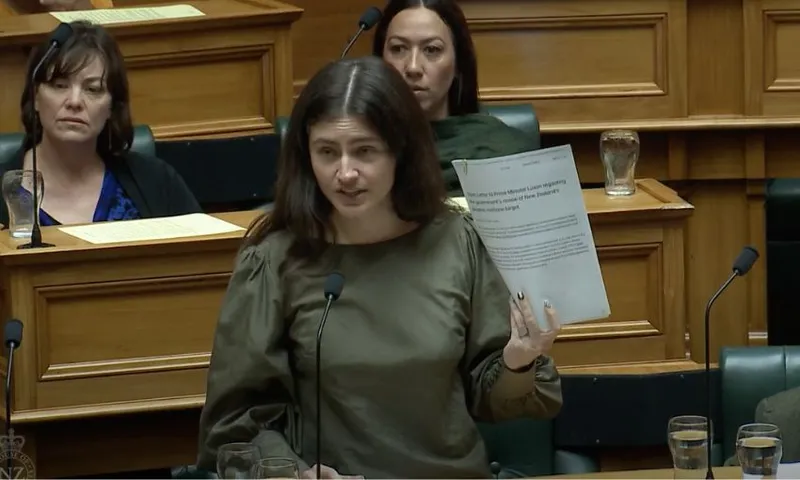
Then there’s “Chloe Swarbrick and her team of vandals”, AKA the Green Party, which earlier this year released a budget that proposed increasing net core Crown debt to 53.8% of GDP, then followed up with a fiscal strategy that modelled a range of scenarios, arguing that a debt ceiling could plausibly go as high as 122% of GDP – with increased debt paid for by the likes of a wealth tax and an inheritance tax. The strategy argued that the 40% buffer was far too high, “sufficient to cover approximately two Covid-19-size shocks occurring simultaneously, or more than 23 simultaneous Cyclone Gabrielles”.
Hmm. So, should I worry about public debt or not?
That’s entirely your choice. But if you are going to worry, it might pay to broaden the focus of your anxiety to take in New Zealand’s collective gross debt of $872.6 billion, which is likely to hit $1 trillion in the next three years, reported the Herald. That includes the aforementioned $238.8bn of public debt, but it’s not the biggest chunk: that honour goes to housing debt, ie mortgages, which currently sits at $377.4bn. Business debt takes up $136.5bn of the total, agricultural debt $62.8bn, local government debt $30.8bn, consumer debt $14.5bn and student loans $11.9bn.
In its recent report, Fitch pointed to New Zealand’s high levels of household debt (which combines mortgages, consumer debt and student loans and is currently around 90% of GDP) as a source of “macro-financial risk” to its credit rating. Our local government debt, meanwhile, is among the highest in the world and has led S&P to downgrade many councils’ credit ratings.
If that’s too overwhelming, maybe just focus on your own mortgage, student loan or credit card bill? That Afterpay debt you racked up? The $100 you borrowed from your cousin and are yet to pay back? The coffee your colleague shouted you last week and you haven’t repaid the favour? Really, the choice is yours.

Alice Neville
Alice Neville is The Spinoff's deputy editor. Her interests include politics, food and data-driven deep dives of all kinds.


