The case for New Zealand action against Israel

A face of triumph as John Walker wins gold in Montreal, and a face of despair from a man carrying an injured Palestinian child. Image: Joel MacManus
The 1976 Olympic boycott over our silence on apartheid left a black mark on New Zealand’s reputation. Our inaction on Gaza could leave another.
He threw his arms wide and reached for the sky. His long, dark locks waved in the air behind him. His face was etched with pain, relief and elation. He wore a black singlet and, emblazoned across his chest, was a silver fern.
The image of John Walker winning gold at the Montreal Olympics sits in the pantheon of New Zealand national pride – heart-swelling, jingoistic, straight out of a Steinlager ad. But go back to that race today and you’ll notice something strange. There were no black athletes in the 1976 men’s 1500m final. Twenty-nine African and Arab nations refused to compete at the games, in protest of the All Blacks’ tour of South Africa that same year – which, in their view, gave tacit support to the apartheid regime and breached an international commitment to cut sporting ties with South Africa.
The 1976 Olympic boycott is one of our country’s great shames – the time the international community came together, on the biggest stage, to condemn us. New Zealand’s crime was one of inaction. When we had an opportunity to say something about an abject evil, we chose silence. Now, almost every New Zealander would agree we were wrong to do so.
It’s a part of our past that stings particularly because our national identity has been so often defined by our moral stands on an international level. We were the first country to have universal suffrage, led the anti-nuclear movement, refused to automatically follow the US into Iraq or Vietnam, called for sanctions against Rhodesia and supported peacekeeping in East Timor. We stood against the appeasement of Hitler and championed the rights of small nations. Ever since the founding of the League of Nations and the United Nations, New Zealand has been an enthusiastic and idealistic contributor which believes, fundamentally, in the power of a co-operative international community – as former prime minister Peter Fraser put it in 1945, “to work in unison to realise the hope in the hearts of all of us, for a peace that would be real, lasting, and worthy of human dignity.”
New Zealand is a young nation, still less than a century into a status of full independent sovereignty. Every action, or inaction, we take contributes to the slowly forming identity of our nationhood.
Right now, at this moment, half a century after Montreal, we face another test. Another chance to show the world who we are. A man-made catastrophe is happening in Gaza. A humanitarian injustice created by the actions of a state.
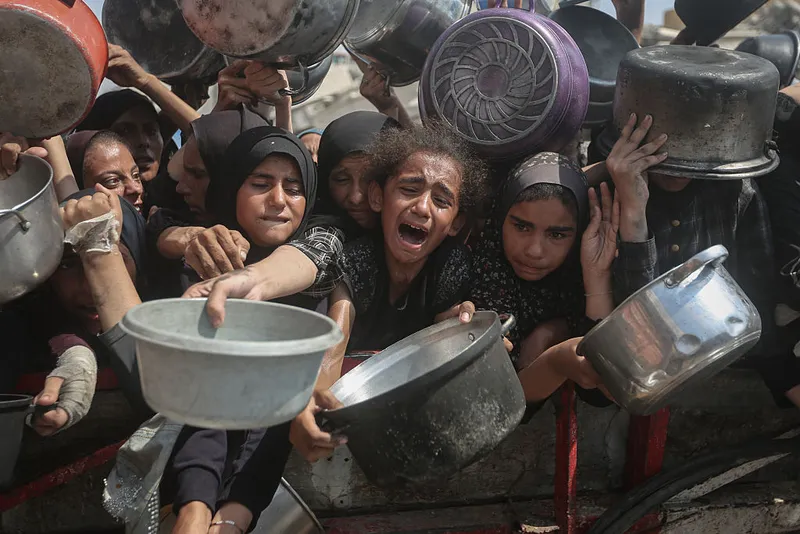
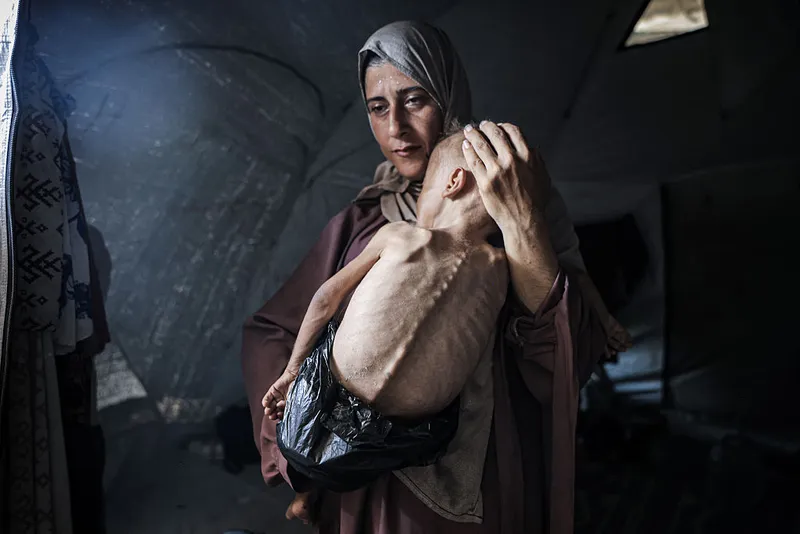
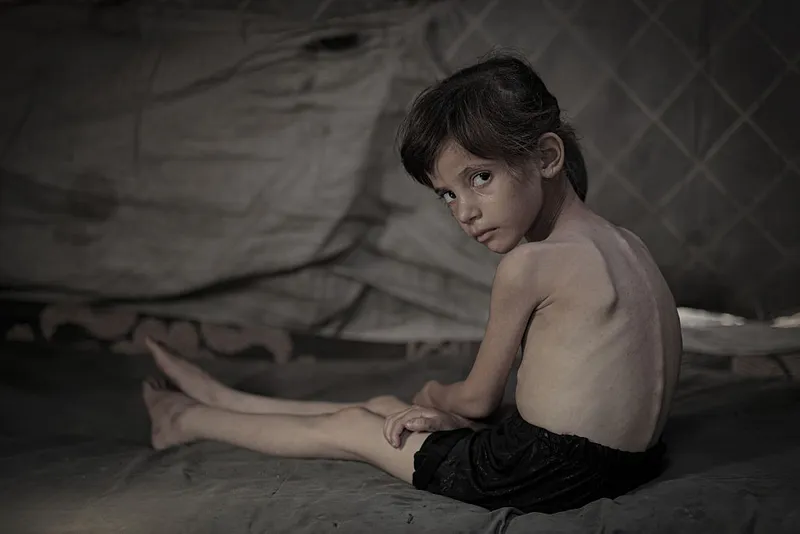
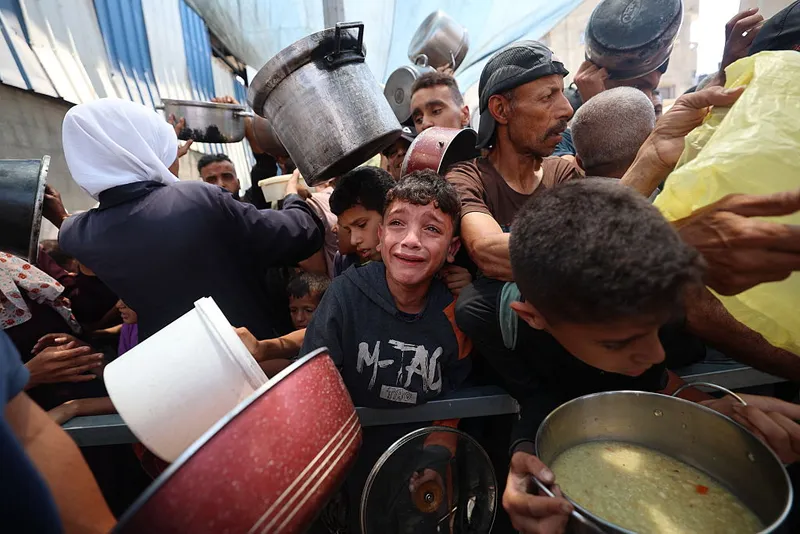
This past week, the Integrated Food Security Phase Classification, a United Nations-backed hunger monitor, officially declared a famine in Gaza affecting half a million people, caused by Israeli blockades on food and supplies. It was the first time the official criteria for famine had ever been met outside of Africa. UN secretary-general Antonio Guterres said Gaza’s famine was a “man-made disaster, a moral indictment, and a failure of humanity itself”.
As the crisis has stretched on, and the evidence for mass starvation has grown, an initially tepid response from the international community has grown into a swelling chorus of condemnation against Israel, including from many of our closest allies.
And again, New Zealand’s government is conspicuously silent.
On October 7, 2023, Hamas fighters in Palestine launched a coordinated attack against 21 Israeli communities, killing 1,195 people, including 795 civilians, and taking 251 people hostage. Two days later, Israel began bombing the Gaza Strip with the stated objective of getting the hostages back and destroying Hamas.
New Zealand’s position at the time, in the words of prime minister Chris Luxon, was: “We recognise Israel’s right to exist and right to defend itself. In defending itself, Israel must respect international humanitarian law.” In December 2023, parliament passed a motion “unequivocally condemning” the Hamas terrorist attack, and expressing “grave concern at the ongoing violence in Israel and the occupied Palestinian Territories”.
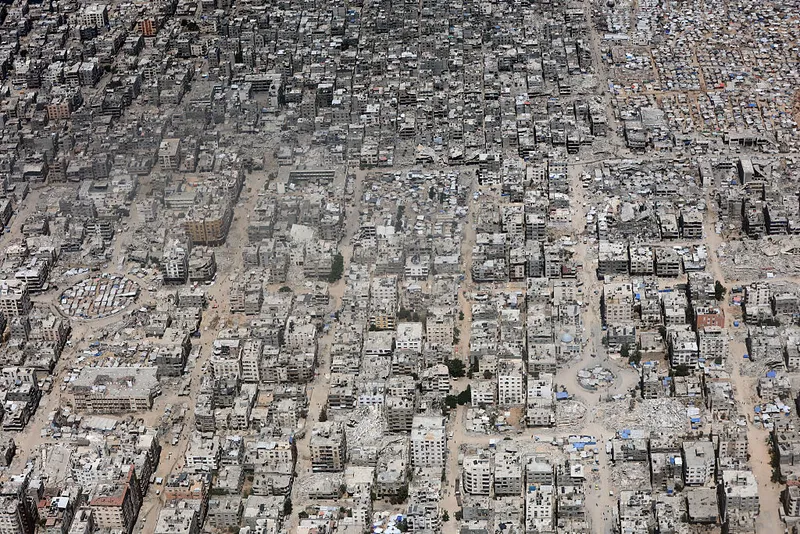
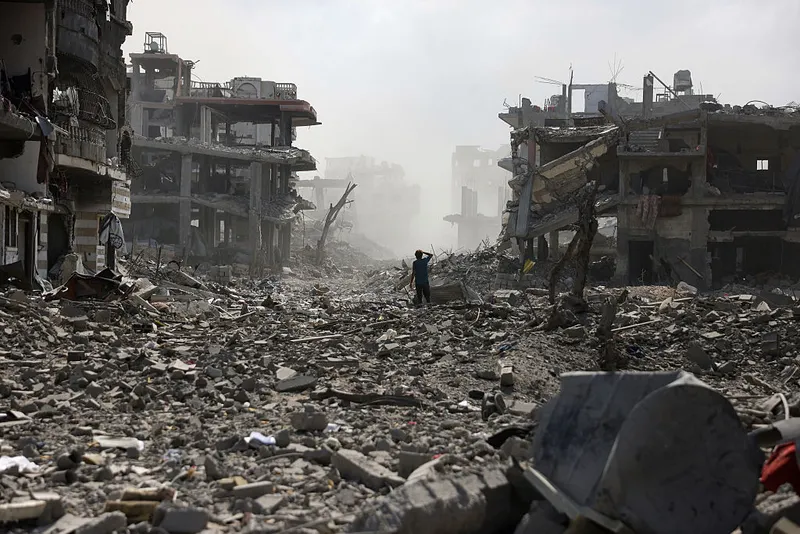
In the nearly two years since those initial attacks, more than 62,000 Palestinians have been killed – though medical journal The Lancet says that is probably an undercount, because thousands of people are buried under the rubble of buildings, and thousands more will slowly die of illness from treatable diseases. More than 50,000 children have been killed or injured. 70% of buildings and 92% of homes in Gaza have been damaged or destroyed. 98.5% of Gaza’s agricultural land is unusable. The UN’s World Food Programme says every child in Gaza under the age of 5 – around 320,000 in total – is at risk of acute malnutrition.
As for Israel’s stated objectives, many experts believe they have already come to pass.
In a recent open letter, 600 retired Israeli security officials – including a prime minister and two defence ministers – said, “It is our professional judgement that Hamas no longer poses a strategic threat to Israel.”
Israel believes 20 hostages remain alive in Gaza – 148 have been returned. The remainder are assumed dead. The open letter insists that bringing the remaining hostages home could only be achieved through a deal, not through further military action. In fact, continued bombing only puts the hostages at further risk.
And yet, the bombs keep coming. Civilians keep dying. Israeli blockades continue to prevent food and life-saving medicine from getting to Gaza.
In the criteria that Luxon set out, Israel has, undeniably, defended itself. But it is becoming increasingly clear that Israel hasn’t respected international law – and yet, New Zealand’s position has fundamentally not changed.
In October 2024, a UN Independent International Commission of Inquiry released a sweeping report investigating the war’s early months – excluding recent developments like the escalating famine – which found several of Israel’s actions constituted war crimes and crimes against humanity, including:
- The war crimes of wilful killing and mistreatment, and the crime against humanity of extermination, because “Israeli security forces have deliberately killed, wounded, arrested, detained, mistreated and tortured medical personnel and targeted medical vehicles.”
- The war crime of collective punishment due to Israel “tightening the siege of the Gaza Strip, resulting in fuel, food, water, medicines and medical supplies not reaching hospitals, while also drastically reducing permits for patients to leave the territory for medical treatment.”
- The war crimes of wilful killing and attacks against civilian objects for “the killing of five-year-old Hind Rajab, along with her extended family, and the shelling of a Palestinian Red Crescent Society ambulance and the killing of two paramedics sent to rescue her.”
- The crime against humanity of other inhumane acts for “the deliberate destruction of health infrastructure providing sexual and reproductive healthcare”.
- The war crime of rape and other forms of sexual violence, and the war crime and crime against humanity of torture, because “male detainees were subjected to rape, as well as attacks on their sexual and reproductive organs and forced to perform humiliating and strenuous acts while naked or stripped as a form of punishment or intimidation to extract information.”
It should be noted that the commission also found evidence of war crimes by Hamas.
In November, the International Criminal Court, which investigates individuals rather than states, issued arrest warrants for Israeli prime minister Benjamin Netanyahu and former defence minister Yoav Gallant after judges found there were reasonable grounds to believe that each had committed the war crimes of using starvation as a method and directing attacks against civilians as a superior, as well as the crimes against humanity of murder, persecution and other inhumane acts.
Then, there’s the big one. Genocide. In December 2023, South Africa brought an ongoing case against Israel at the International Court of Justice, alleging that Israel was committing genocide against Palestinians. The case was initially a solo effort, with several major states dismissing it or refusing to take a position. Over time, however, as more evidence has come to light, South Africa has slowly built a coalition of 30 states supporting the case, including Ireland, Spain, China, and the most recent ally, Brazil.
South Africa alleges that Israel has committed genocidal acts including: the mass killing of Palestinian civilians in Gaza, the infliction of serious mental and bodily harm, deliberately imposing conditions that cannot sustain life by forcefully displacing most of the population and blockading food and water, destroying the healthcare system, and preventing Palestinian births by blocking life-saving treatment needed to deliver babies.
However, genocidal acts are only one part of the requirements to prove genocide. The second criteria is that the acts must be “committed with intent to destroy, in whole or in part, a national, ethnic, racial or religious group.” As evidence, South Africa pointed to the rhetoric of several Israeli political leaders, including defence minister Yoav Gallant, who called Gazans “human animals” and said “Gaza won’t return to what it was before. We will eliminate everything”.
However, genocidal intent is extremely difficult to prove.
The International Court of Justice has never ruled that a state has committed genocide. The closest it has come was the Srebrenican massacre, the 1995 killing of more than 8,000 Bosniak Muslims by paramilitary units during the Bosnian War. In that instance, the court found that genocide was committed, but it did not find that Serbia was responsible or complicit – merely that it had failed to prevent the genocide from occurring.
In previous cases, the ICJ has set a high bar for proving genocidal intent – that it is the “only reasonable inference” for the acts committed. Philippe Sands, an international lawyer who has argued several genocide cases before the ICJ , explained what this means in a recent interview on The Ezra Klein Show: “If you have a double or triple intent – if you want to act in self-defence and you want to act to protect your national security, but actually, on the side, it would be helpful to destroy these people as part of a group you happen to hate – it’s going to be very difficult to prove that it’s the only reasonable inferred intent.
“That, in practice, is what has caused so much difficulty. My own personal view is that the definition is wrong. It sets the bar far too high. Psychologists that I speak to say that when human beings have an intent to act, they’re often motivated by multiple different intents. To say that you’ve got to have only one intent makes it very, very difficult to prove.”
The most telling moment in that interview was when, after an hour detailing the finer legal points of genocide, Sands concluded that the exact definition doesn’t matter: “Whether it’s a war crime, a crime against humanity or genocide, I’m less interested in that. It’s wrong, and it should not have happened, and it needs to be punished.”
And really, that is the most important thing. If New Zealand believes what Israel is doing is wrong, there are several ways to say that.
New Zealand has already taken some limited diplomatic actions against Israel. In July, foreign minister Winston Peters co-signed a letter with 27 other countries calling for Israel to end the war in Gaza and comply with international law. We’ve also issued sanctions against two far-right ministers in the Israeli government, and imposed travel bans against “extremist settlers”.
The next likely step is recognising Palestinian statehood. Luxon confirmed that Cabinet was considering the matter. It would mostly be a symbolic gesture, but according to University of Otago international relations professor Robert Patman, “it would significantly reduce the scope for diplomatic ambiguity or sitting on the fence”. So far, 147 of the 193 UN member states have recognised the Palestinian state. Within the last month, Australia, Canada, and France have announced plans to recognise Palestine at the UN General Meeting in September, and the UK has indicated it is likely to join them.
The government could summon the Israeli ambassador, Alon Roth-Snir, to parliament for a “please explain” over the ongoing blockades. New Zealand has done this previously, summoning then ambassador Shemi Tzur to parliament in 2010 in response to attacks on aid ships bound for the Gaza Strip. In 2022, Russian ambassador Georgii Viktorovich Zuev was summoned to hear New Zealand’s opposition to the invasion of Ukraine, but he refused to show. Last week, the UK summoned its Israeli ambassador to London over plans for settlements in the West Bank.
The step beyond that would be to expel the Israeli ambassador and recall the New Zealand diplomatic mission to Israel. That would essentially mean cutting all diplomatic ties, a serious gesture of displeasure, which 11 other countries have already taken, including Chile, Brazil and South Africa.
Parliament could also pass a motion condemning Israel’s actions – or even declaring genocide. Ireland, Turkey, Pakistan and the Scottish parliament have all taken similar steps.
Further action could include cutting all military ties with Israel. Last year, New Zealand forces trained alongside Israeli soldiers in a US-led military exercise; refusing to take part in future drills with Israeli involvement would send a firm message. Another option is an arms embargo. At present, New Zealand doesn’t have any restrictions on buying military equipment from Israeli companies – in 2019, for instance, the NZDF purchased bomb-clearing robots from Roboteam, a company which also supplies the IDF. That policy could be overturned by a government directive. Italy, Japan, the Netherlands, Slovenia, Canada and Belgium are among countries that have restricted the import and export of arms to Israel. In November, 52 countries, led by Turkey, signed an open letter to the United Nations Security Council calling for an arms embargo (mostly from the global south, though Norway was a rare Western backer).
Economic sanctions could take things even further; New Zealand could ban all imports and exports with Israel. This is a relatively small figure – New Zealand exports to Israel in 2024 were worth $16m, compared to imports of $178m – but would send a clear message. However, New Zealand typically only takes trade sanctions as part of broader UN initiatives and would be unlikely to act alone. Spain, Ireland and Slovenia have called for the suspension of the EU-Israel Association Agreement, and the Netherlands has suspended negotiations with Israel on a new free trade agreement.
Several activist groups, local and global, have focused their efforts on divestment, urging major investment funds, banks and universities to sell any holdings in Israeli government bonds, weapons companies, or businesses which benefit from settlements on the West Bank. Some institutions, including NZ Super Fund, Simplicity, and ANZ and Westpac’s Kiwisaver funds have already committed to varying levels of divestment. If it wanted to, the government could issue a directive requiring divestment from ACC funds, Super Fund and default Kiwisaver providers.
And possibly the strongest statement New Zealand could make would be to join the 30 other countries which have formally supported South Africa’s genocide case at the International Court of Justice.
All of these actions would require the current government to believe that what Israel is doing is wrong. And there is little evidence to suggest that is the prevailing view among ministers – or that they are motivated to act on it.
Luxon has spoken in strong terms in his personal capacity, recently saying, “Netanyahu has gone way too far. I think he has lost the plot.” As foreign minister, Winston Peters has been firm – if not bold – on Palestinian rights. The Act Party is the major pro-Israel bloc in government – leader David Seymour described their stance on Palestinian statehood as “sceptics”. Several Act MPs, most notably Simon Court, are outspoken in support of Israel. They’re joined by some National ministers, including Chris Bishop. Even if Luxon wanted to take a stronger stance against Israel, he may not have the political strength to do it without causing a serious fissure within cabinet.
Any international action against Israel would, of course, come with risks. Brazil recently copped a 50% tariff from the United States, which many speculated was related to its support for the South African case. The intention of this piece is not to argue for any particular action, but to point out that New Zealand could do much more. Compared to many of our closest allies New Zealand increasingly looks like a laggard.
Of course, in international relations the only law that really matters is “might makes right”. If Israel maintains US support it could plausibly continue its mission indefinitely, until it has conquered all Palestinian territory, causing untold harm to the more than two million people currently living and dying there.
Maybe New Zealand’s small voice, added to the growing international chorus, would do nothing. Maybe every song of solidarity will fall on deaf ears. But maybe it won’t. As Kate Sheppard said, “the rain that refreshes the parched ground is made up of single drops”. And the ground in Gaza has never been so parched.
The horrible echo in this travesty is the way it reflects on each country’s history. Israel, a Jewish state founded in the aftermath of humanity’s worst atrocity, is now inflicting profound suffering on another people. Meanwhile, South Africa, a state that once enacted systematic oppression, is leading the fight against it. And New Zealand seems determined to repeat the mistakes of 1976. That might be what’s most damning of all – that we are a country failing to learn from our past.

Joel MacManus
Joel MacManus is a senior writer for The Spinoff. He previously worked at RNZ and Stuff, and began his career at Critic Te Ārohi. His writing explores the political, economic and cultural systems that underpin modern New Zealand. He won the 2025 Voyager Media Award for Best Columnist, Opinion or Critique.


