New Zealand must move beyond empty statements on Gaza

Palestinians crowd at a lentil soup distribution point in Gaza City in the northern Gaza Strip on July 27, 2025 (Photo: OMAR AL-QATTAA/AFP via Getty Images)
Winston Peters may have signed a statement declaring the government was ‘prepared to take further action’, but after 21 months of nothing substantial, it rings hollow. Nothing will change without meaningful disruption, argues Cole Martin.
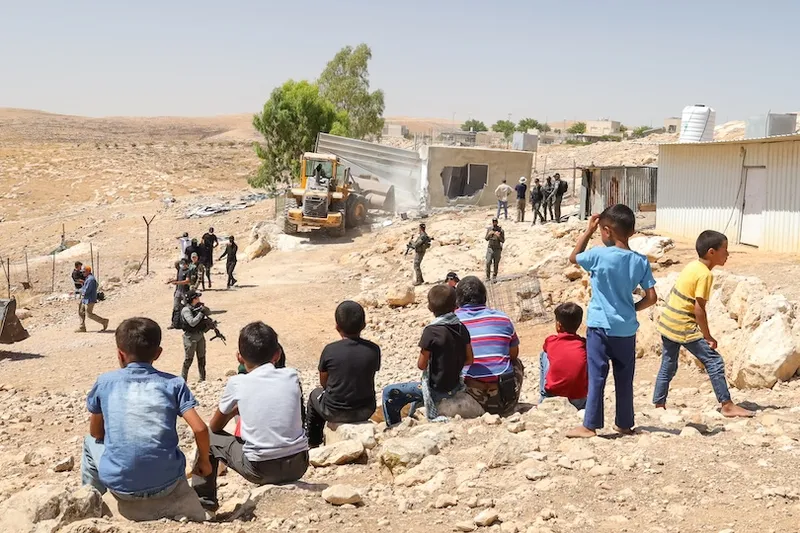
I’m a New Zealand journalist currently living in a refugee camp in the occupied West Bank, alongside families who were expelled from their homes by Israel’s violent establishment in 1948. Daily I witness suffocating checkpoints, violent settler attacks, arbitrary imprisonment with no charge or trial, a crippled economy, expansion of illegal settlements, demolition of entire communities, genocidal rhetoric, and continued expulsion.
That doesn’t even begin to cover the atrocities we are witnessing in Gaza.
Over 92% of homes have been destroyed; all 36 hospitals rendered partially or completely non-functional; well over 65,000 people killed, including 18,000 children; with entire families wiped off the civil registry. Israel has killed more than 850 people at food distribution points, while simultaneously blocking aid from entering the strip to intentionally starve the entire population. This has become a daily occurrence.
Yet in last week’s joint 28-government statement, it seemed collective punishment and genocide were a mere political nuisance. The claim that New Zealand’s government was “prepared to take further action” to support an immediate ceasefire is empty rhetoric when it has done nothing substantial to prevent Israel’s atrocities over the last 21 months.
The recent addition of two Israeli ministers to a list of 33 settler “extremists” facing travel bans is a wholly misleading gesture, ignoring how widespread and deeply embedded these systems are. Apartheid doesn’t stem from a few corrupt leaders; it is a de facto state policy driven by nationalism and supremacist attitudes across civil society.
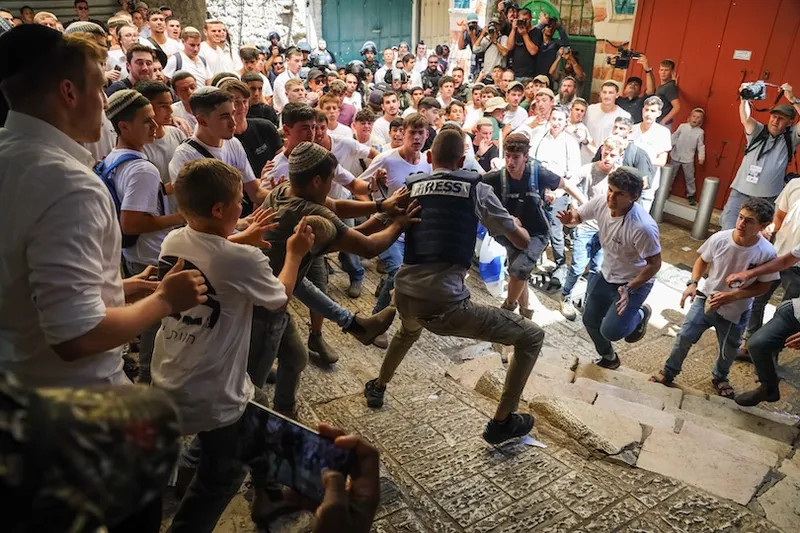
I’ve seen firsthand as settlers in army uniform assault Palestinian farmers, protected or aided by Israeli soldiers, while Israeli police ignore calls for help. When authorities finally arrive, settlers are acquitted, and Palestinians are arrested for protecting their lives and homes.
Last week I attended the funeral of two young Palestinians beaten to death by Israeli settlers. No one was charged. In 2022 beloved Palestinian Christian journalist Shireen Abu-Akleh was assassinated by Israeli forces. No one was charged. Last year I met Zakariya, who was assaulted and shot by a settler who continues to roam free, still armed.
Between 2005-2020, 91% of Palestinian reports filed with police were closed without indictment, according to Israeli human rights organisation B’tselem.
Palestinians, by contrast, face a 95% conviction rate in Israeli military courts, while settlers retain full legal rights and higher lenience in Israeli civil courts. I visited Ofer military courts last year, a revolving door of corrupt five-minute “trials” designed to funnel Palestinians directly into prison – 3,600, including children, are currently held without charge or trial, facing well-documented physical, psychological and sexual abuse.
Friends on the frontlines of peace-building and reconciliation work here have stressed how futile their work is without overwhelming international pressure. Change will not come from within, and no amount of dialogue will halt these systems until Israel is forced to come to the table with genuine intentions.
Meaningful disruption is essential. Economic pressure is one of the most effective tools of non-violence that we have at our disposal, and such sanctions are in line with our collective obligations under international law. It is the moral and legal obligation of all businesses and institutions to seriously reconsider any economic links or investments with Israel. Global economic sanctions played a pivotal role in ending apartheid in South Africa; the same tools must now be applied to Israel.
To deny these methods inevitably leaves oppressed communities with few alternatives but armed resistance, which disproportionately harms civilian populations. If we do not address the root causes, such scenarios will continue to happen.
It is hypocritical to condemn violence if we are not supporting alternative pathways. Palestinian civil society and individuals have spent decades committed to creative non-violence in the face of Israeli aggression; from court battles to academia, education, art, demonstrations, general strikes, hīkoi, sit-ins, civil disobedience. Google “Iqrit village”, “Great March of Return”, “Tent of Nations” – these are the stories that don’t make catchy headlines.
No form of peace can exist within an active system of domination. To talk about peace without liberation and dignity is to suggest submission to a system of displacement, imprisonment, violence and erasure.
If we’re serious about peace, we cannot continue to ignore the root causes of this violence. Our government must act.
Cole Martin
Cole Martin is a New Zealand journalist based in the occupied Palestinian territories.


