Windbag: Why the Taxpayers’ Union endorsed this Green Party policy

Wellington mayoral candidate Alex Baker is campaigning on a switch to land value rates
They say politics makes strange bedfellows, and there are few stranger pairings than this.
Wellington is the remnant of a failed startup. The New Zealand Company, which established the city, was a for-profit enterprise with a clear business model: sell land to wealthy people, and use the proceeds to bring working-class people to New Zealand for free. In theory, the mix of capital and labour would work in perfect harmony: founding businesses, working the land, and creating a functioning economy that would improve everyone’s property values.
So what went wrong? There are many factors, but one of the most important was absentee landlords. Many investors stayed in London, hoping the value of their land would increase due to the work of others, while contributing nothing themselves. The New Zealand Company brought more labourers than could be employed by independent businesses, so it had to provide them with work, which eventually drove the company to bankruptcy.
From the very beginning of British-style property ownership in Aotearoa, land banking has been one of our biggest problems, dragging down productivity and hindering the growth of our cities. It’s still the case today. There are empty lots and surface car parks in the centre city, underdeveloped sections in city-fringe neighbourhoods, and a single family owns almost all of Wellington’s remaining greenfield land.
The Wellington Green Party is targeting this issue with a policy to change the rates system to be based on land value rather than the current combination of the capital value of buildings and land. Several other councils have already adopted land value rates, including Nelson, New Plymouth, Napier and Whangarei.
The Greens found an unlikely ally in their campaign last week when the policy was endorsed by the Taxpayers’ Union – which even the Taxpayers’ Union seemed surprised by. “The Greens are right on this one,” executive director Jordan Williams said in a statement. “Taxing land, rather than housing and development on land, creates the right incentive of avoiding land banking or not putting land to its most productive use, such as housing.”
Williams went even further than the Greens’ policy, calling for local government minister Simon Watts to embrace land value rates nationwide, saying he “should reach over the aisle and grab this phenomenal policy”.
Alex Baker, the Green-ish mayoral candidate who isn’t officially endorsed by the Greens, is also campaigning on a switch to land value rates. This story in The Post implies it’s suspicious that Baker and the party could have come up with the same idea separately. It’s not. Land value taxes are the big current thing in the Yimby movement. Henry George is Sabrina Carpenter for online urbanists.
“The current setting is inefficient,” Baker told The Spinoff. “It discourages capital investment, business, new houses and intense developments and encourages the accumulation of under-utilised land. I simply want to change to a system that is more efficient. The long-run impact of that is improved housing supply, which will mean rents come down and quality lifts, which will attract more people and bring down rates.”
The alliance between Wellington’s Greens and the free-market TPU is rare, but it’s not the first time it has happened. The TPU was strongly supportive of the zoning reforms in last year’s District Plan, which were led by Wellington’s progressive councillors. This ability to form cross-partisan consensus is one of the things that has made the Yimby movement so successful. The TPU sees zoning reform as giving more property owners more rights to develop their land, and land value rates as an economic incentive to do so. The Greens see it as a way to improve housing supply, quality and affordability. The motivations might be different, but the outcomes are the same.
“The TPU-Green coalition is exactly where I see myself as a candidate,” Baker said. “It’s a free-market change. A more efficient tax. But it will result in change, which is something that conservatives who don’t want the city to grow or improve will always be against. I expect over time the business community will get aligned with me, because no amount of taking a blunt axe to the council will improve outcomes for the city.”
The two conservative councillors who have put up their hands for mayor, Ray Chung and Diane Calvert, both oppose a switch to land value rates. Calvert said debating rates reform was “like moving deck chairs while the ship takes on water. The real problems run deeper and we need to fix those first. Chung told The Post the policy was “built on a false ideology that anyone who gets ahead should pay more” – which is not an accurate analysis of how land value rates work.
The TPU specifically called out Chung in its statement. “It is sad to see Ray Chung further disgrace himself by coming out against this policy. We’d urge him to reconsider and put policy ahead of partisanship,” Williams said.
Andrew Little, who is widely considered the frontrunner in the Wellington mayoral race, said he was open to the idea. “Land value-based rates is an idea worth considering,” Little told The Spinoff. “We can also use rates loading to incentivise better land use, and we should do so to make sure Wellington gets proper housing density in key areas.”
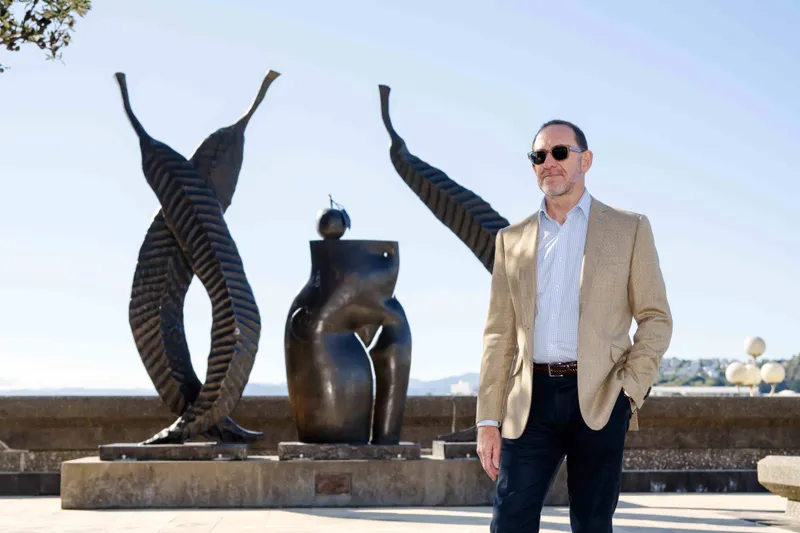
Baker is claiming Little’s soft support as a victory. He doesn’t believe Little would be talking about land value rates if it weren’t for his and the Greens’ policy. Baker said he entered the race after Tory Whanau left because he felt someone needed to drive the debate from the progressive side. “I wasn’t seeing anything from any other candidates that indicated they would turn things around,” he said.
Wellington City Council considered a switch to land value rates last year as part of its rates review, but basically decided to put the idea in the too-hard basket. In the short term, that’s probably a fair approach. It’s looking increasingly inevitable that a Wellington supercity will be back on the table soon. Porirua and Hutt City voters will both vote in non-binding referendums on amalgamation at this year’s election, and the region’s chief executives seem to be largely united on the idea.
It probably doesn’t make much sense for Wellington City Council to upend its rating system right now, given the likelihood of such a major restructure in the next few years. But with the possibility of major reform happening soon, this is the perfect time to have the debate.

Joel MacManus
Joel MacManus is a senior writer for The Spinoff. He previously worked at RNZ and Stuff, and began his career at Critic Te Ārohi. His writing explores the political, economic and cultural systems that underpin modern New Zealand. He won the 2025 Voyager Media Award for Best Columnist, Opinion or Critique.


