

Bariatric surgery is inaccessible for many in Aotearoa who need it. Health researcher Ash Gillon asks why.
Māori are among the most surveilled and measured peoples when it comes to our bodies. We are weighed, measured and disciplined against standards that were never made for us. The message is relentless: We are too big, too fat, too sick, too much.
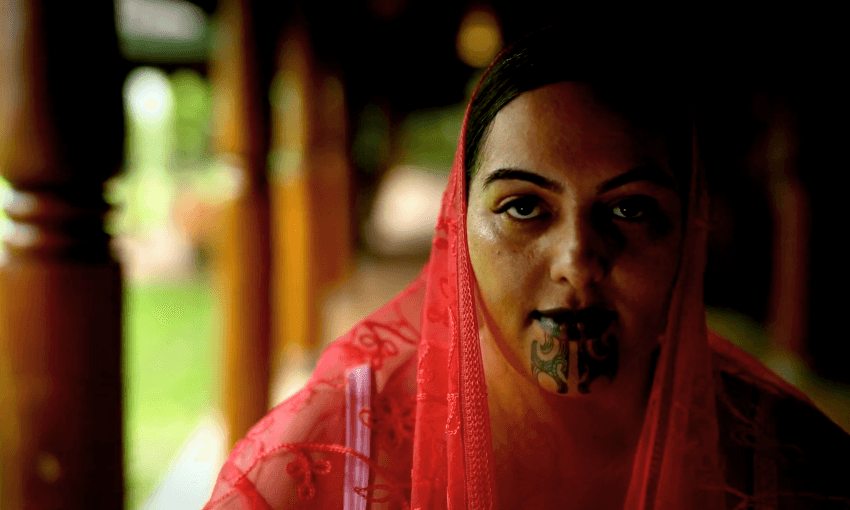
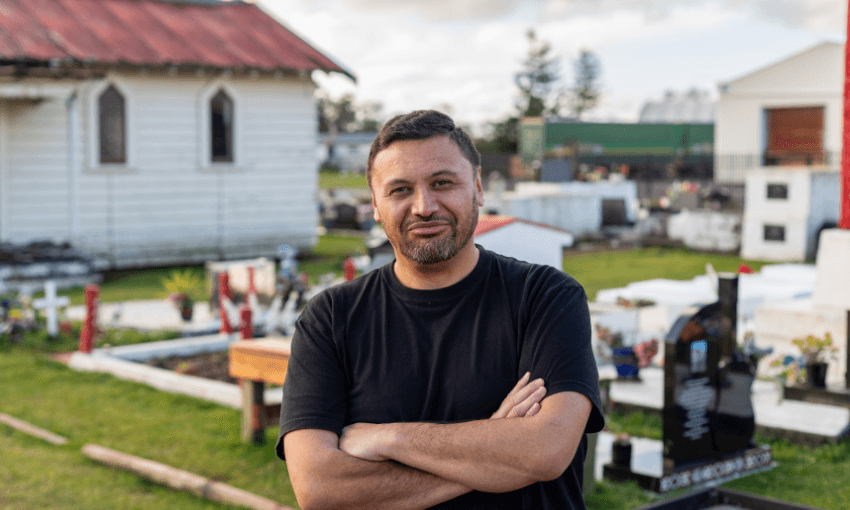
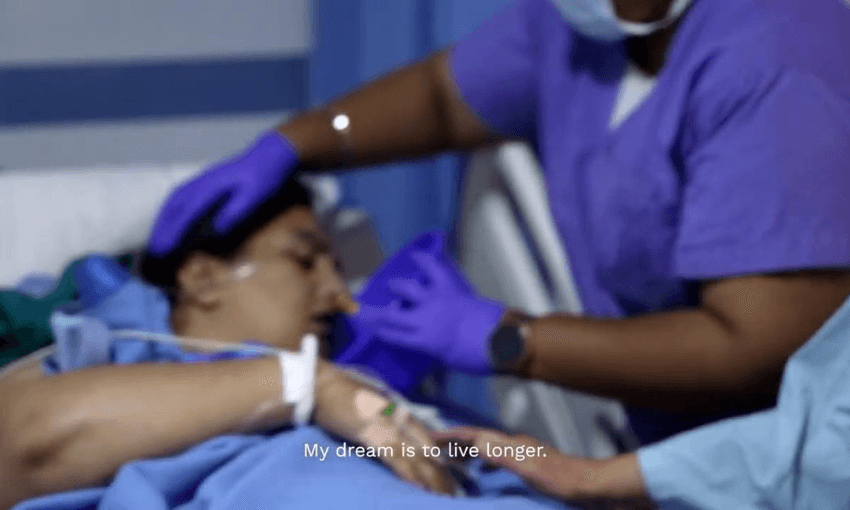
Pukunati: Lose Weight or Die is a raw, te reo-rich documentary series following Roihana and Faren as they travel to India for bariatric surgery they cannot access in Aotearoa. The series opens up necessary kōrero around health inequities and a fat-hating world that makes life inaccessible for Māori, positioning surgery and weight loss as the only pathway to survival. Their journeys are emotionally compelling: we see their mamae, humour, whakapapa, and courage to confront the unimaginable hardship they are facing. The series captures the intimate realities of living in bodies that are devalued in the world, and highlights Roihana and Faren’s vulnerability and their determination for a future that is meaningful for them.
It also raises questions: why do Māori have to leave home and fly across the world to access surgery they feel provides them an opportunity to have a future? Why do we accept a public health system that refuses to ensure accessibility to care and health options for Māori? What is obscured from view when the only narrative (re)frames Māori bodies as problems to be fixed, or problems left to die?
Te taumahatanga o tāmitanga
The inequities for Māori are blatant: Pākehā do not encounter racism, they live longer and face less chronic illness than Māori. Our health system continues to privilege Pākehā.
Bariatric surgery in Aotearoa is rationed through restrictive criteria, privileging the “compliant” or “low risk”. In practice, super-fat Māori – those who would likely benefit the most from this surgery – are denied publicly funded access and often turned away. This forces them to take out loans, withdraw their Kiwisaver, or travel overseas where the cost of surgery is more manageable.
On the flip side, fat Māori have described to me throughout my research how they are often told they are too fat for surgery that they need, or their risk profile made them unworthy of public investment. Some were instructed to lose weight before qualifying for surgery, some were offered bariatric surgery to help them lose weight so they could be eligible for the actual surgery they need – a counter-intuitive issue that problematises their bodies, and still offers to shrink them. These criteria and policies create a hierarchy of bodies. There are value-laden judgments within the weight-related health space that influence whose lives are worth changing. This is not simply medical pragmatism, it is a system of values that ranks whose lives are worth the most.
Publicly funded bariatric pathways frequently exclude the very people they claim to help. A system that tells us to lose weight before qualifying for weight-loss surgery, or that we are too fat for weight-loss surgery is a cruel paradox. For Māori, especially wāhine Māori, this compounds long histories of being measured, restricted, and shamed by colonial medicine. Our tinana become sites of judgment rather than care, and our hauora is reduced to a number on the (inaccurate and debunked) BMI chart.
Pukunati does not shy away from these structural issues, the decision to travel to India – as Pukunati shows – is a desperate response to a system structured around scarcity, rather than abundance. Roihana and Faren navigate endless barriers at home before deciding they must leave.
A fat-hating world
Faren recalls being called “pukunati” and “poaka” as a child, carrying the mamae of those words into adulthood. Roihana speaks of journalism’s pressures and kai as comfort in a world that (mis)positions his body as failure.
These narratives echo the stories of fat Māori: the delay in doctor’s visits because every symptom is dismissed as weight-related; the misdiagnoses; the internalisation of the fat-shaming; the years of dieting; ridicule; and exclusion.
What these stories reveal are the systems shaping our experiences: colonisation, racism, and fatism intersecting and weaponising our body diversity. To seek bariatric surgery within the context we live in is not only about survival – it is about navigating a world that insists fatness is incompatible with worthiness and mana.
Mōmona does not simply mean fat, it also means rich, plentiful, fertile, nourished, nourishing, abundant, thriving. Our whenua, moana, tinana, whānau and puku, can all be mōmona. To be mōmona is not inherently negative; it is to be full of life.
Our tīpuna saw puku as more than an organ – it was a site of wairua, emotion, decision-making, knowledge generation, understanding, and intergenerational memory. To be mōmona is to be sustained by kai, whenua, whānau, wairua, and more. Yet colonisation, biopolitics, and biomedicalisations, have collapsed mōmona into deficit.
Where our tīpuna saw mōmona as abundance and thriving, westernised health systems see obesity as pathology. This clash is not merely semantics, it shapes whose lives are valued, disregarded, or exported offshore for a chance at survival. Pukunati captures these tensions – Pou Temara reminds us of the tapu o te puku, even as the narratives frame fatness as something to cut away.
The willingness of Roihana and Faren to share their journey is courageous. Their stories remind us of the lengths Māori must go to in order to survive within a system that does not value our lives equally. Pukunati is not only a health documentary; it is an indictment of inequity.
Yet, we must be critical in not letting survival be the only story. If surgery and weight loss remain the sole visible narratives, deeper, complex inequities will persist and harmful systems are reinforced.
Fat Māori live full, complex, meaningful lives – lives of joy, resilience, whanaungatanga, and mōmona. These abundant stories must also be told if we seek to challenge the discourses about us and enable our flourishing.
Hei oranga, he mōmona
What would an Aotearoa look like if Māori lives, in all our forms, were truly valued?
What does dismantling our health systems that ration and restrict care according to colonial logics of worthiness mean for us? It would mean recognising the structural violence of fat bias and fat stigma as a public health crisis in itself, as the structural determinant of health that it is, rather than as a personal failing. It would mean centring mōmona as a core component of hauora, grounded in abundance, nourishment and intergenerational strength.
To be mōmona is to be sustained, by kai, whenua, whakapapa and all that makes up our complex worlds as Māori. It is to re-imagine hauora accessible for all Māori, as we are – fat and all.
At its core, Pukunati is about aroha: Aroha ki te tangata, whānau, me te oranga. It’s about the determination to carry on for love, against all the challenges. That deserves honour. But it also exposes entrenched inequities that make such journeys necessary. By bringing these stories to the screen, this series demands we confront a health system that deems who is worthy of care in Aotearoa, a system where Māori must leave our whenua to purchase survival.
Pukunati: Lose Weight or Die premieres on Whakaata Māori on tonight at 7.30 pm and all episodes are available to stream on Māori+.