
Earlier this year, a ‘spending slump’ on Karangahape Road had business owners worried. Has anything changed on Auckland’s favourite strip?
In the depths of winter things seemed grim for Karangahape Road. They were, arguably, grim across the city (Aucklanders don’t handle winter well) but the strip appeared to be doing it particularly rough. Despite our gentle climate, the rhythms of Tāmaki Makaurau are distinctly seasonal. By the time spring turns into summer, everyone loves the city again and even the economy is – maybe, possibly, hopefully – turning a corner. Three years ago it was declared one of the world’s “coolest” streets, but by 2025 reports of a “spending slump” raised concerns.
Foot traffic is still lower than pre-Covid numbers and turnover (revenue earned by businesses) is down too, around 8-9% lower than this time last year, according to Jamey Holloway, general manager of the K’Road Business Association. He notes Marketview’s card data, where the turnover figure comes from, doesn’t account for cash or the direct business-to-business transactions. “It’s been really bloody tough, but people have mostly done their rationalisations and they can see it’s just slowly clawing its way back and ready to kind of take off.”
Are the vibes better? “It definitely feels that way,” says Holloway. “I think that the bigger picture is that people are sick of doom and gloom.” But economic improvement and optimism aren’t evenly spread. “There are some people that are just hurting and not thinking about much more than survival,” Holloway says. “There are some people that are actually thriving right now, and they know they’re gonna do even better.”
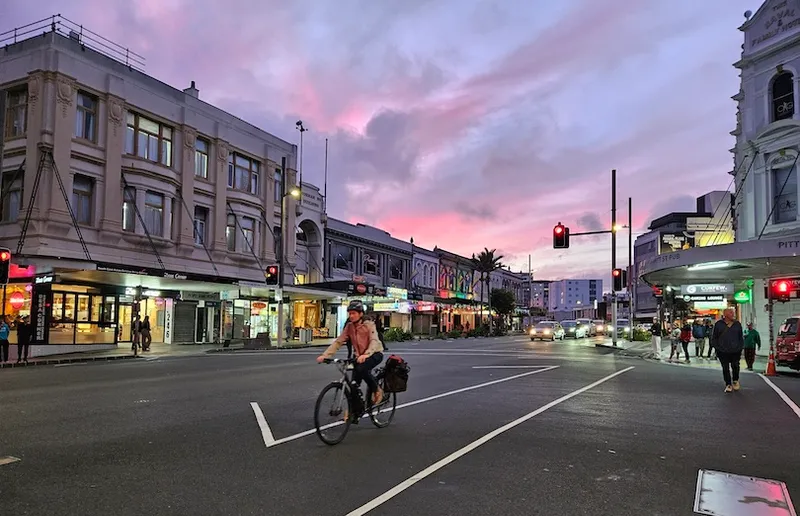
Whammy Bar had the worst winter in recent memory, says co-owner Lucy Macrae. “ It was hard! People simply haven’t had the disposable income to go out, and that’s completely understandable with the state of the world.”
But there’s also been a distinct, visible effort from the neighbourhood to shake off its economic hangover, put some lipstick on, fluff the hair and get back to it. Recent months have seen a surge of activity. “There’s also been a real community-wide effort to make Karangahape Road feel vibrant again,” Macrae says. “Events bring people onto the road and add value to what local businesses are already doing. They work with the community and everyone benefits.”
Taking things out onto the street, new markets have been established, including the weekly K Road Market and the FAM (Food Art Market) on the first Saturday of each month. Much of K Road’s social fabric takes place on its footpaths. “We’ve got really good relationships with all the council enforcement team,” says Holloway. “Some things – like street posters – that are non-compliant in other neighbourhoods are accepted up on K Road. “Like the posters on the poles. That would be a faux pas at the bottom of Queen Street. It’s not here.”
Asked to define business on K Road, he says “it’s all hospitality” one way or another. Half of the transactions measured there are going to somebody who lives within two kilometres of the strip. There are more amenities catering to residents; long-running Asian supermarket and foodcourt Lim Chhour has been joined by the 24-hour In & Out Supermarket on the corner of Upper Queen and new dairies have opened down the road. Even the laundromat got a recent facelift.
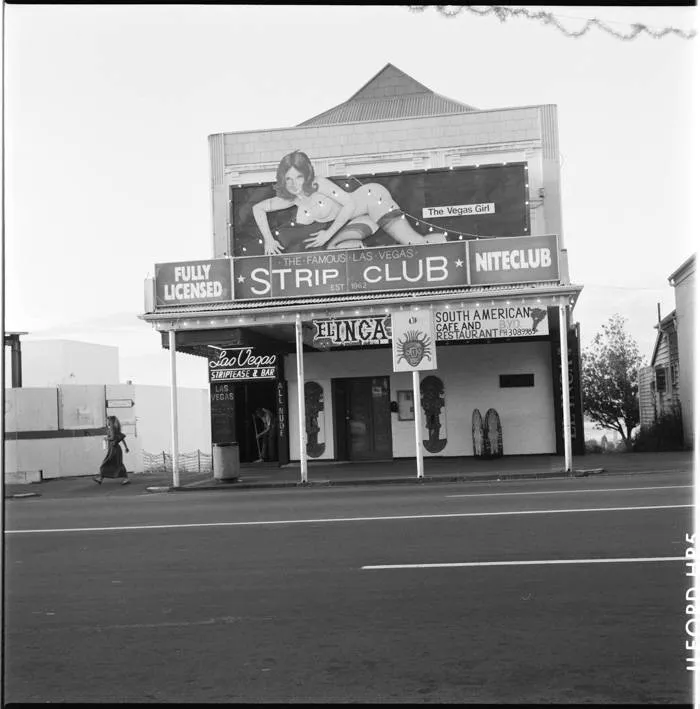
The Las Vegas girl enjoys regular touch-ups too. The precinct has historically catered to assorted appetites (even amid gentrification) and its distinct culture of entertainment remains an important part of the evolving neighbourhood.
“It’s great to walk along Karangahape Road and see the planning come to fruition,” says Annah Pickering, regional co-ordinator of the Aotearoa New Zealand Sex Workers Collective. “We’re part of advisory groups with council, Auckland Transport and City Rail Line around the places that won’t affect our industry; it’s important that our clients can come and park.” Pickering says sex workers have had a challenging year. “Economically, it’s been hard for a lot of people in our industry,” she says, and that includes everyone from dancers to full-service sex workers. “Where our local, street-based sex workers are concerned, it’s really, really tough.”
Comparatively affordable buildings helped shape K Road’s role in the city’s subcultures and underground. “There’s been heritage restrictions and underinvestment, which creates opportunities for artists and creators,” Holloway says. “That’s the unique selling proposition of Karangahape Road.” The affordability of rental spaces is critical in keeping that culture alive. “It’s huge and it’s going to be an ongoing challenge,” says Holloway. “Not just for here; it’s vital for Auckland.”
Tāmaki’s Makaurau’s independent, underground fashion scene still has a strong foothold in the neighbourhood; Te Wiki Āhua o Aotearoa took place twice this year, and secondhand and vintage shops continue to dominate the strip’s retail mix. The old Leo O’Malley spot, which hasn’t had a permanent tenant since AS Colour vacated in 2024, has been taken over by Crushes boutique, which has just relocated from its previous space a few doors down.
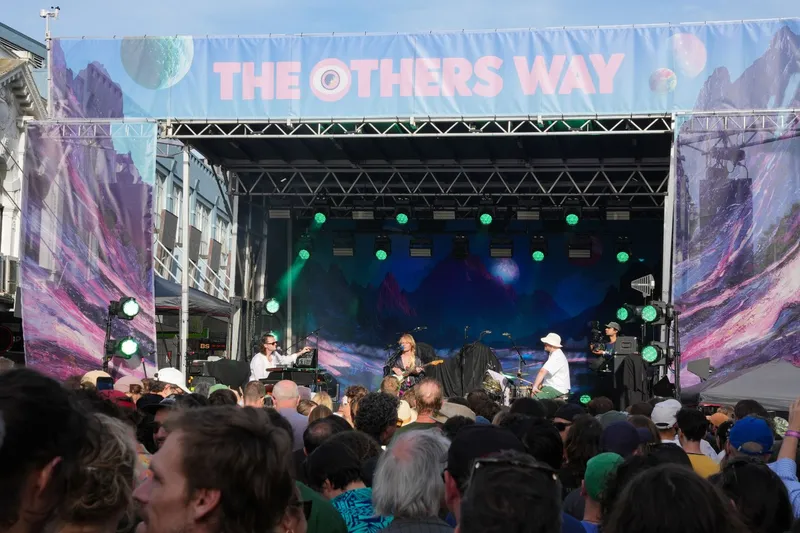
Last weekend saw the return of The Others Way festival to nine venues around the neighbourhood. For Whammy and its sibling venues Double Whammy and Public Bar, “It’s always a great night economically,” says Macrae. “We need that festival, for Karangahape Road, for the music ecosystem, and for a vibrant Auckland city. “It brought people out in force and created a real sense of momentum. I think it also showed what the festival could be. With more investment and buy-in, it has the potential to grow even further and become an even more significant economic touchpoint for the area and for the city.”
The spring-summer period has been much more positive for Macrae and her co-owners’ venues. Putting on free mid-week shows at Public Bar – a response to the rough winter trading – helped encourage a different rhythm. “It’s been amazing to see people still showing up and investing in live music. It’s also proved that going out and enjoying culture doesn’t have to be limited to late-night Fridays and Saturdays.” They tend to see a significant lift from late January to the end of March. “There are festival sideshows, more people out and about, and everyone’s general mood improves. It’s great – people need to feel happy and connected, and the city needs to feel busy and alive.”
Auckland’s nightlife hasn’t been the same since Covid; we’re going out less frequently and when we do it’s more sedate. Attitudes have changed – a quarter of New Zealand adults don’t drink alcohol and Aucklanders are among the earliest diners in the world – and K Road has changed too. The neighbourhood’s hospitality offering is now dominated by restaurants, winebars and affordable eateries. Not that they’ve had it easy.
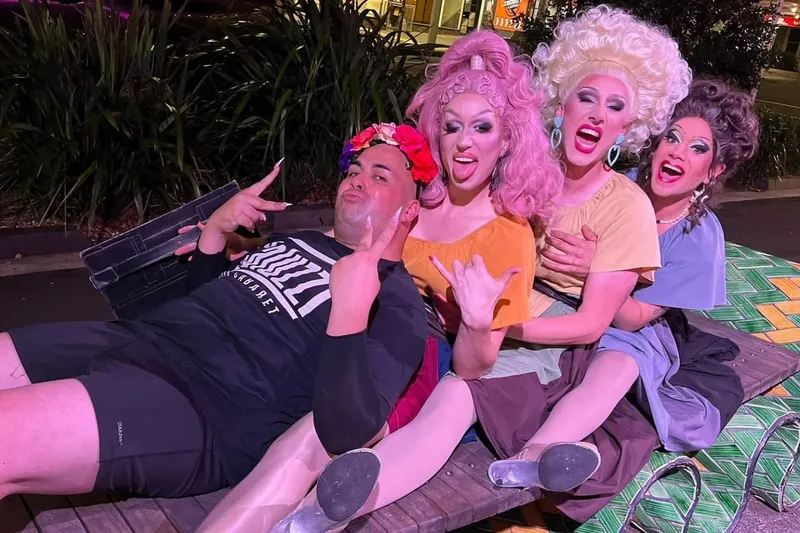
Echoing Macrae’s comments, Caluzzi co-owner Kita Mean says this past winter was one of the worst the much-loved drag cabaret spot’s ever had. But things are looking up. “Caluzzi goes hand in hand with the nicer weather, when people are feeling, fun, flirty and throw caution to the wind a bit. I think drag queens are excellent facilitators of that.” This part of the year is their busiest period as Caluzzi hosts work functions and hen’s parties. Next year marks the drag club’s 30th anniversary.
It’s among the neighbourhood’s longstanding establishments. Family Bar has been in business 20 years, Verona opened in 1992, Charlie’s feels like it’s been there forever. K Road cashed in on the nostalgia in September, with an array of memorabilia “sold” in exchange for receipts at a pop-up store.
The famous Vegas Girl could be found on a deadstock key chain. A couple of blocks down, 335 Karangahape Road is still her home, even though the strip club closed in 2015 after 53 years. Underneath her are newer nightclubs, the latest in a line of tenancies that have included Shanghai Lil’s and The Rising Sun.
People still come up here to party. There’s Studio and Neck of The Woods. Whammy expanded last year, A-Space has opened behind Acho’s and a new music venue is rumoured to be in the works at number 510. Walk through Beresford Square on a sunny summer evening and you’ll see patrons perched outside the bars around Beresford Square. All those businesses are well placed for what’s next.
After nearly six years of construction, Beresford Square reopened in October. The entrance to Karanga-a-Hape Station entices from behind a fence (for now). A second is located across the intersection on Mercury Lane; that street will become a shared space (rather than fully pedestrianised as originally planned). When the CRL opens next year K Road will be only a couple of minutes away from Britomart’s Waitematā Station and 40,000 daily users are expected to use what will be the country’s longest escalator.
Other ambitious projects are in the pipeline; that innovative Fearon Hay-designed timber building planned – and nixed – for 538 Karangahape Rd is going ahead after all (construction should start in 2027).
No one’s short on motivation. Open Late has been hosting a series of “Night Mayors” events about how to improve Auckland. Coastal Signs moved to the street, joining the many other art galleries already there. Two Karangahape Road businesses, Lebanese Grocer and Pici, were among the four Auckland eateries awarded $25,000 grants from the American Express Backing International Small Restaurants programme designed to facilitate “critical” improvements.
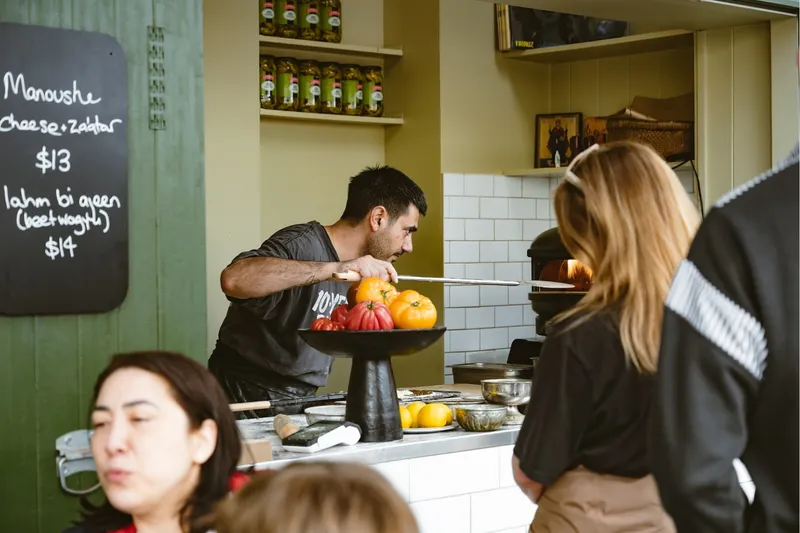
The owners of Tempero restaurant had been vocal about challenges last year. “We were hit with issues like construction outside the restaurant and it goes without saying that the country was in a deep economic decline,” explains co-owner Tiffany Lowe. This summer, she says, it feels like K Road has its buzz back. “Hospitality will always be an industry that is unpredictable, but this year has been night and day in comparison to last year (at least for us) and we’re looking forward to what next year brings. We are optimistic that when the CRL launches, along with the economy slowly adjusting, that it’s only going to get better from here.”
And while there have been some high-profile closures, including Madame George and Candela, this year has seen a handful of additions. The Frog and Hyderabad Hotel opened; the spot vacated by Celeste has been filled by Honoka Yakitori; and One Stop Açaí can now be found in Saint Kevin’s Arcade, which welcomed Sagrado Cantina earlier this year. At the west end of the road, a multi-purpose music space is getting ready to open at number 510. “To see the Pink Pussycat [which used to be at that address] come back to life is pretty cool,” says Holloway. “There’s a lot of leasing activity going on.”
Beyond that, he thinks there’s room for more to happen. “I think what The Others Way showed is that with the right creative approach you can do things that you wouldn’t have thought were possible.” Like close down a major arterial for an event. Holloway thinks Karangahape Road should close six to eight times a year for a wide variety of events. “That’s the vision.”

Emma Gleason
Emma Gleason is a staff writer at The Spinoff and an award-winning fashion journalist. But it’s not just clothes that interest her, you’ll find her exploring tasty cheese, influenza outbreaks and more important things right here. She has experience with some of the country’s leading media outlets as well as the toaster in our kitchen.


