What it’s like to go blind at 25

Photo: Getty Images
My father and I share the same experience of retinitis pigmentosa: we knew something was wrong when we could no longer see stars.
It was Barbenheimer weekend – a real cultural reset. The slight scent of body odour and popcorn filled the musty recycled air of the Queen Street Event Cinema. Auckland was flocking to see hot Ryan Gosling, hot Margot Robbie and hot war-crime Cillian Murphy all on the same day. We shuffled in to find our seats. Oppenheimer had already started 10 minutes ago; my friend had insisted she simply had to have a frozen Coke, along with the rest of Auckland’s movie-going population. I walked into the black haze, illuminated faintly by the IMAX screen. I scrambled for the torch on my phone, because I could not see shit. Following my mate’s white t-shirt ahead of me, I squeezed through the row, brushing people’s knees, inadvertently blinding them with my torch, and fumbled for my seat in the middle of a row.
“Sit down, idiot!” I recognised the voice – it was my friend. He didn’t know that I had retinitis pigmentosa, a rare condition which leads to almost complete “night blindness”, extreme sensitivity to glare, a gradual diminution of peripheral vision, leading to “tunnel vision”, and in extreme cases, blindness. In simple terms, it is a slow and painless death, atrophy, of the retina. To be fair to my friend, I didn’t really know I had it either. I had just got back from a four-month jaunt in Europe, deciding that post-law-degree-post-break-up depression was best cured by a three-week Contiki tour with 50 alcoholic Australians, followed by three months of solo travel through Europe and Canada.
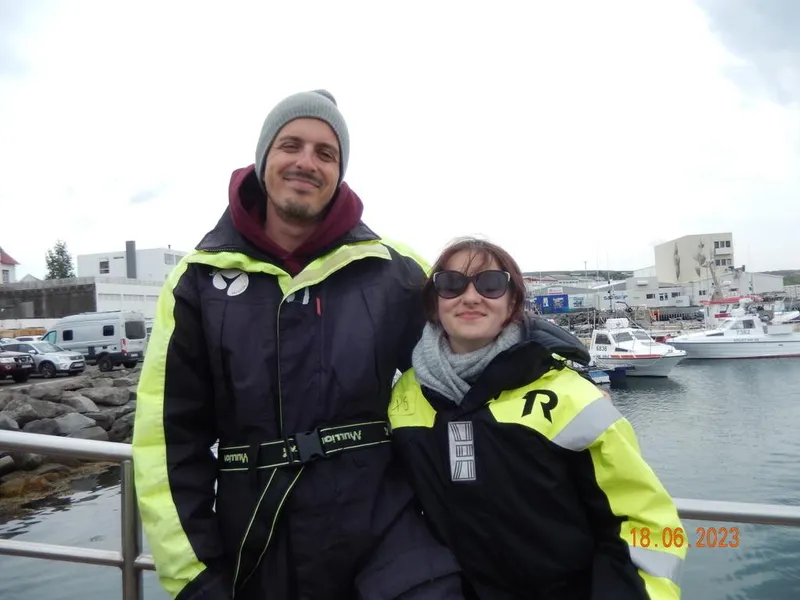
Many of the Contiki walking tours, which are conducted “by night”, are unsurprisingly far less fun when the participant is unable to see anything. I found myself stumbling into puddles in Prague (to the delight of many – “look at old mate playing in the puddles!”), walking into wheelbarrows on Amsterdam farms, and consciously avoiding the KitKatClub, a sex club in Berlin. I was afraid I would quite literally blindly stumble into an amorous situation, without even my own knowledge or consent. When I eventually reached Iceland, I gratefully basked in the island’s 24-hour summer sunshine.
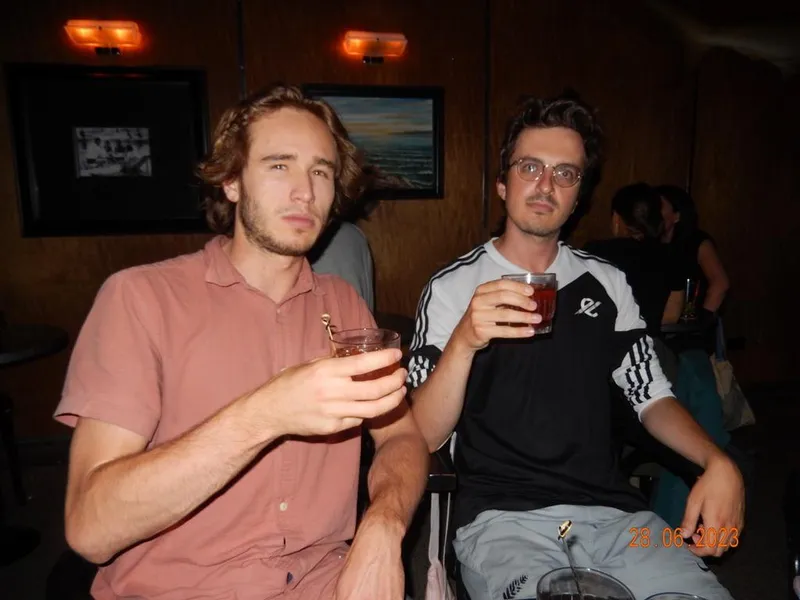
Being night-blind is hard to explain. The best way I can describe it is: imagine you are looking at a scene at night, with the “brightness” turned all the way down, and with every source of light flashing at you, so that all you see is a granular, blotchy, hazy mess. At night, everything is incredibly dark. Sometimes I cannot see anything. At a dimly lit party, I will often have to guess who I am talking to based on their voice alone. I carry a torch wherever I go. Winter is particularly difficult. I leave for the office, unable to see, and return home, unable to see. Daytime also brings its difficulties; hyper-sensitivity to glare is a paradoxical symptom of night blindness.
My haphazard, somewhat scripted explanation of my visual impairment, usually prompted by what I have come to call a “sit down, idiot” moment, is often met with unwelcome attempts at humour – something I have never quite understood. Once, on a dark night, I was struggling to find the lock on my old flat’s front door. I was gouging the key into the door, missing the lock entirely. I explained my condition to my flatmate at the time, who produced a zinger – “someone didn’t eat enough carrots growing up!” Another personal favourite is “no one can see in the dark, silly!” Honestly, the evolution of my impairment has really emphasised just how much the average person can see in the dark. Once, I was on a first date with a girl who very helpfully encouraged me to learn braille – excellent first date chat. For some reason, any explanation of my visual impairment turns everyone into prime Jerry Seinfeld, with “observations” just as original.
I had 20 years of optometrists, and even retina specialists, telling me that I had managed to avoid the disease. Unfortunately, just as everyone can be useless, medical specialists can also, sometimes, be useless. Combined with -6.50 shortsightedness, retinitis pigmentosa, labelled “RP” by those in the know, is, if I may, an absolute cunt. Unfortunately, with RP, things get just a little bit worse – every single day. That means that every day you meet me, my vision is the worst it has ever been. There is no cure. I have never as much as Googled RP. I do not have the courage, yet. I hear that Paddy Gower has even done a documentary on RP, but likewise, I have not watched it. Maybe one day.
My father also has RP. His mother, rest her soul, had RP. His aunty, her sister, has RP. As you may have gathered by this point, RP is genetic.
My late grandmother – my father’s mother, Irini – moved to Auckland from a tiny village called Mesavlia in Crete, Greece, when she was 17 years old. The main attraction of Mesavlia is that it has a water well. As far as I know, the village didn’t have electricity until 1975. My grandmother was born in a local cave while her mother was hiding from the Nazis, who were inconveniently invading Crete at the time. The Cretans now endure a complicated relationship with the Germans, who have come to make up a significant portion of Crete’s tourist population.
I digress. One of my father’s cousins, who lives in Chania, Crete’s main city, refers to RP as the Koutoulaki Curse – Koutoulaki being my grandmother’s maiden name. Perhaps it is a touch ironic that I have inherited nyctalopia, night blindness, from a woman who was born in a cave.
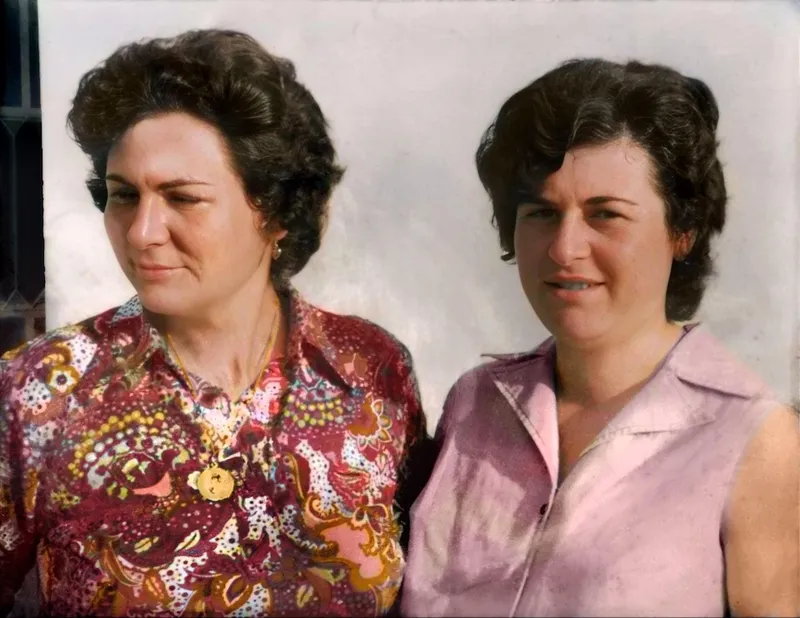
While Eleni’s daughter may see it as a curse, I do not. Or at least, not yet. We got off lightly. Some babies are born blind with RP. There are innumerable different types of RP, and it affects everyone differently. My father has been told by a specialist that our family’s brand of RP, in the scheme of things, is quite mild. For that, I am thankful. I have cried to my father a few times, bemoaning a litany of “sit down, idiot” moments, but then I remember it could be so much worse. In terms of the Koutoulaki Curse, symptoms tend to start in the 20s, and come on quite slowly – the odd stumble here and there. Things in the nightclub or mood-lit restaurant become just a little bit harder to navigate. Ironically, my grandmother even worked in a darkroom, developing photographs until she was about 30. She was almost completely blind when she died in 2023.
A shared experience with my father: we knew something was wrong when we could no longer see stars. It is likely I will never see stars again, but hopes of an accessible cure are stronger with my generation. Apparently there is a government scheme where the offending gene can be isolated and removed for successful in vitro fertilisation, without fear of passing on the Curse to my children. I haven’t looked into it. As I said, I have never even googled the condition. Although self-diagnosed through an almost identical timeline and experience to my father, I have been trying to get a formal diagnosis through an RP specialist in the public health system. So far I have been unsuccessful. Every month or so, I will be greeted with a lovely letter from Te Whatu Ora. Perhaps I finally have an appointment, or more likely, it will be the same template letter I get every month. For example, here is one I received in May 2025.
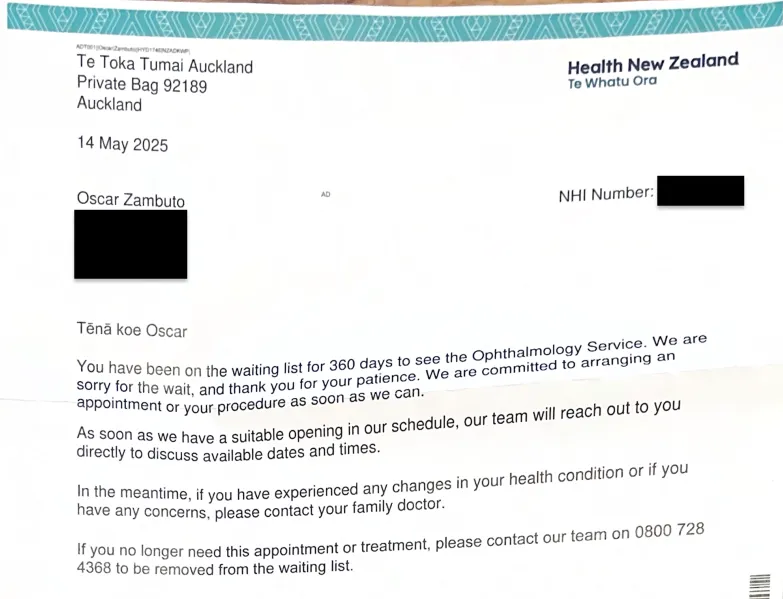
The choice of “days” as the unit of measurement really drives home how long I have been waiting, leading me to conclude that I am not seen as a priority. And they are right – I am not. As I have said, I am one of the lucky ones. Yes, it can only get worse, and the worsening peripheral vision is the real issue. The night blindness is an amuse-bouche for the joys of an ever-diminishing field of vision, which I have certainly started to notice, but will not get truly problematic for some time yet. I’ll cross that bridge when I come to it.
The Serenity Prayer springs to mind almost daily for me now as I stumble to the bathroom every morning, feeling for the light switch: “O God, give us the serenity to accept what cannot be changed…”. The incurability of the Curse leaves only one variable – my attitude. Every day is a challenge, but I can see the humour in the Curse; I have to. I am a strong believer that humour can outrun harm, and sometimes you have to let it, despite others often seeing the funny side that hasn’t been earned by experience. But I have earned the right to see the funny side.
I once found myself in a strip club – I mean physically, not spiritually, as some of my friends are sex workers. I was being a supportive friend. Anyway, I got chatting to a woman. I was enjoying the conversation, but I couldn’t see anything, really. Similar concerns arose as the ones that did for the sex clubs in Berlin. I was being very careful. I ventured into small talk. “What do you do for work?” There was a pregnant pause. “Honey… do you see what I’m wearing?” I focused very hard on the lady. An appropriate answer to her question would have been “not much”; she was one of the workers.
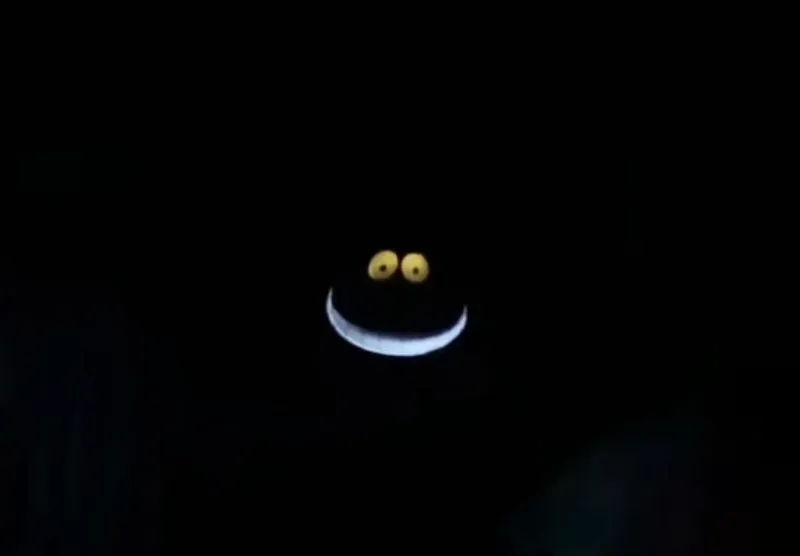
RP is also unintentionally slightly racist. At parties, or any low-light situation, I lose my brown friends far more often than my fluorescent white ones, whom I can just make out. My brown friends resemble something like the Cheshire Cat at night.
Girlfriends of the past have noticed that my pupils get extremely dilated when it’s dark, presumably to compensate for their nightly battle to let in enough light. This, combined with my often stumbling presence, leads to people asking if I need an Uber home. I have been asked at dimly lit, schmoozy work events if I’m “on gear”, due to my dinner-plate pupils and bumping-into-shit gait. People at Nest Fest thought I was in the “K-hole”, as I was lying happily unaware across a thoroughfare I could not see. The annual New Year midnight swim on Onetangi Beach on Waiheke, which I used to enjoy when I was at high school, I now have to sit out. I simply cannot see anything, and a sensory deprivation tank is not the best way to start the new year.
Many a morning kiss has been unknowingly ignored. Many friends forget about my RP. Many, I have never even told. Often it is so difficult to explain, I would rather not. But the more I go through life, the more I want to centralise the Curse, rather than pretend it isn’t there. I want to see as much as possible, in my peak years of vision. I increasingly wonder if a life with decreasing clarity is meant to be spent staring at a screen.
I used to balk at the concept of an “invisible disability”. What did that even mean? You’re either using a wheelchair, or you’re fine – that is, regrettably, how I thought when I was growing up. Yes, I was holding my father’s hand when we went for evening walks, prompting funny looks from passers-by, but that pesky thing that Dad has certainly isn’t a disability. That’s crazy talk. Of course, my opinion on this has changed. My life is very different to what it was even three years ago. I have to think carefully about light. No, that bar is too dimly lit and I will make a tit of myself. No, I will not take a Lime scooter at 3am, for fear I may actually die. No, I won’t go out tonight at all because “I’m tired”.
I do not have blind trust (ha) in a cure. Life cannot be spent waiting. All I can control is my attitude. This article is an attempt to look head on at something which I must confront every day, and which has so far been an isolating experience. While RP is a cunt, it is a cunt I wake up with, and go to bed with. My heart goes out to all with disabilities – physical or mental, big or small. Perhaps you see it as a curse. Perhaps you see it as your superpower. Regardless, it is part of who you are, and it doesn’t take a working pair of eyes to see that.

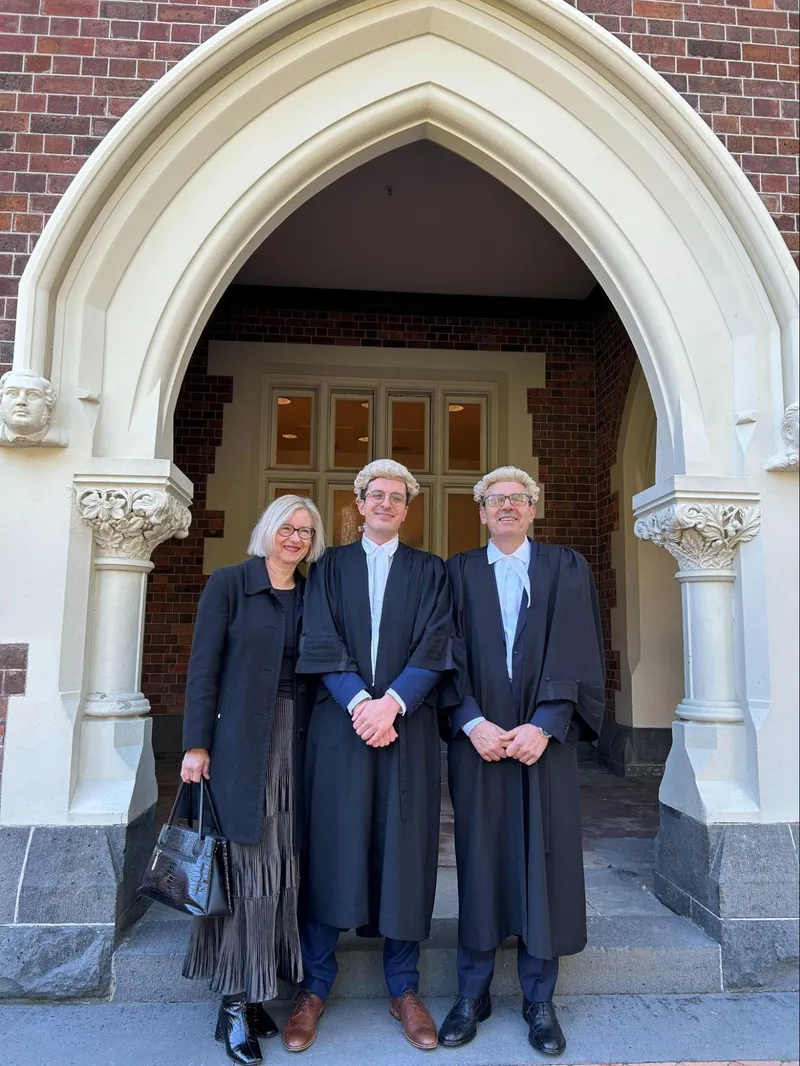
Oscar Zambuto
Oscar Zambuto is an Auckland-based lawyer. He writes about whatever piques his interest at the time.


