How the pay equity ‘reset’ erased years of progress for Pacific communities

Pacific workers dominate in aged care, support work, cleaning, disability services and school support roles, all sectors that had pay equity claims cancelled (Photo: Getty Images)
Saunoamaali’i Karanina Sumeo, the Pacific adviser to the People’s Select Committee on Pay Equity, reflects on the ‘blunt and chilling’ message sent by Pacific submitters.
In August last year I listened with deep respect and silent rage to hundreds of submissions to the People’s Select Committee on Pay Equity from women workers, their employers, community groups and union representatives.
I’m the Pacific adviser to this select committee, established by 10 former women MPs from across the political spectrum to do what parliament should have done. But the coalition government chose to pass the Equal Pay Amendment Bill 2025 under urgency and without public scrutiny, especially from those most affected by it.
We’ve now worked through the Pacific submissions for the People’s Select Committee. Their message is blunt and chilling.
Pacific workers are warning that the Equal Pay Amendment Act will deepen poverty, suppress wages, and shut down the few remaining pathways to justice that pay equity processes once offered. Many have called it unprecedented – both in impact and in the speed with which it was pushed through parliament.
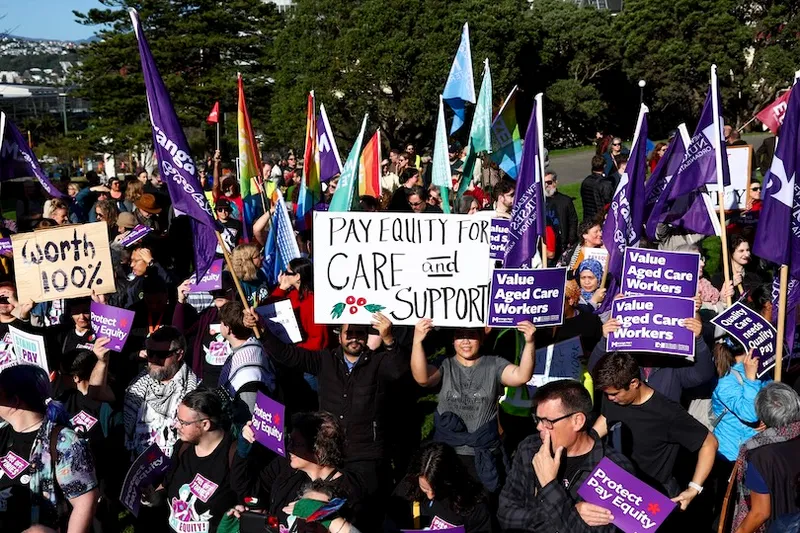
What dominated submissions was not just anger at the policy, but shock at the process. Pacific groups described the fast-tracked law as undemocratic – retroactive, rushed and dismissive of those most affected.
Dozens of unions, women’s organisations, civil society groups, Pacific collectives and human rights advocates warn that Pacific workers will bear the brunt of the cancelled pay equity claims. These were claims expected to lift incomes in sectors where Pacific workers dominate: aged care, support work, cleaning, disability services and school support roles.
Pacific communities – who overwhelmingly staff the country’s lowest-paid essential services – now believe the government has signalled their equity is optional. The government insists the Equal Pay Amendment Act 2025 is a tidy “reset”. But Pacific communities say it has erased years of progress and locked in inequity for another generation.
Submitters point to Human Rights Commission evidence that Pacific women earn just 75 cents for every dollar earned by a Pākehā man, amounting to nearly half a million dollars in lost lifetime wages. “These are not just numbers – they are school uniforms unpaid, prescriptions skipped, rent overdue, and dreams deferred.”
The very communities carrying essential public services say the act delivers the most significant setback to pay equity in a decade, and rushing the legislation through undermines democratic accountability and public trust. They say they have a sense of “betrayal” from a process that shut people out.
Submitters said the decision to void review clauses in existing settlements – agreements negotiated over years – sent workers a chilling message: even hard-won progress could be undone overnight. Several said the process had “destabilised trust” in government.
Pacific women argue the act creates a pay equity system that workers cannot realistically access. The new legal threshold – requiring occupations to be 70% female for 10 years – immediately disqualifies large female workforces, where Pacific workers are disproportionately represented.
Add to this the requirement to prove undervaluation before a claim is even accepted, the three-year delay on any wage increases, the ban on back pay, and the ability for employers to walk away without reason and Pacific submitters say the outcome is clear: it isn’t clarity, it’s obstruction.
One of the most newsworthy elements of the submissions is the explicit warning that the act may breach New Zealand’s international obligations. Submissions from the Human Rights Commission, Pacifica Inc, Age Concern, Pay Equity Coalition Aotearoa, Rights Aotearoa, Project Gender and others illustrate that the absence of ethnicity from the act neglects commitments under CERD, CEDAW, ICCPR, CESCR and ILO conventions to equality by ethnicity and race.
Given Pacific workers face both gendered and racialised undervaluation, the absence of ethnicity grounds was described as “a structural blind spot” leaving Pacific, Māori and workers from ethnic minorities invisible and without acknowledgement of their specific skills. This is despite their clear significance numerically, culturally and professionally to lives and workplaces in our nation.
We know that unions, NGOs and employers outside the public sector still do not routinely collect ethnicity data. Without it, pay gaps remain hidden, unmeasured and politically unaddressed. This allows inequity to persist unchallenged. Mandatory reporting – especially for Pacific women – was one of the strongest and most consistent recommendations.
The top calls from these groups include: a repeal or major revision of the act, embedding ethnicity and gender in pay equity principles, restoring fair, accessible thresholds for raising claims, reinstating enforceable review clauses, mandated ethnicity-disaggregated pay reporting, dedicated funding pathways for settlements, Pacific leadership embedded in pay equity governance, and full consultation with Māori and Pacific communities for any future reforms.
If the government expected this act to settle the pay equity debate, the submissions show the opposite. It has ignited one.
The People’s Select Committee on Pay Equity will release its report on February 24.

Saunoamaali'i Karanina Sumeo
Saunoamaalalii K Sumeo previously served as equal employment opportunities commissioner at Te Kahui Tika Tangata Human Rights Commission, where she campaigned to end pay secrecy, and led inquiries into Pacific and ethnic pay gaps, bullying and harassment in the workplace and the Recognised Seasonal Employer Scheme. Sumeo works as a private consultant and is the Pacific adviser to the People's Select Committee.


