A tired teacher explains why they’re striking tomorrow

Striking teachers rallying at parliament in March 2023 (Photo: Hagen Hopkins/Getty Images)
Teachers entered into negotiations with a set of very reasonable demands, but the government ignored our requests and crafted an offer seemingly purpose-built to make things worse, argues secondary teacher Connor Murphy.
Last week, the government announced it was disappointed in teachers. This might have come as a surprise to some members of the public, as recent messaging from the government also praised teachers, with education minister Erica Stanford lauding their hard work every single day to “inspire our young people and do the very best for them”.
The reason for this disappointment? Teachers want money for their work. Public service minister Judith Collins mislabelled the upcoming teacher strikes as a “political stunt”, claiming they were premeditated and accusing teachers of attending negotiations in bad faith. So, let’s review the recent offers and requests put forth by both sides to see how we’ve reached this point.
Historically underpaid and undervalued
Around 50 years ago, teacher salaries were comparable to those of backbench MPs. Now, teacher wages have declined to around half of what MPs earn. You might argue that this is an unfair comparison. After all, MPs will sit in parliament for an exhausting 93 days this year, while teachers are expected to teach students for a mere 170 full days throughout the year. So, it makes sense that teachers receive half as much for twice as many days of work. Oh, wait – no it doesn’t.
I won’t contest that politicians have a more demanding job than teachers in many regards (although watching Gerry Brownlee try to preside over the House of Parliament does feel eerily similar to observing a beginning teacher losing control of a Year 11 class). But I think most people would find it difficult to argue that MPs work twice as hard as teachers do.
I like to think of myself as pretty proud to be a Kiwi. I’m a second-generation immigrant with British and Australian parents, but New Zealand has always been home to me. I love our culture, our native flora and fauna, and the kindness of New Zealanders. Unfortunately, I find myself tempted to leave my home in pursuit of better living conditions. Just across the ditch, starting teachers receive $18,000 more per year in Victoria and $31,000 more per year in the Northern Territory than what they get in New Zealand. The call of cheaper groceries and higher wages beckons to me more and more each day.
The prime minister says he has a solution. At the National Party conference earlier this month, Christopher Luxon insisted that New Zealand needed to create more jobs and increase wages if we hoped to stem the brain drain to Australia. I agree: to keep the best-quality teaching professionals in New Zealand, you must pay them competitively. If we continue to undervalue teachers, we will lose our best and brightest to other countries willing to pay teachers what they’re worth. This is why teachers entered into these negotiations with the expectation of better pay and conditions. We deserve better, and if we don’t get better, then our teacher staffing shortage will only worsen.
The recent pay offer stings especially hard for teachers following the government intervention in our pay equity claims in May. Judith Collins has attempted to argue that secondary school teaching has historically been considered a masculine career, and so the pay equity claim wouldn’t have led to anything. But it’s worth pointing out that all New Zealand teachers have the same base salary scale. That means that primary school teachers and secondary school teachers receive the same salary for their level of experience. While secondary schools have a higher proportion of male teachers, primary schools have historically been staffed overwhelmingly by women, as has the overall profession since the unified base salary scale was introduced.
The purpose of this pay equity claim was not to look at the salaries of secondary school teachers, but how teachers as a whole have been undervalued because of this systemic inequality. However, just before these claims could be acted on, ministers met in secret and undermined this correction for the sake of minimising government spending. This sent a clear message to teachers across Aotearoa: teachers are worth less to the government than even a single moment of bad public relations.
Another example of how little teachers’ time and energy are valued can be seen through the curriculum refresh and the recently announced overhaul of NCEA qualifications. I have worked at a couple of different schools during this curriculum refresh, and can say with near certainty that every teacher across New Zealand has dedicated at least 100 hours to it. Unfortunately, teaching isn’t a job where you can pause your other duties to find time for something like this. Lessons still need to be planned, assessments need to be marked, and students still need to be taught. Pay them for their labour.
During the last teacher pay negotiations in 2023, the Ministry of Education and the Post-Primary Teachers’ Association were unable to reach an agreement for over a year. According to the arbitration panel that settled the dispute, “the ministry refused to engage in productive discussions with teachers about most of our long-standing issues”. This culminated in multiple nationwide strikes, needlessly costing teachers time and money. Yet, the government feigned surprise and shock that teachers left negotiations this year. They labelled our strike as “premeditated” and done in bad faith. I would instead label it the forgone conclusion from mistreating teachers at the beginning of negotiations, the same way we were mistreated two years ago. This wasn’t premeditated, but it was something the government should have predicted from its offer.
An insult disguised as an offer
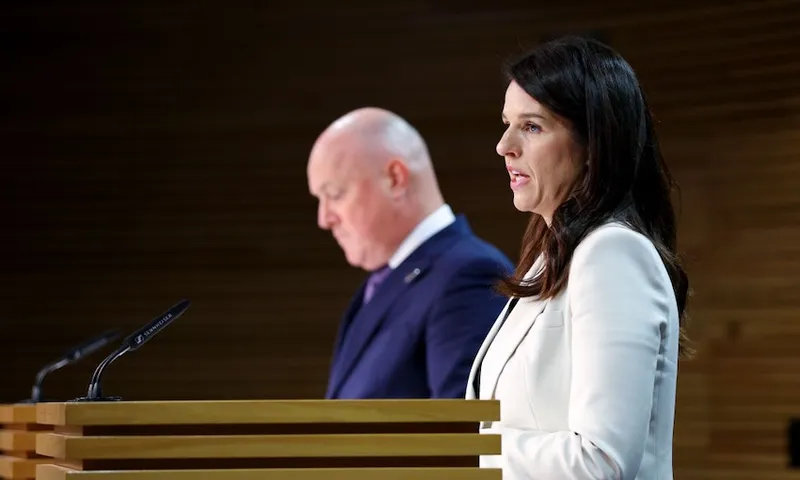
Judith Collins and Erica Stanford claimed in their announcement at the Beehive that the PPTA had only been negotiating with the government for six days (spread across nearly two months since June 17). According to these two ministers, the government made its initial offer, but received no counteroffer. This is probably true, but it ignores the fact that the PPTA had already submitted a list of proposed claims that teachers across the motu had signalled support for. Teachers did not walk away from a terrible first offer without warning or explaining what we wanted. We walked away from a terrible first offer that ignored every request we made.
The PPTA requested an annual pay increase of 4%, which is, on average, less than we received during our 2023 negotiations. The government instead offered teachers a pay increase of 1%. For a new teacher, that would amount to an additional $11.79 a week. What’s worse is that a 1% pay rise would fall below our current rate of inflation of 2.7%. In other words, this offer represents a pay cut instead of the much-needed pay rise the education sector needs.
During negotiations, the government emphasised fiscal restraint. That’s a hard pill to swallow when MPs’ salaries are getting rolling rises of 10.5%, and ministers recently signed off on a pay rise of up to 80% for Crown board members. To some extent, I understand those pay increases. After all, we’re living through an unprecedented cost-of-living crisis, and people need more money to make ends meet. I just wish the government acknowledged teachers as people, too.
It’s also difficult to accept that our ministers seem to be working on the assumption that experienced teachers are making $40,000 more than they actually are. In a press release responding to the strike announcement and subsequent radio interviews, Judith Collins said experienced teachers made over $140,000 each year. A teacher at the top of the pay scale is actually earning $103,000 and might be getting an additional $2,000 to $5,000 for extra duties like being in charge of a subject. Deputy principals might be close to $140,000 a year, but there aren’t enough of those roles to pay even 10% of experienced teachers that much money.
New Zealand schools are facing an increasing number of students with diverse needs and backgrounds who frequently require specialised pastoral care and learning support. The PPTA sought to protect these vulnerable ākonga by increasing pastoral care funding for schools, to ensure that students can learn in an environment where they feel safe and supported. The government disregarded this claim entirely, with no changes to pastoral care mentioned in its offer.
The PPTA also requested funding for helping teachers upskill within schools in the form of a professional learning and development allowance and financial incentives for teachers who can demonstrate proficiency in key areas, like te reo Māori (such incentives already exist across the public sector, including the Ministry of Education). Instead, the government wants to restrict teachers’ current ability to complete funded study awards or sabbaticals. The claim put forward by the government revokes all funding unless a teacher can publish research based on their studies, which means teachers cannot use this funding to improve their understanding of New Zealand’s official languages unless they are already fluent. Teachers cannot take part in study days or overseas conferences to improve their practice. The government might argue it wants highly skilled and professional teachers, but it isn’t willing to pay for them.
One of the more glaring needs in New Zealand schools that the curriculum refresh has uncovered is the need for properly resourced curriculum advisers. We need good resources to deliver this evolving curriculum to students with confidence. Instead of reassuring teachers that the Ministry of Education is committed to helping teachers do the best job they can in planning for this new curriculum, the ministry refused to acknowledge this claim and left it out of their offer. Without adequate funding or resourcing, teachers will be overwhelmed by the impending changes to NCEA and the New Zealand curriculum. The government’s obsession with saving money and cutting costs risks burning out teachers and worsening our teacher shortage.
Where can we go from here?
Despite rising tensions and concerns within education, teachers entered into these negotiations with a set of very reasonable demands. Instead of making a reasonable counteroffer, the government ignored our requests and crafted an offer seemingly purpose-built to make things worse. Some might even be inclined to argue that the government designed the offer as a premeditated political stunt to win points with a voter base that has historically disliked those in the public sector. Some might say that the government has initiated these negotiations in bad faith. Not me, though – I’ll leave such conspiratorial accusations to be handed out by our MPs.
Instead of trying to figure out who’s morally right or wrong, I want the government to focus on crafting an actual offer. One that pays teachers well enough to draw in talented new professionals and helps our current staff develop the cultural and pastoral competency needed to ensure our ākonga learn and succeed.

Connor Murphy
Connor Murphy (They/Them) is a secondary school teacher based in Tāmaki Makaurau. They are also very, very tired.


