Pacific profiles: The women behind the regional Pasifika Fusion festival

Made with the support of
The Pacific profiles series shines a light on Pacific people in Aotearoa doing interesting and important work in their communities, as nominated by members of the public. Today, Helen Talamaivao and Epenesa Faaiuaso talk about fostering Pasifika pride in the regions.
All photos by Geoffery Matautia.
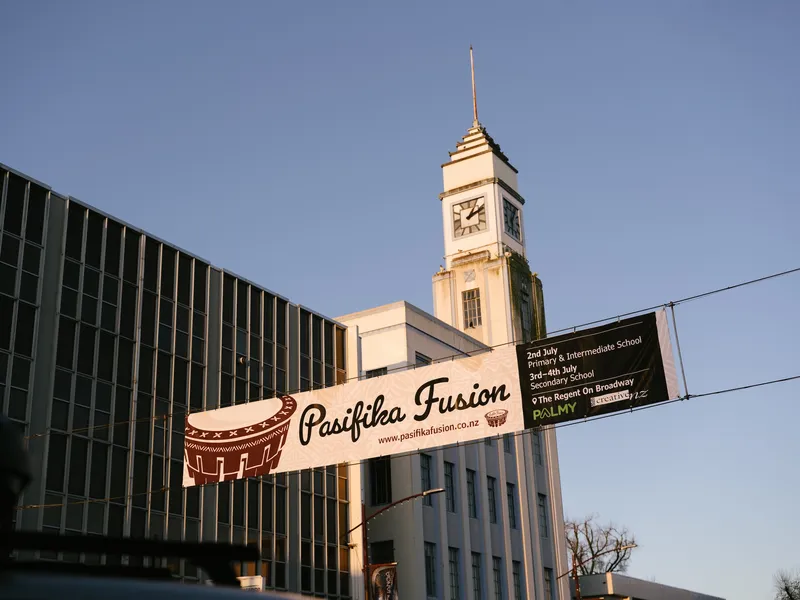
For over 20 years in Palmerston North, the Pasifika Fusion festival has provided a stage for thousands of Pacific island high school students to showcase their culture in a wide range of events. I spoke to two of the committee’s organisers – Helen Talamaivao and Epenesa Faaiuaso – about why this event is important for our rural Pacific communities, their decision to focus on AI meets PI for 2025, and passing on the baton for the next generation.
Morning! Please introduce yourselves.
Helen: Talofa lava, I’m Helen Talamaivao, and I’m the events coordinator for Pasifika Fusion. I’m Samoan, born in New Zealand, and a registered nurse working in Palmerston North’s ICU. My family moved here from Grey Lynn in 1968 when my father took up the position as minister for the Ekalesia Faapotopotoga Kerisiano Samoa (EFKS). I’m one of 14 children. I joined the committee in 2005. We’re a team of 14, all based in Palmerston North, and of various Pacific island backgrounds, working across health, education and business. Most of us are parents, too. We all work full-time and organise the Pasifika Fusion festival on a volunteer basis, dedicating 4-6 months to it each year.
Epenesa: Talofa lava, I’m Epenesa Faaiuaso, and I was born and raised in Palmerston North. My parents also arrived here in the 1960s. I’m an early childhood teacher at our only Samoan preschool in the area – Malamalama Moni Aoga Amata – also based at the EFKS. I’m the secretary for Pasifika Fusion.
Tell me about Pasifika Fusion’s origin story.
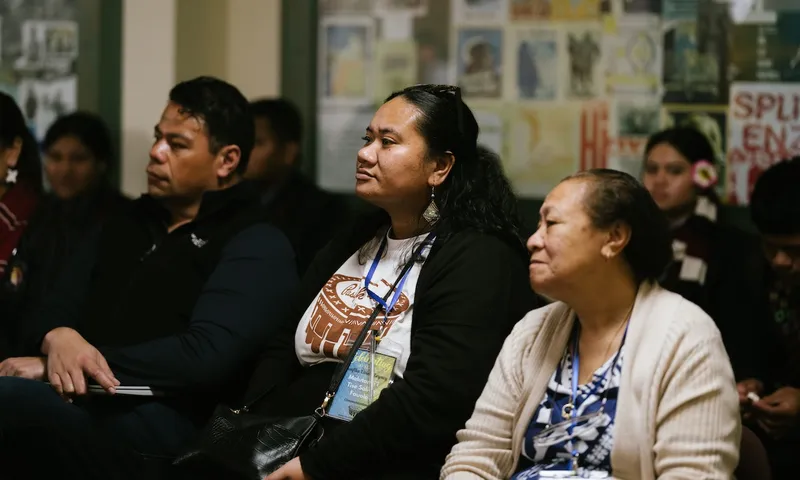
Helen: The event started back in 1999, when the Pasifika Pride educators – who ran homework centres – and local families recognised that there wasn’t anything for their youth in our area. The families also wanted to form closer relationships with the local high schools. More than 60% of Pacific peoples in this region are under 25, with the majority of them being New Zealand-born. So for them, there’s limited access to cultural events and activities.
At first, many schools didn’t allow their students to attend, so parents had to write letters asking them to let their children participate. It wasn’t until the schools saw our success that more of them got on board. Now, we run a two-day event reaching schools as far as New Plymouth, Masterton, Tararua and Horowhenua. The schools’ support is excellent. We need a bigger venue!
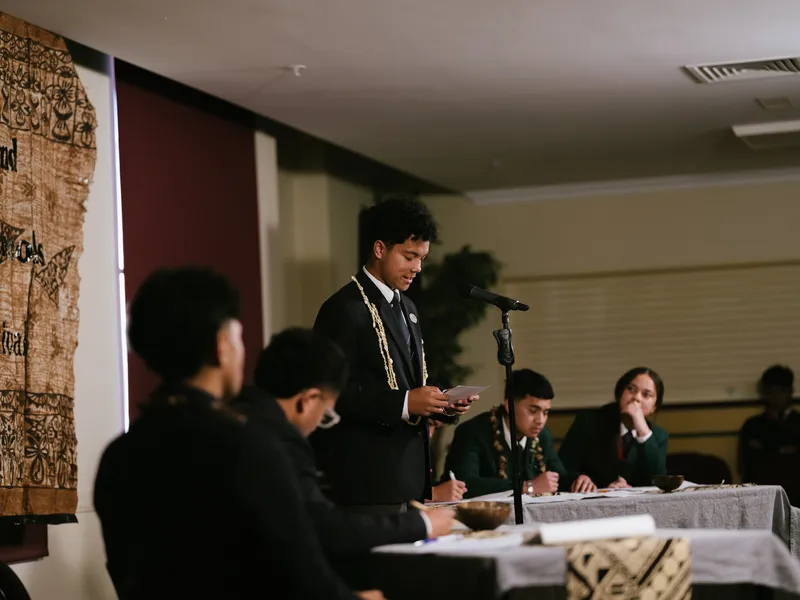
Epenesa: The event has helped celebrate our students’ Pacific Island heritage and showcase their cultural intelligence through a range of activities. It’s been great to see the students and their families thrive.
How many students attend each year?
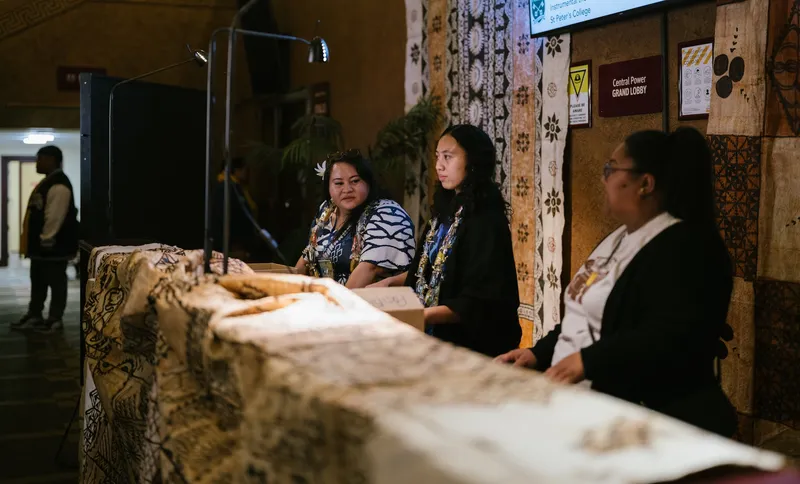
Epenesa: Up to 600, and growing. We had 17 schools this year. Palmerston North has seven schools, so the rest are from outside the area. Many small towns and communities don’t have a Pasifika event.
The two-day event has an extensive program with over 12 categories ranging from cultural performances, debates, speeches and cinematography. How does the committee decide on the program each year?
Helen: All our committee members have different strengths that feed into the various categories. Some take charge of the essay writing, others work in health and science, and so on. Not all students want to sing and dance, so we ensure there are different events for them.
Epenesa: We want to create opportunities for students to explore and express themselves and the culture(s) across a range of media. It gives them a pathway into different forms of expression with the safety to try them out.
Helen: The event has also been a great opportunity to use the schools as a resource, as many teachers want to help out. For example, we can negotiate NCEA internal credits for the essay writing topic.
The theme for this year’s event was “P.I. meets AI” How did this idea come to be? And what was the response like?
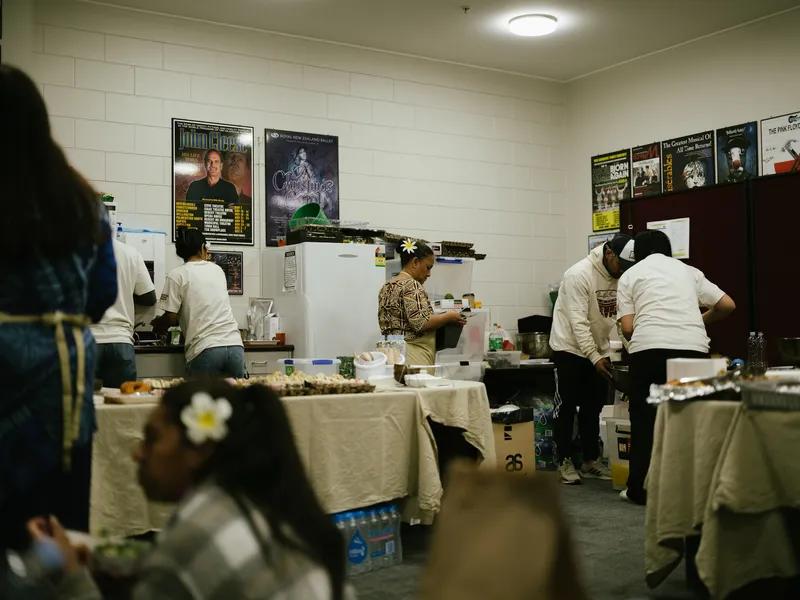
Epenesa: AI has been around for a little while, but it’s far more prominent now. It was interesting to see how our young people and their families collectively unpacked their relationship to it – understanding its benefits but also its pitfalls – and making sure the information they receive is verified. It was a timely topic for this event because there aren’t many places in our communities where we’re having this discussion. I loved seeing how the students expressed their ideas through poetry, dance, debates, wearable art, music, video and more. We were really pleased with the engagement.
Helen: With AI, a lot of it is about awareness. We know that in 2025, students will be using it a lot. They’re on their phones 99% of the time. I think it’s a critical topic to explore. When we choose our yearly theme, we hold a roadshow at various schools to gather feedback. Most were really keen on this topic.
What makes the event so successful?
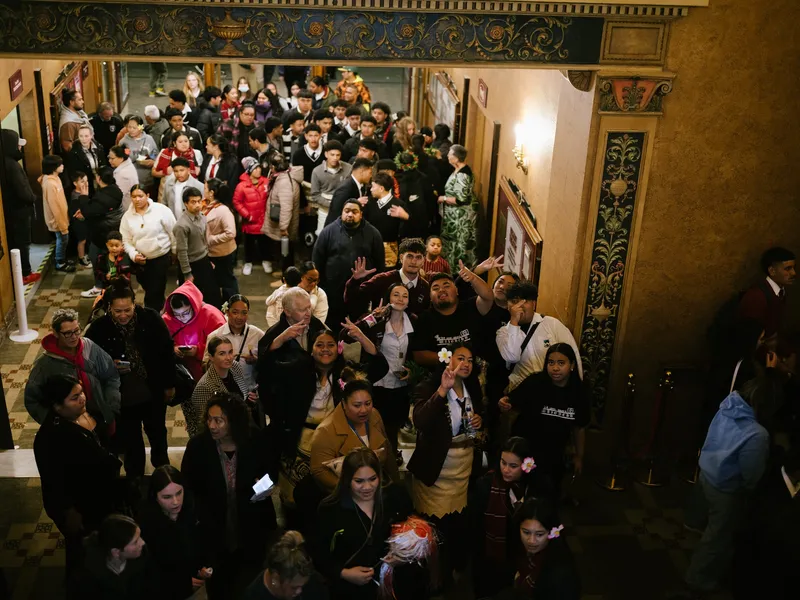
Helen: For me, it’s the cultural awareness. Pacific Islanders in this region make up only 2-3% of the population, so we want to make the most of the community here. It really serves a need for our young people, as we only have them for a short time before they go off to the big cities. And our wider non-Pacific community love it, too! It’s so colourful, loud and joyous. I love seeing our kids step out into the world and be themselves.
Epenesa: Seeing our aiga and kids thrive is awesome. It’s great for our students and their families as we’re now seeing generations come through Pasifika Fusion. It’s great to see the students’ growth in leadership roles as many go on to become prefects and head students. I’ve also seen a lot of growth within our committee, too. We’ve made close bonds with each other, and that’s a huge success for me. We’re always asking how we can do better and how we can pass the baton to the next generation. We’ve opened a door and want to leave it open for the younger ones to step through.
What does the future hold for Pasifika Fusion? What do you want to see the event evolve into?
Helen: I would like to have more young people on the committee to help plan Fusion. I also hope that they can take what they learn from Pasifika Fusion into the outside world, whether locally or overseas. Last year, we launched the Pacific Fusion legacy – a festival for primary and intermediate students to get involved earlier. It’s about finding more ways to get them to celebrate their heritage.
Epenesa: Success means different things to different people. It’s not always academic. It can be being proud of your identity, proud of who you are, knowing your language, knowing your culture, and being happy and connected to your family! We want Pasifika Fusion to be successful and continue long beyond us. People might not know that we have a group called Pacific Festival Aotearoa Inc (it’s been in the works for a while) and that it’s made up of members from all around Aotearoa who organise Pasifika festivals in their regions. For me, that’s our future – to share, support, and resource each other. It’s not about competing but supporting those on the stage and behind the scenes, too.
This is Public Interest Journalism funded by NZ On Air.

Litia Tuiburelevu
Litia Tuiburelevu is a professional teaching fellow at the University of Auckland’s Faculty of Law, overseeing the Pacific law students’ academic programme. She teaches an elective course titled “Pacific Peoples and the Law: Critical Perspectives” and is also interested in film and photography.


