Auckland just reached a major demographic turning point

Photos: Getty Images; design The Spinoff
With more Asian babies now being born in Auckland than any other ethnic group, the city is becoming something new, whether we like it or not. The only real choice we have is whether we shape that future deliberately, writes Shamubeel Eaqub.
Auckland has crossed a quiet but important threshold. For the first time, Asian babies are the largest ethnic group among newborns in the city.
This is not a sudden change. It has been building for decades. But it is an invitation: to think more carefully about identity, social inclusion and the long-term social and economic outcomes that flow from them.
The headline number is easy to misread. It is tempting to see it as about immigration. But it’s not just that. A large share of this growth reflects families that have been here a long time and are now having children. Auckland’s diversity is no longer just something that arrives at the border, it is also new generations born right here.
Ethnicity itself is also changing. It is self-defined, fluid, and increasingly overlapping. More than a quarter of babies in Auckland have more than one ethnicity. Identity is not fixed or discrete. It shifts across time, place and experience.
For example, I am a first-generation migrant. My kids are born here and share a mix of ethnicities and backgrounds. Ethnicity is a complicated concept in our household, as I imagine it is for many others.
Also, ethnicity does not equal culture. How we classify people matters less than how we live together. Culture, to me, matters more than categories.
What happens when cultures meet?
There is a useful idea that helps make sense of what comes next: acculturation. It focuses on what happens when groups with different cultural backgrounds meet, and it asks two simple but powerful questions. First, to what extent can people maintain their heritage culture and identity? Second, to what extent can they participate fully in shared civic, economic and social life?
Different answers lead to very different social and economic outcomes.
Where both the objectives above are supported, integration and multiculturalism are more likely. This tends to be associated with stronger wellbeing, higher trust and better participation.
Where one or both are constrained, outcomes weaken. Stress rises. Trust falls. And the effects are felt not only by minority communities, but by the wider society as well.
Crucially, acculturation is not a one-way process. Outcomes depend on the behaviour of new groups and the openness of institutions, labour markets, schools and social norms in the host society. Integration is something we do with each other, not something one group does to another.
This matters particularly in Auckland.
Why Auckland matters a lot
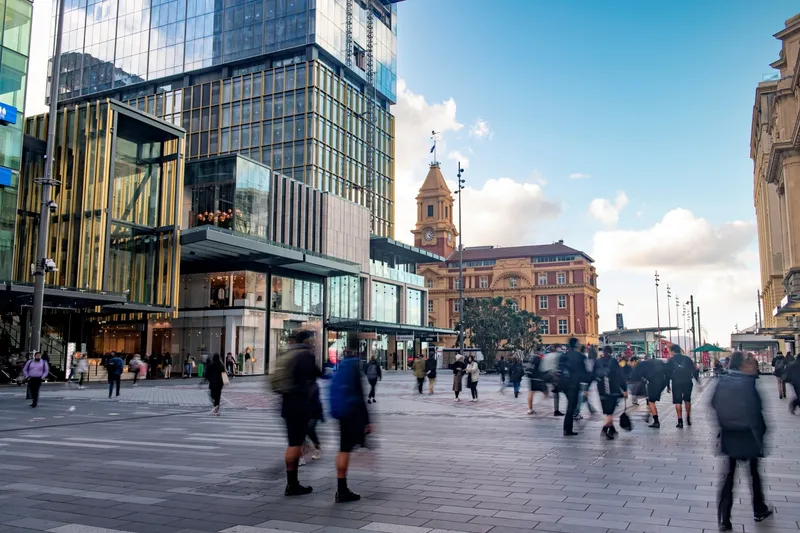
Auckland is not just New Zealand’s largest city. It is its main connector. People move through it, businesses link through it, and ideas spread from it.
What happens in Auckland is eventually exported to the rest of the country through internal migration, trade and social networks. Get it right here, and the benefits flow nationally. Get it wrong, and the costs do too.
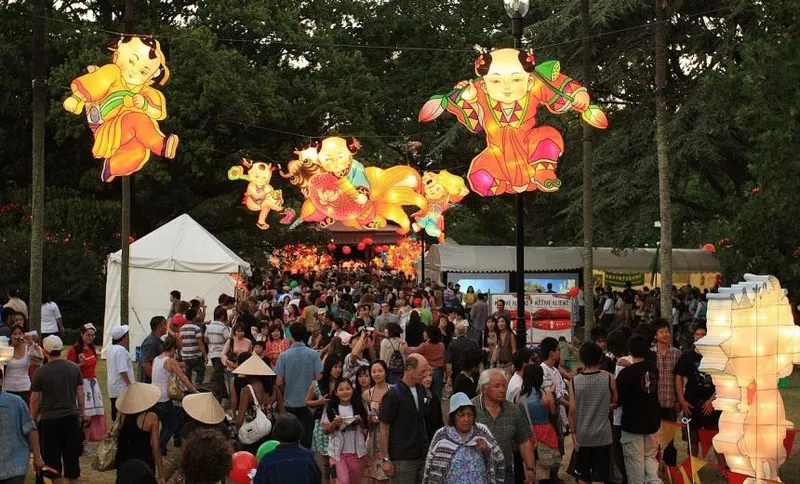
Auckland is already one of the most diverse cities in the southern hemisphere. Ethnic minority communities make up over 40% of its population, and they are younger, more likely to be in family-forming ages, and increasingly central to the future workforce.
High participation, but weaker outcomes
On the surface, the ethnic story in Auckland looks positive. Ethnic minority communities in Auckland have high employment and participation rates. They are active across a wide range of industries, from hospitality and logistics to healthcare, ICT and business services.
They are also, on average, more highly qualified than the Auckland average. And yet, outcomes do not match that potential.
Even after adjusting for age, qualifications, occupation and location, many ethnic minority workers earn less and progress more slowly in their careers. There is a persistent income gap that cannot be explained by “the usual factors”. Representation in management and leadership remains low for several groups.
This is not about lowering standards or special treatment; it is about removing friction so capability can translate into contribution. These frictions are often subtle, sometimes unintentional, but real nonetheless.
The cost of getting this wrong
The cost of entrenching these gaps is both social and economic.
Economically, it is large. If persistent income and progression gaps were closed, Auckland would in effect be more prosperous. Talent and opportunity are being left on the table.
Socially, the risks are deeper. When people work hard at study, work and contribute, but still feel stuck, trust erodes. If groups become segregated, marginalised or excluded, social cohesion weakens. That path leads to fragmentation, not prosperity.
We do not want to import the social failures seen elsewhere around the world.
The question is not whether Auckland can afford to focus on integration. It is whether it can afford not to.
What needs to change
There is work to do, across multiple levels.
In the labour market, recruiters and employers need to place greater weight on skills and experience rather than relying on narrow credential signals. Overseas qualifications and experience need to be recognised more effectively. The biggest barriers often appear at the point of recruitment, which means inclusive hiring practices matter more than many realise.
In education, diversity should be treated as permanent, not exceptional. That implies designing systems from the start for multilingual, multicultural classrooms, and ensuring pathways into work that build local experience and networks.
In public policy, integration needs an explicit acculturation lens. That means recognising that successful integration is a two-way process, and that institutions themselves must adapt. Auckland is uniquely placed to lead here. What works in Auckland can shape national practice.
And at the individual level, it requires openness. Integration happens through everyday interaction at work, at sport, in schools and in neighbourhoods. It involves being willing not just to change others, but to be changed ourselves.
None of this is radical. But it does require intent and follow-through.
After immigration, what?
New Zealand has spent a lot of time debating immigration numbers. Far less time thinking seriously about what happens after people arrive, and, increasingly, after their children are born here.
Auckland’s demographic milestone is not about replacement or loss. It is about transition. The city is becoming something new, whether we like it or not. The only real choice we have is whether we shape that future deliberately.
This is not a sudden change. But it is an invitation to think more carefully about identity, inclusion and the long-term outcomes that follow from them.
This piece is based on an earlier LinkedIn post by the author

Shamubeel Eaqub
Shamubeel Eaqub is an independent economist and commentator


