Ministry apologises after beneficiary told food ‘not an essential need’

Image: The Spinoff
A muck-up at the Ministry of Social Development’s administrative end saw a student-aged beneficiary told food-related payments weren’t a necessity.
Advice to a beneficiary that described food as “not an essential need” should “not have been sent”, the Ministry of Social Development admits. MSD has chalked the miscommunication with the client up to an “administrative error”, with a staff member selecting the wrong reason to decline the beneficiary’s emergency food grant application.
The Christchurch-based university student told The Spinoff she had contacted MSD in mid-December seeking food assistance while waiting for her benefit to be processed. The student had applied for Jobseeker Support Student Hardship (JSSH), designed to support students with their living costs on study breaks lasting longer than three weeks, earlier in December. On its website, MSD advises students to apply for a JSSH three weeks before a study break begins, and to allow for a one-week shutdown period.
When a week passed and her application was still being processed, the student applied for food assistance through the Special Needs Grant Programme. The programme offers one-off grants loaded onto a payment card to cover essential and emergency costs, which MSD’s website lists as including the likes of medical treatment, a driver’s licence and food.
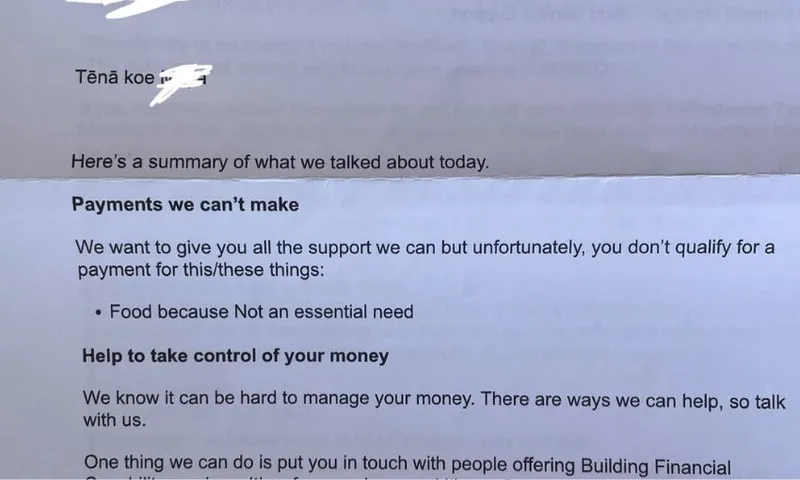
That assistance was granted to the student on December 24, but while still awaiting the JSSH, she applied for another food grant in early January. On January 8, she received a letter from MSD informing her that her application had been declined on the basis of food not being an “essential need”.
The student told The Spinoff she had been out of work for four weeks when she was advised that her food assistance grant had been declined. “I didn’t think [processing the application] would take that long, and the first week that I missed my pay, they [MSD] connected money to a grocery card,” Hansen said. “Two weeks later, I asked for more, and they said I had reached my monthly allowance, which was $100.
“They said I could go to a food bank or reach out to my family, which I had already been doing for weeks,” the student said. Reaching out for financial assistance had “absolutely” been a strain on family, she said. The student was later granted food assistance on January 12, and as of January 13, she has received the JSSH benefit, as well as backdated payments.

In a statement, MSD’s contact centre and digital services general manager Karl Oliveira told The Spinoff the ministry “apologise for the error” and “the letter sent to the student was incorrect and should not have been sent”. MSD “are reinforcing with staff the importance of selecting the correct decline reasons to ensure our communications accurately reflect legislation and the support available”, the statement said.
MSD encourages “anyone who is struggling to afford food … to contact us so we can look at what help may be available to them”. Special needs grants don’t need to be paid back, and applicants don’t need to be on a benefit to apply.
It’s not the first time a beneficiary has been told that food is “not an essential need”. In April 2021, a Lower Hutt-based beneficiary received a similar decline letter to the student. The client told Newshub that an MSD operator had informed her she would not receive a food grant after spending previous grants on vet bills, but then a letter arrived stating that the reason was that food was not an essential need. The ministry said it was sent in error.
In error or not, people in need are increasingly having their requests for assistance declined, according to advocates. Kay Bereton, of the Beneficiaries and Unwaged Workers Trust, told The Spinoff that MSD’s “tightening up” of processing hardship grants had seen “huge” demand placed on food banks. Bereton’s small local food bank in Nelson, like others around the country, has had to restrict the number of food parcels given to families and individuals to keep up with community needs, she said. “So then people rely on the kindness of strangers, things like Kai Rescue, and stealing – that’s what it pushes people to do.”
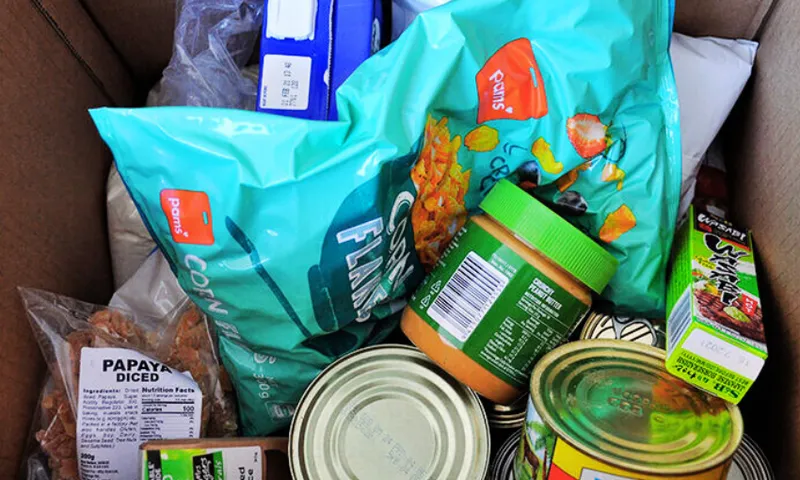
“For a lot of people, it’s a choice between eating and paying their rent, if they’re lucky enough to have a house,” Bereton said. “We do our best to make sure that people who come and ask us for food don’t feel shamed, but it’s hard to admit that you’re not able to feed yourself or your family.” She said some people forgo seeking hardship assistance from MSD, for worry of waiting for hours over the phone to be rejected. “It’s pretty awful being rejected face-to-face as well,” Bereton said. “It’s so demeaning.”
In December 2024, Radio New Zealand reported that 6% of special needs grants were declined in the first nine months of that year. In the same period in 2023, only 3.5% of these grants had been declined. Spending on food grants had dropped in the September 2024 quarter by 10.8% (to a total of $32.6m) compared to the same period the year prior. Spending dropped again slightly in the September 2025 quarter, with $32.5m worth of food grants issued.
A report released by Kore Hiakai in November 2024 found that in the 18 months to March 2024, applications for special needs grants for food requested over MSD’s Studylink call centre had increased by 15%, indicating a rise in students struggling to afford food. “People constantly go back and forth from special needs grants from MSD to food parcels from community organisations,” Jennie Sim, a Kore Hiakai researcher, told The Spinoff at the time. “There’s a narrative that students have always done it tough, but this shows just how tough it is.”
Update: This article has been updated to remove the name of the student.
Lyric Waiwiri-Smith
Lyric is an award-nominated politics reporter at The Spinoff. She covers parliament from the press gallery, pens the weekly column One MP, One Pint and is endlessly curious about what makes our decision-makers tick. Off the clock, Lyric loves a live gig, a cold brew, and being a Wellingtonian (on a good day).


