What do you do after your student project has gone to the ICJ?

Pacific Island Students Fighting Climate Change, and judges at the International Court of Justice, delivering their ‘advisory opinion” (Image: Supplied/Getty/AFP)
Solomon Yeo grew up in the Solomon Islands. At university, he became inspired by the possibility of international law to spur climate action. Now the International Court of Justice has made a ruling, what comes next?
In 2019, Solomon Yeo was in his final year of law school, studying in Vanuatu. He was taking a class on international law, and they started discussing the relationship between climate change and human rights. “Human rights are protected through international law, and climate change can breach those rights,” Yeo says. A cyclone destroying your home threatens your right to your property. A flood destroying a road threatens your right to free movement.
Where could the connection between human rights and climate change be established so that it was legally binding and open to all? At the International Court of Justice, the UN body that can adjudicate conflict between countries and produce advisory opinions on how law should be used.
In Yeo’s class, momentum started building. They thought about other options – it’s much easier to get a case heard if it deals with the law of the sea, for instance – but decided to go for the “most ambitious” option first. A small group of Pacific law students, Yeo among them, started writing letters to Pacific Island countries, asking ministers to support a case to be taken to the ICJ.
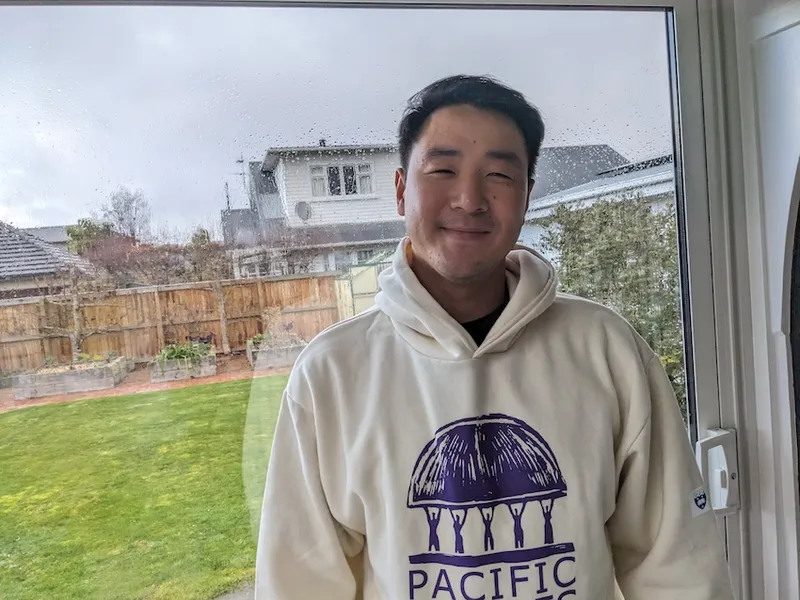
Yeo is speaking to me, obviously, because it worked. At the end of July, the advisory opinion was delivered. It said that producing and burning fossil fuels “may constitute an internationally wrongful act attributable to that state”, that climate treaties do not overrule states’ responsibility to follow international law and that access to a healthy and safe environment is a human right; states cannot meet human rights obligations without protecting the environment. It adds further legal heft to the responsibility to limit climate change and provide compensation for harm.
Yeo is in Christchurch to give a talk at the University of Canterbury, nearly a month after the judgment was delivered. While not legally binding, an advisory opinion is a tool that can be used to interpret other laws.
The students were mainly involved in the initial, political part of the process: getting a country to support the case. They wrote letters to politicians across the Pacific, signed by the whole group. Yeo pulls out a folder where he still has some of the responses. The Australian government was dismissive. “We got a lot of responses that just said ‘noted’.” The New Zealand government was a little more helpful, saying it would consider supporting the bid depending on the terms of the question.
Eventually, though, it was the government of Vanuatu that was willing to put the case forward. Yeo stayed up all night preparing to meet Ralph Regenvanu, the then-foreign minister of the country. Regenvanu agreed to take the proposal to the Pacific Islands Forum, to get support from other states; eventually New Zealand and Australia got on board. The proposal then went before the UN General Assembly. After extensive lobbying, the assembly voted unanimously for the case to go to The Hague, the Dutch city where the ICJ is based.
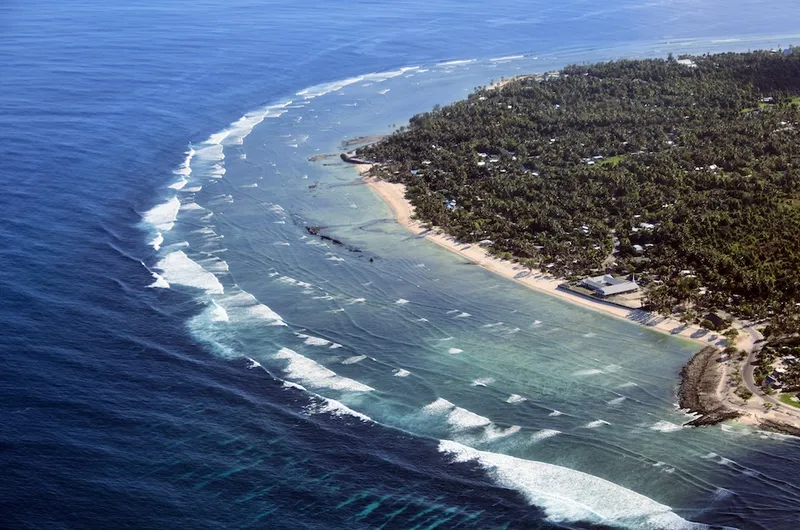
It’s not surprising, Yeo says, that this case came out of the Pacific. “We are like the critical threshold – in a way, if you address the concerns of the Pacific, you address the concerns of the world.”
After the political part was secured, the processes of the court were straightforward: there was a set procedure to follow, even though it was lengthy. Yeo thinks before describing how it felt to receive the judgment. “It was powerful, it was very meaningful, it needed to be done.” But the kinds of relationships and collaboration formed through the campaign felt just as important: a sense that by working together, they had changed something urgent.
While the judgment is significant, the law “is not a silver bullet”, Yeo says. Other supposedly binding treaties, like the UN Framework on Climate Change, have a litany of missed deadlines – not least in New Zealand, which has no plan for reaching its targets. Global heating and the disasters of sea level rise and intensified extreme weather that accompany it “require a transformational change in all fields”.
Yeo has stepped back from campaigning, and completed a master’s last year at the University of Hawai’i. He’s continuing to do legal work for communities in the Solomon Islands. “Logging companies have been incredibly damaging,” he says. He’s helping to sue companies that are removing forests. But that’s not the only part of the work. He’s been researching agroforestry: what use is it fending off a logging company if another one will come back next year? “We’re looking into intercropping coffee with the forest, so the forest is still there,” he says. Meanwhile, there will be a more enduring source of income for people in this vulnerable region.
Yeo has also worked in archiving, supporting people in the Solomons to have better records of their genealogy and culture. “I was doing this for my people – but you go back to your communities, and you see that people have a lot of needs that are immediate, and it’s not necessarily directly related to the climate.” Losing knowledge, especially if young people are moving away, is a major concern. “People say ‘my tupuna have a wealth of knowledge in our nation. If he dies, we’ll lose it.’”
Having a record of where you come from is even more urgent when the land you stand on is under threat. To Yeo, there’s a role for the law here as well. “One important thing the court clarified is that even if a state has its territory submerged by sea level rise, it remains a state.”
When Yeo first went down the “rabbit hole” of international law, way back in 2018 and 2019, he was most struck by the idea that the law can change our “global consciousness”: what we believe about the world. “Issues like genocide, apartheid, nuclear weapons, had all come through the court,” he says. While progress can feel slow, he thought about how slavery had once been normal, too. The ruling that climate change and human rights are utterly connected is a challenge for another shift in attitude. “If we’re people who really care about this planet and all life on it, are we going to help those who need it the most, or are we going to ensure our own interest and our own comfort first?”

Shanti Mathias
Shanti is a contributing writer at The Spinoff with a focus on Christchurch and the South Island. Email her at shanti@thespinoff.co.nz


