Rugby, netball and cricket’s leadership breakdowns all have one thing in common

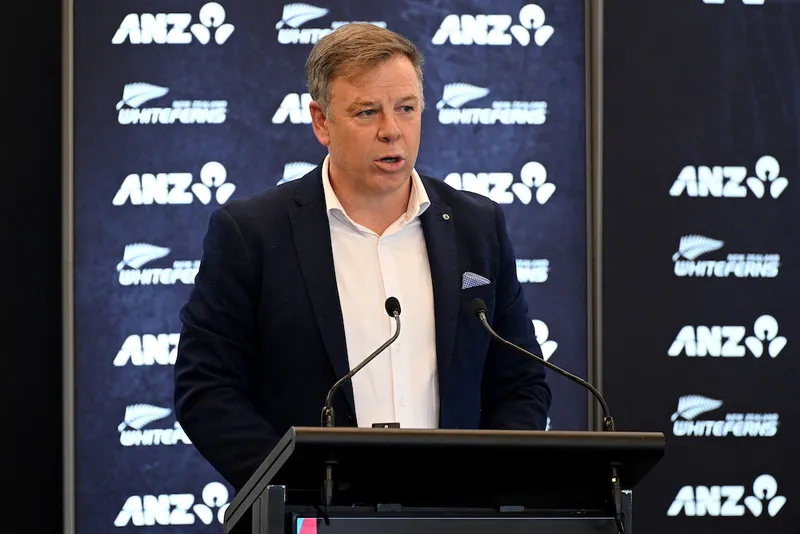
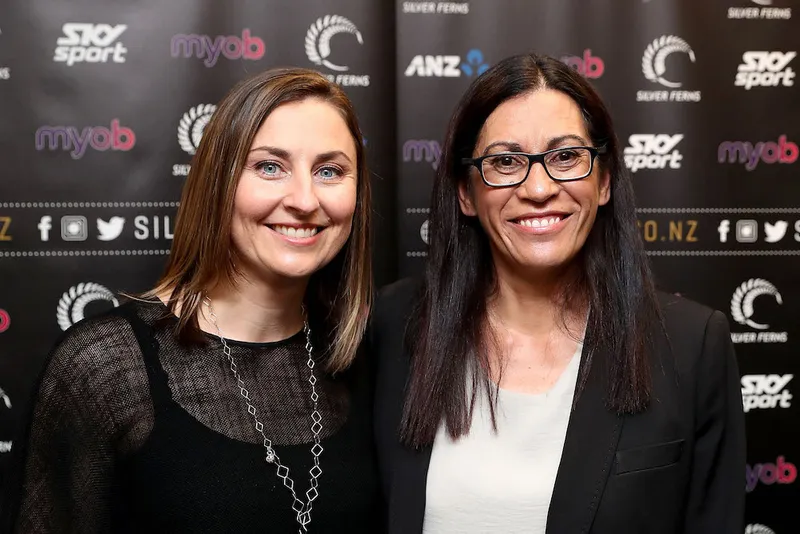
David Kirk, Scott Weenink, Jennie Wyllie, Noeline Taurua and Scott Robertson – some of the major players in the tumult (Photos: Getty Images)
Last year was a calamitous one for the leaders of the country’s three biggest team sports – and this year hasn’t started any better.
There he goes, old Scott Robertson, exiting stage left. No swan song, no chance to kick into one of his signature backspins or a dolphin dive. The only music to accompany the All Black coach’s departure was the bass-like thud of a “brutal” performance review hitting the boardroom table at New Zealand Rugby.
It will be of no consolation for the man dubbed with brilliant cruelty by an RNZ headline writer as “Disposable Razor” to realise that his misery has company.
In an extraordinary 12 months for the three highest-profile national sporting organisations (NSOs) in New Zealand, we have seen Silver Ferns captain Ameliaranne Ekenasio quiet-quit, coach Noeline Taurua temporarily stood down in a dispute over her role, and Netball NZ chief executive Jennie Wyllie resign.
Just a couple of kilometres away, New Zealand Cricket’s head office was in tremor, with chief executive Scott Weenink effectively sidelined from his role before resigning prior to Christmas. Amid this upheaval, reports of a hopelessly split and dysfunctional board emerged.
Meanwhile, New Zealand Rugby started 2025 by farewelling chairwoman Dame Patsy Reddy, who stood down from her role. In June, chief executive Mark Robinson announced he would depart after six years in the hot seat, and following a “scathing” internal review, last week Robertson was ushered out.
It is a leadership turnover like never seen before in our major team sports codes. A lot of IP has left the room and it begs questions as to whether the turbulence across the sports is coincidental, whether there is a “big-sport” leadership deficiency in this country, or whether the governance systems that deliver our major codes are fit for purpose.
As the three aforementioned sports are on different trajectories and have different issues, it would be easier to write the past year off as a random concurrence of misfortune. It would be, except for a common thread that binds them.
The leadership of all three sports have recently found themselves at war with either key stakeholders or their own members, and in some cases both.
This was especially true at NZC where Weenink, whose corporate career and first-class playing background seemingly gave him perfect credentials to lead the sport, fell foul of first his players and then his members, the six major associations that constitute the domestic game. The angst crystallised around the domestic game, with the members and Players’ Association agitating for a privately-owned T20 competition in which they would have stakes. They saw Weenink’s reluctance to endorse the NZ20 concept as proof he was working counter to their wishes.
Eventually, a majority of the board agreed with the members (who had the power to call for an SGM and dismiss the board) and without their support, Weenink’s position was untenable.
Rugby had their private equity moment in 2022. After months of bitter negotiations, their members, the provincial unions and the Māori Rugby Union, along the the Rugby Players’ Association (RPA), signed off on a deal that would eventually morph into a 8.5 percent stake for American private equity behemoth Silver Lake.
Although NZR’s recent issues revolve around the underperformance of its high-performance arm, most notably the All Blacks, the private equity deal reverberates to this day. The RPA signed only on the promise of a governance review into NZR. The so-called Pilkington Review found that NZR was not fit for purpose and although not all the recommendations – such as a fully independent board – were adopted, there was enough change where we now have a situation where the then-chairman of the RPA David Kirk is now effectively executive chairman of NZR.
It was Kirk who made the call to blade “Razor”.
Robertson was clearly the architect of his own demise, with a patchy record, a stodgy playing style and a failure to get full buy-in from his players and staff, but Kirk pulling the trigger so early while talking about “trajectories” was a signal that NZR has entered a more ruthless, maybe even more corporate, era.
Defenders of the sacking of Robertson could even claim that it was a move borne of professionalism; that it was driven by an uncompromising desire for a high-functioning, high-performance culture.
Neither of those things applied to Netball NZ’s annus horribilis.
From a botched, self-selecting review into the Silver Ferns’ environment, to the extraordinary reaction of Noeline Taurua’s coaching team to the negative feedback, the entire saga carried only the thinnest veneer of professionalism.
Taurua missed two series as the stand-off was untidily resolved. Wyllie, however, became the highest-profile casualty of the mess, when she resigned just days before her NZC counterpart.
With netball’s five regional zones still agitating for major changes, Wyllie’s successor is likely to be under pressure to usher in immediate and fundamental changes to the way the sport is delivered.
And herein lies the most significant challenge for the country’s biggest codes. As the professional sports world carves out a slot in the entertainment nexus, our NSOs are still working within systems designed for an amateur, analogue world.
If you take that to its extreme, the chief executive of New Zealand’s biggest sports are as liable to be blamed for the failure to bring home a World Cup as they are for the small club that is struggling to buy practice kits for their kids’ teams.
Their brief is enormous and in a world where change is constant, the majority of their constituents and stakeholders are either change resistant or have a thousand different ideas of what that change should look like.
So, to return to the central question: Is it merely coincidence that three of our major NSOs have faced such major upheavals and leadership failings in recent times?
The answer is no. The only real surprise is that there is no shortage of people lining up to be the next person to fail in those roles.

Dylan Cleaver
Dylan Cleaver has been immersed in sports journalism since 1996, covering three Olympic Games, various world cups and two pigeon races. He has won more than 30 national journalism awards. He is the founder of the sports newsletter The Bounce – find it at dylancleaver.substack.com


