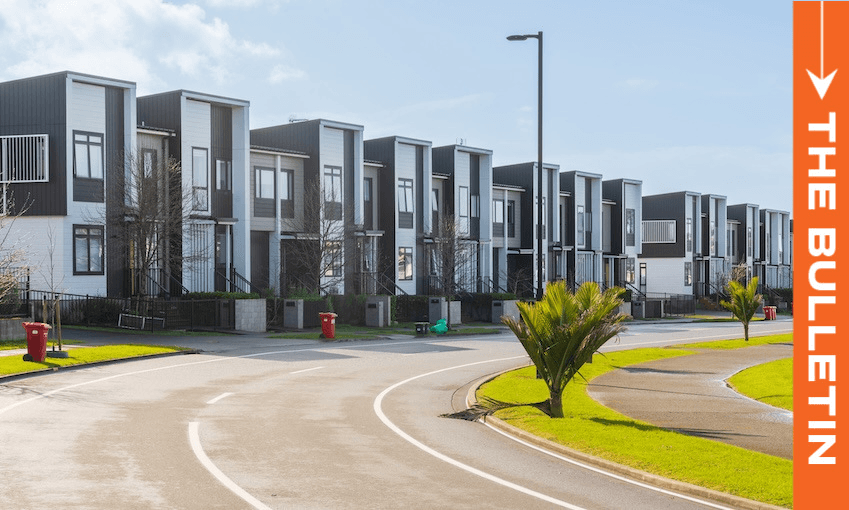

A ‘truckload’ of new townhouses – especially in Christchurch and Auckland – is reshaping the housing market, writes Catherine McGregor in today’s excerpt from The Bulletin.
To receive The Bulletin in full each weekday, sign up here.
Townhouses age out of ‘new build’ status
A curious twist has emerged in the housing slowdown: some newly built townhouses are sitting on the market so long they no longer qualify as new builds. In BusinessDesk (paywalled), Maria Slade reports that it’s having real consequences. To count as a new build, a property must have received its code compliance certificate within the past six months, never been lived in, and be purchased directly from the developer. That status allows first-home buyers to avoid loan-to-value restrictions and access low-deposit lending, including the government-backed First Home Loan scheme.
But with Auckland and Christchurch “awash” with townhouses, many listings are lingering beyond the six-month mark and “for every listing you might see on the websites … that masks maybe four or five others that are on the market for sale”, says Christchurch consultant Mike Blackburn. With ballooning supply, fewer of which are available to low-deposit buyers, some developers have reportedly shifted unsold units into rental pools or short-term accommodation, which also strips them of new-build eligibility. Nationally, townhouse median values have fallen 1.7% over the past year, compared with a 0.7% drop for standalone houses.
Auckland’s apartment overhang
The picture is even starker in Auckland’s apartment market. According to the NZ Herald’s Anne Gibson, citing CBRE research, 521 newly completed apartments remain unsold – around 20% of all units built in the past three years. Of those, 472 are in suburban projects, 42 in fringe locations and seven in the CBD.
While the absolute number represents just 1% of Auckland’s total apartment stock, the proportion relative to recent completions is “undoubtedly problematic”. Examples are wide-ranging. Ockham’s Whetū block in Pt Chev has been switched entirely to build-to-rent. In Takapuna, the 46-unit Loxley Apartments ended up in mortgagee sale after never being lived in. In the CBD, The Cab on Aotea Square still has dozens of units available, with the developer offering two-year suspended mortgages to attract buyers.
Christchurch’s townhouse glut
Christchurch tells a different but related story. The city is leading the country for overall price growth, with average values up 2.5% in the three months to December. But in The Press, Blayne Slabbert reports that townhouses and apartments are facing clear “pricing pressure” as choosier buyers are faced with a wave of new stock. A quarter of Christchurch homes are now townhouses or terraced houses – the highest share in New Zealand – and about 21,000 have been consented over the past 20 years. More than half of new housing consents in the city are multi-unit dwellings.
On the ground, one real estate agent describes “a truckload” of new-build townhouses on the market, with hundreds listed online. Those that sell quickly have garages and plenty of storage; those that don’t sell are languishing on Trade Me for months.
The Horncastle factor
One of the key figures behind the townhouse boom is Christchurch-based Matthew Horncastle, CEO of property developer Williams Corporation. In a great (paywalled) BusinessDesk profile by Cécile Meier, Horncastle rejects the idea that the city has overbuilt. His co-owner Blair Chappell says it is “definitely no harder” to sell townhouses now than a year or two ago, and that the firm is still hunting for development land. The company intends to list on the stock exchange in 2027, with Horncastle planning to remain chief executive for at least five years post-IPO before potentially moving into politics.
At the same time, Horncastle has become notorious for his combative, liberal-bating social media posts. For example: “I see no difference in values between Adolf Hitler and the political left.” As Meier writes, things Horncastle “has deemed bad, evil even” include taxes, Jacinda Ardern, beneficiaries, net-zero carbon targets, fluoride, left-wing voters (“mentally ill”) and men wearing shorts at work.
According to one anonymous property commentator, Horncastle’s passion for posting may become an issue for investors as the IPO approaches: “Is that the sort of thing I want to invest in? Do I believe that this person can run a serious business if they are ranting like this on social media?”



















![On NZ Super, ‘Treasury is very clear,’ said Milford CEO Blair Turnbull. ‘Unless [the entitlement age] goes to something like 72 or 73, we can’t afford it.’ (Image: Getty/The Spinoff)](https://images.thespinoff.co.nz/1/2026/02/Bulletin-160226.jpg?undefined&w=600&w=1290)
