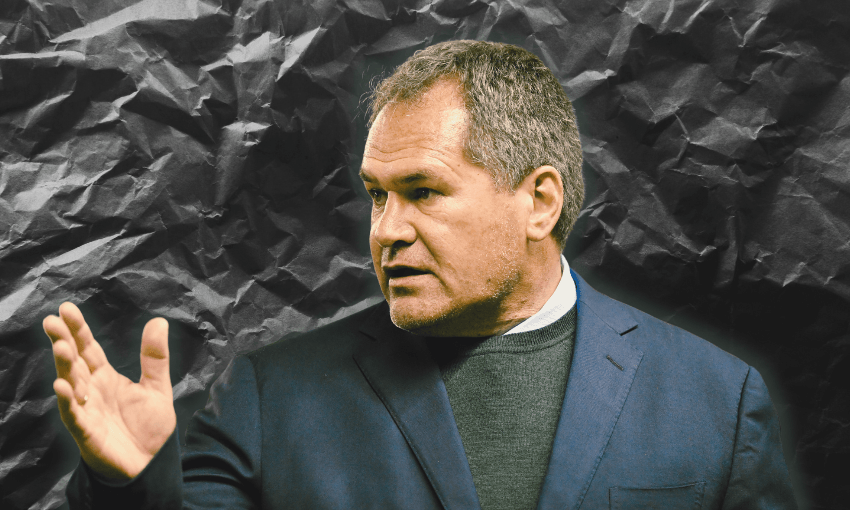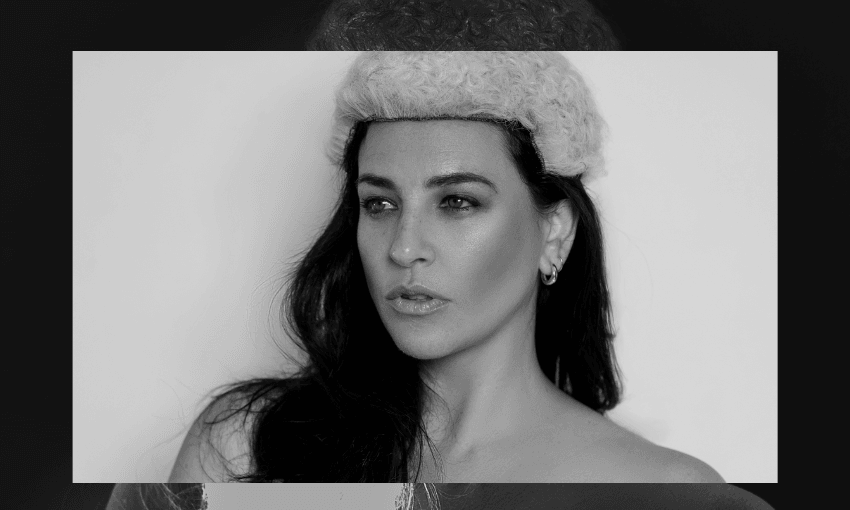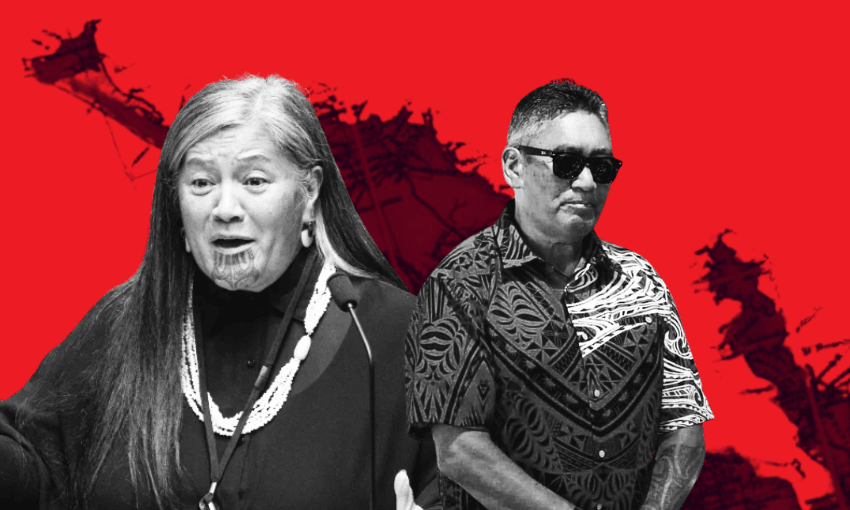


Hone Harawira walked away from Te Pāti Māori over a decade ago. Now, another Te Tai Tokerau MP looks set to do the same.
Fourteen years ago, former Te Tai Tokerau MP Hone Harawira sensationally quit Te Pāti Māori, which was then known as the Māori Party. He wasn’t happy with the party’s leadership or their stance on the Marine and Coastal Area (Takutai Moana) Act 2011 – a piece of legislation born from the Foreshore and Seabed Act 2005, which itself was the impetus for the formation of the Māori Party only six years earlier.
Now, we are seeing history repeat itself in an almost uncanny fashion. Mariameno Kapa-Kingi, the current holder of the Tai Tokerau seat Harawira once held, is being pressured to leave Te Pāti Māori in spectacular fashion. Right beside her is Te Tai Tonga MP and fellow party member Tākuta Ferris, who Te Pāti Māori is also looking to expel. Add to that the fact the Marine and Coastal Area (Takutai Moana) Act is back before the house and the two MPs are poised to split from Te Pāti Māori at any moment – potentially forming their own party – and the scenario becomes astonishingly similar to Harawira’s formation of the now dissolved Mana Movement.
With all that in mind, attention is turning to what the future could hold for not only Te Pāti Māori, but for all of the Māori electorates. Currently, it seems there are two likely paths forward:
- Te Pāti Māori completes its process of having Kapa-Kingi and Ferris removed as MPs of its party. Following this, they could remain independent MPs until next year’s election or look to form a new political party of their own, potentially taking other members of Te Pāti Māori with them. There is also the potential for a dual by-election to take place, should this unfold outside of six months before the next general election.
- The other (less likely) scenario is that the party’s leadership – party president John Tamihere and co-leaders Debbie Ngarewa-Packer and Rawiri Waititi – are removed by detractors such as Ferris and Eru Kapa-Kingi and replaced with their own preferred options.
Whatever happens, the Māori political landscape will be vastly different come election time. Te Pāti Māori currently holds six of the seven Māori electorate seats and had its sights set on claiming the elusive Ikaroa-Rawhiti electorate from Labour MP Cushla Tangaere-Manuel at next year’s election. However, there is now every chance all of the Māori electorates will be tightly contested in the next 12 months, either through byelections or the general election.

Despite six of the Māori electorate seats being held by Te Pāti Māori, Labour won the party vote across all seven of them at the 2023 general election. This is something Te Pāti Māori will be acutely aware of and the Labour Māori caucus will want to capitalise on support for their party come election time.
The ongoing fiasco has shattered any perceived sense of kotahitanga among supporters of Te Pāti Māori that was galvanised under the Toitū Te Tiriti movement. Instead, lines have been drawn, sides have been picked, and the feeling of unity is gone. Waititi and Ngarewa-Packer continue to deploy the “one-term government” line in a desperate attempt to keep supporters focussed on removing the coalition government, but the elephant in the room continues to grow and the disunity cannot be ignored.
Across the country, many once faithful supporters of Te Pāti Māori have spoken out in support of Mariameno Kapa-Kingi, criticising the party’s leadership and their handling of the situation. In particular, the relationship between Tamihere, his daughter and party manager Kiri Tamihere, and her husband and party co-leader Rawiri Waititi has come into focus.
In Te Tai Tokerau, the electorate committee is believed to be in support of Kapa-Kingi, with ongoing discussions around next steps. In Ferris’s electorate of Te Tai Tonga, a vote was passed and a petition launched calling for Tamihere’s resignation. In between, the trio at the top of the party appear to have adopted the adage that the best defence is a great offence.
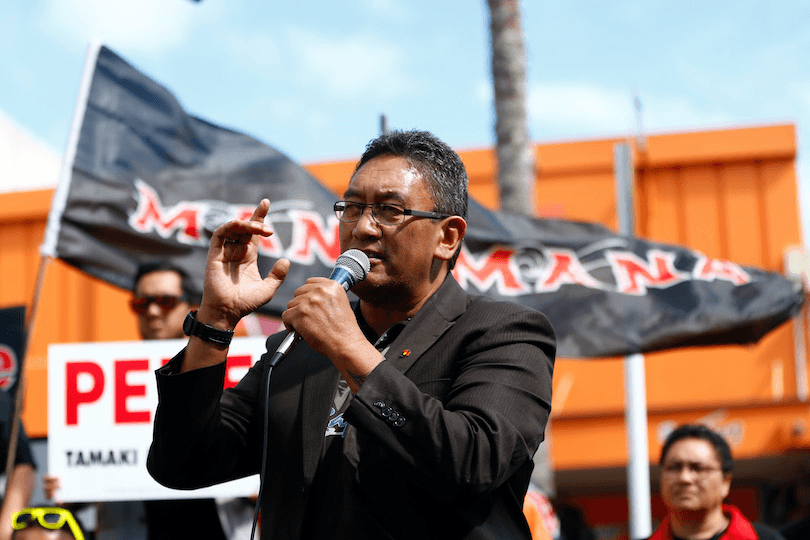
The party’s leadership looks to be betting on the chips somehow falling in their favour – but it’s a risky gamble. Support for Kapa-Kingi in Te Tai Tokerau has likely been strengthened by the whole drama. If votes in the electorate are split between an independent Kapa-Kingi and whoever Te Pāti Māori chooses to stand, there is the potential for a strong Labour candidate, such as Willow-Jean Prime, or 2023 Green candidate Hūhana Lyndon to swoop in and claim the seat. The same is true for Te Tai Tonga, where Labour would have a good chance of picking up the seat with a strong candidate running against an independent Ferris.
With much of its voter base seemingly disillusioned at the inability of Te Pāti Māori to get its shit together, the party is facing an uphill battle to retain a majority of the six seats it currently holds. If anything, the two most inexperienced MPs in the party – newly elected Tāmaki Makaurau MP Oriini Kaipara and Hauraki-Waikato MP Hana-Rawhiti Maipi-Clarke – have the best shot at retaining their seats and emerging from the turmoil with the least amount of damage (and even then, Kaipara has apparently aligned herself with Kapa-Kingi).
The calamity has taken away from what should be a time of celebration for Te Pāti Māori. Kaipara comprehensively won the Tāmaki Makaurau seat over an experienced senior politician in Peeni Henare, and Maipi-Clarke has just returned from New York after being honoured as one of the most influential young people in the world. Instead, a war of words and accusations continues to fly between MPs and the party’s leadership.
It appears the time is ripe for a new Māori political party to enter the fray. If Kapa-Kingi, Ferris and whoever they bring with them (see Hone Harawira and Eru Kapa-Kingi) can provide a viable alternative for disillusioned supporters of Te Pāti Māori, then they stand every chance of forming a legitimate party with strong support. A clear policy framework and willingness to work with any party in the house in order to create change would truly set them apart from Te Pāti Māori. However, to do so would require a departure from the fiercely independent stance Ferris and Kapa-Kingi have adopted as Te Pāti Māori MPs.
At a minimum, they would simply have to provide a feasible alternative to Te Pāti Māori for Labour and the Green Party in a potential left bloc coalition. At most, they could give consideration to working with a right wing government. Although it is highly improbable the likes of Winston Peters and Ferris would ever consider teaming up, stranger things have happened in politics.
Those who were once empowered by the belief that Te Pāti Māori was the movement for them will now instead be left with a sour taste that will be hard to rid. The hangover from this will linger for some time, as factions become hardened and irreconcilable differences take their full effect. It’s difficult to say if this is bad or good for Māori on the whole, but it has provided an insight into the complexities of Māori politics, which traverses whānau, hapū, iwi, regions, history, and the halls of parliament.