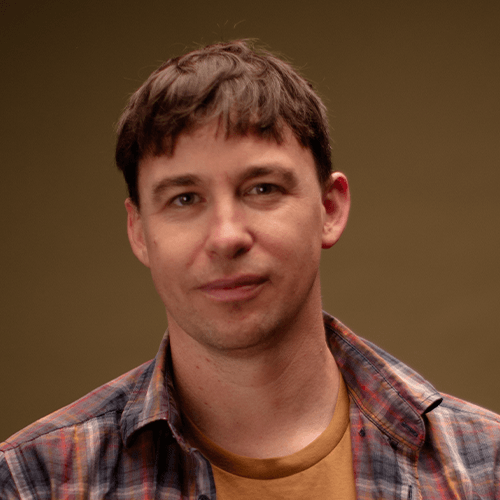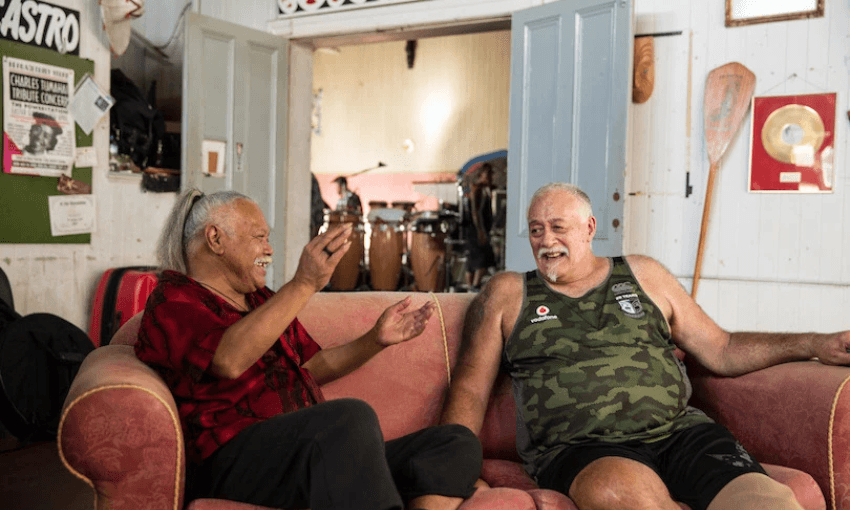
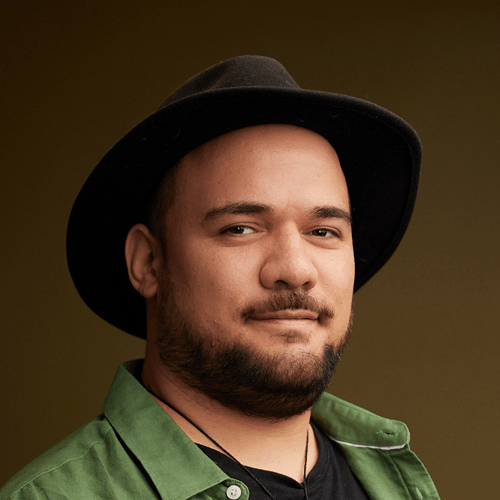


The longtime Herbs frontman Dilworth Karaka didn’t just help create Pacific reggae in Aotearoa – he turned music into a voice for Māori, Pasifika and the unheard.
“We were the voice for a lot of people that just weren’t getting heard,” John Dilworth Karaka said in the band’s documentary Herbs: Songs of Freedom.
It’s hard to think of a better summary of Karaka’s life’s work than that.
Karaka, the longtime frontman and enduring pou of Herbs, was 75 when he died, with his whānau confirming on Sunday he had passed. He leaves behind a legacy as one of the great pioneers of modern Aotearoa sound. Karaka was a musician whose voice, guitar and humble mana helped shape not just a band, but a political and cultural language for generations of Māori and Pacific listeners.For more than four decades, Karaka was at the centre of Herbs, the band that gave this country some of its most soulful, warm and uncompromising protest music. For Herbs, reggae was never just an imported rhythm or borrowed style. It became rooted here in the 1970s Bastion Point occupation, the dawn raids of the same era, and the anti-nuclear struggle of the 80s. Reggae was synonymous with Māori land rights, Pacific solidarity, the working-class suburbs of Auckland, and the intertwined lives of Māori and Pasifika communities learning to stand together.
Herbs did not just provide the soundtrack to that history, but helped make sense of it.
Born in 1950 and raised in Auckland, Karaka came from a whānau where music was in the bloodstream. His mother’s people had come south from Parua Bay near Whangārei and his father, Johnny Mita Karaka, was from Waikato, with deep ties to the Kīngitanga. Karaka was a product of the inner-city and east Auckland worlds that formed him: Airedale St, Glen Innes, Tāmaki College, the wharves, the working-class circuits of dance halls, pubs and family musicians.
Before Herbs, there was rugby league, and by all accounts Karaka was good enough for much bigger things. However, a devastating injury at Carlaw Park changed the course of his life. After a tackle left his leg mangled in the mud, gangrene set in and his left leg was amputated below the knee. Karaka refused to let it shrink his life. He kept going, working, and adapting. Eventually, Karaka found the path that would make him one of the most important musical figures this country has produced. That path ran through Takaparawhau, Bastion Point.
Karaka and his young whānau were there during the occupation, among the many who lived, learned and stood together across those 506 days, protesting the land being taken by the crown and set for subdivision. Later, he would describe it as a profound education – not only in land injustice and state power, but in the power of collective action and the role music could play within it. At Bastion Point, he saw old people sing before eviction. He watched protest become memory in real time. He learned that songs could hold grief, resistance and clarity all at once. It was a lesson that never left him.
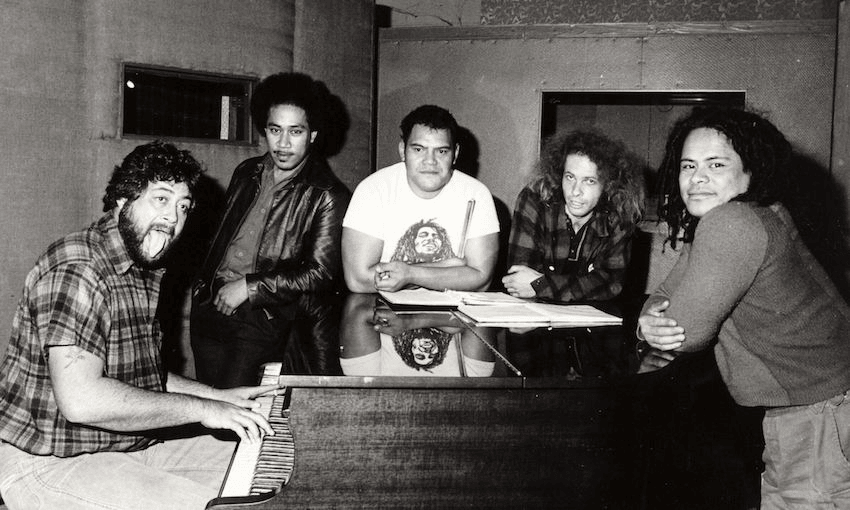
When Karaka joined a fledgling Herbs in 1979 – after the group had begun taking shape around Toni Fonoti, Spencer Fusimalohi and Fred Faleauto – he stepped into a project already alive with political purpose. But over time, he became its centre of gravity. As members came and went, Karaka remained: guitarist, singer, bandleader, mentor, keeper of the kaupapa. As Fonoti later put it in Herbs: Songs of Freedom: “In most ways, he is the face of Herbs.”
Herbs emerged from an Auckland era shaped by social justice movement Polynesian Panthers, unionism, anti-racist organising, urban Māori activism and the ripples of colonisation that were still being treated by many as background noise. Their landmark 1981 EP What’s Be Happen? is now regarded as one of the most important recordings in New Zealand music history. The album cover featured an image of the Bastion Point eviction. Its songs confronted apartheid, the Dawn Raids and the treatment of people pushed to the margins by the state.
Later came ‘French Letter’, the anti-nuclear anthem aimed at France’s testing in the Pacific, and songs like ‘Nuclear Waste’, ‘Dragons and Demons’, ‘Rust in Dust’ and ‘Sensitive to a Smile’ – music that was melodic, accessible and beautiful, but never politically lacking. Herbs understood that a song could be warm without being soft, generous without being vague, and popular without surrendering its teeth.

That was part of Karaka’s gift. He never sounded like he was shouting for attention. He did not need to. There was steadiness in him. A coy quality. “A light touch”, as director Tearepa Kahi said to media. But the work was anything but slight. Karaka was part of building a distinctly Aotearoa and Pacific sound world, one that fused Bob Marley’s influence with Māori and Pasifika sensibilities, histories and obligations. UB40 reportedly heard that emerging blend and called it “Pacific reggae”. The label stuck. But what mattered more was that the music had finally named itself. Karaka spent the next 40 years carrying it.
Herbs were never just confined to the protest circuit though. Their reach was much wider than that, and Karaka helped steer them there too. There were collaborations with Dave Dobbyn on ‘Slice of Heaven’, Tim Finn on ‘Parihaka’, Annie Crummer on ‘See What Love Can Do’. There were tours, awards, Hall of Fame inductions and documentary retrospectives. There was mainstream recognition. But even as Herbs became beloved across the country, the band never forgot where it came from – its songs still held the fabric of struggle. Its harmonies still carried the memory of people told they were too political, too brown, too angry, too much. Karaka knew exactly who Herbs belonged to.
That knowledge helps explain why so many tributes have described him not only as a musician, but as a mentor. For countless Māori and Pacific artists, he represented proof that you could make music grounded in your communities, political in content, and still enduring enough to be sung by school choirs, church congregations and mokopuna decades later. Karaka took joy in that continuity. He understood that recorded music could become history, and that history, if sung often enough, could become inheritance.
“As far as we were concerned, our music is recorded history,” Karaka once said in an interview.
The public image of Herbs was one of brotherhood, and that was no act. Karaka outlasted many of the men he played beside: Fred Faleauto, Charlie Tumahai, Tama Renata, Willie Hona, Tama Lundon and others who helped build the Herbs’ sound and spirit. He often spoke of missing their vibe, their quirks, their presence. But he also understood that carrying on was part of the duty.
Those who knew him describe a storyteller, listener, league tragic, family man, and someone more interested in the kaupapa than in pretentiousness. Karaka mattered, because Herbs mattered. Herbs mattered because they gave shape to truths this country often preferred to avoid. They sang about land theft, racism, nuclear violence, Pacific dispossession and spiritual hypocrisy without ever losing sight of joy, kinship and tenderness. They were political because their communities had no luxury of being otherwise. Karaka understood that instinctively.

Karaka also understood that Māori and Pacific solidarity was not inevitable. It had to be built. Toni Fonoti said as much in an interview, reflecting on a time “when Māori and Pacific were not united”. Herbs helped bridge that divide, not through slogans but through shared labour, shared stages and shared purpose. Karaka was central to that project. In that sense, his legacy sits not only in music history but in social history too.
His whānau have said he will be taken to Whaatapaka Marae in Waiuku, where he will be farewelled and buried. It is a fitting journey for a man whose life moved between city and whakapapa, protest and performance, public voice and private devotion.
There will be many ways to remember John Dilworth Karaka: as the frontman of Herbs, pioneer of Pacific reggae, freedom fighter for Bastion Point, mentor, bandleader, cousin, dad, koro, and a brother in music and in struggle.
But perhaps the simplest is still the best. He was the voice for a lot of people who weren’t getting heard. And because he sang, they were.