The rugby league club where reo Māori is spoken first

One of the Waitematā players takes a hit-up during the game. (Photo: Liam Rātana).
In the depths of suburban West Auckland, one rugby league club has supported 150 children to play in teams where te reo Māori is the norm. Ātea editor Liam Rātana went along to a game.
When I was 13 years old, I played a season of rugby league for the Hibiscus Coast Raiders. There was a player on our team, Barney Peters, who was raised with te reo Māori as his dominant language. By the time he joined our team, Barney had been speaking English for a few years, but reo Māori was still where he felt most comfortable. I remember a few players in the team giving him shit for his “broken English”.
Eighteen years later, a group of parents raising their children with te reo Māori as their dominant language have joined together to create a safe, reo-first team environment for their tamariki within the Auckland Rugby League competition.
“Rongomaiwhiti Rīki is a kaupapa born from a desire to foster reo Māori within mainstream competitions,” says coach Tuteauru Maipi.
More than 150 tamariki predominantly from kura kaupapa or rūmaki reo around West Auckland and as far afield as the North Shore have created five teams in different age grades – ranging from under sixes up to under 11s – to play in the Auckland rugby league competition under the banner of the West Auckland-based Glenora Bears club.
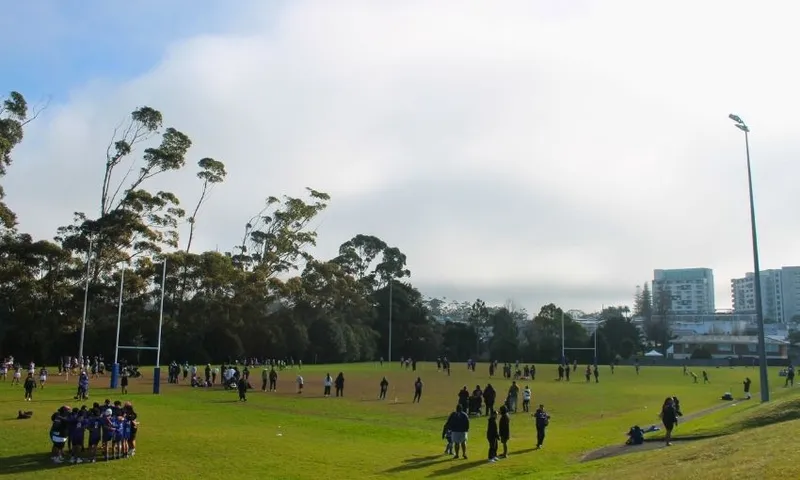
I arrive at Harold Moody Park in Glen Eden at 10am. Today’s a big Saturday for the proud ‘ora – it’s the club’s 95th anniversary and many longtime members will be here. As I walk past the main field, I see a young Glenora team playing Richmond. They’re probably around the age I was when I played with Barney.
Walking over the bridge and past the kids looking for eels in the Waikumete Stream, I make my way towards the top fields. As I near the top of the small hill, I hear reo Māori being flung around – much like it is in the marae kitchen when the dishes are taking too long – and know I’m in the right place. There’s a team warming up to the side of the field, led by Maipi. Almost all of their instructions are in te reo Māori.
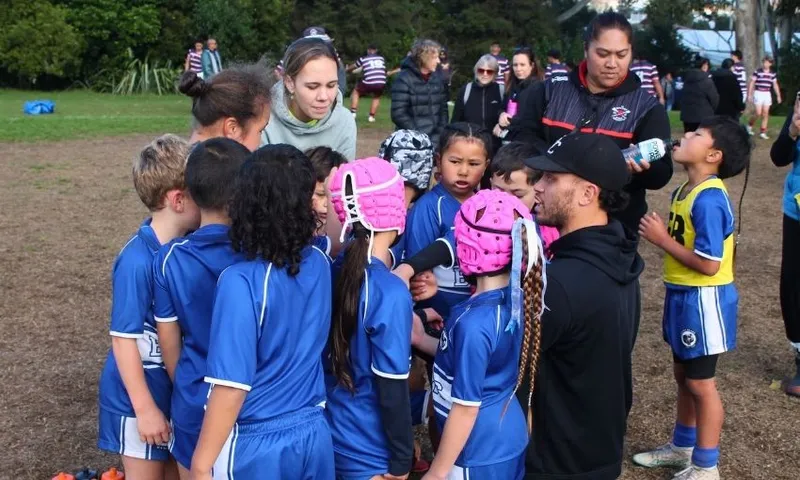
“Kua rite koutou?” he asks the team. “Āe,” they reply in unison.
Wherever I turn, I hear te reo Māori being spoken. The parents on the sideline, the kids, their coach. They’re all speaking their native tongue and normalising the use of the language in a mainstream setting that has long been dominated by English. “Te maha o te reo ki konei,” I tell myself. “Lots of reo being spoken here.”
I soon spot an old friend from university, Laughton Matthews, whose eldest son plays in the team. She tells me she was a little hesitant to allow her boy to play league but seeing him run around with his friends and the whānu-first culture the team has been built around was hard to turn down.
“The karakia before games, the whanaungatanga, it’s all part of it,” Matthews says.
Khlani Paenga Hayward, Māori outcomes lead for Healthy Families Waitākere team at Tuia Waitākere and partner to Maipi, has played a key role in establishing the kaupapa. She jokingly tells me working with her partner has been the hardest part of the whole process. “He played for Te Atatū Roosters his whole life,” she says. “He still won’t put on a Glenora Bears jersey.”
Jokes aside, Hayward says she’s grateful for the support shown by the Glenora club, which donated $15 towards each child’s fees across the five teams. She says finding resources for the teams – equipment, coaches, referees and training grounds – has been the hardest part of establishing the kaupapa so far. With interest growing quickly, Hayward says she is both excited and nervous about the group’s capacity to cater to the needs of the tamariki. “We play against other teams with Māori kids and they hear the reo being spoken and then they want to play for us, or their parents want them to play for us.”
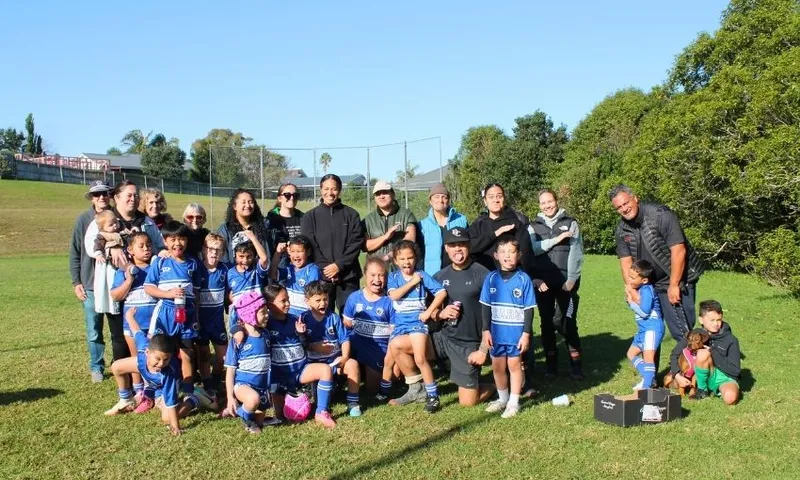
While many of the children in the team speak reo Māori fluently, some are still learning, but Maipi stresses any child is welcome, even non-Māori. “We’re a whānau first kaupapa,” he says.
Today the team is playing against fellow West Auckland club Waitematā Seagulls. The Glenora team gathers together for a team huddle before the game and Maipi leads a short karakia. It’s something not often seen in this competition, but that feels intrinsically Māori and tika to do.
Before long, the kids are out on the field running around and it’s just like most games at this age. They run around the paddock, there are some stand out performers, and no one worries too much about the score. What catches my attention the most during the game is not the big runs or try-saving tackles, but the amount of reo Māori I hear being used.
“Haere! Mahitahi! Awhina! Ka pai Hine!” the proud parents and supporters shout from the sideline.
During a quarter break I hear Maipi talking to the team: “What are we doing in kōwhai?” he asks. The kids say something about coming off their line on defence.
In the next period of play I see one of the children stick out his hands like an aeroplane to help with spacing on the defensive line. “Waka rererangi,” he says to his teammates on either side. “Whakarongo,” one of the other players says.
The tackle count is in both English and te reo Māori. The support is in te reo Māori. The instructions amongst the team mates are in te reo Māori. This is an environment where reo Māori is normalised, and a natural progression of the hard fought wins advocates of the language have achieved over the last 50 years.
While Sky Sports – the country’s largest live sports broadcaster – first trialled broadcasting sports fixtures with te reo Māori commentary back in 2000, it didn’t catch on until 2019. Since then, however, the option to view major sporting events like All Blacks games or Super Rugby fixtures with reo Māori commentary has become more common.
Speaking to me after the game, Maipi shares his own lived experience as a raukura of Hoani Waititi who played club sports throughout his schooling. While a lot of his teams at Te Atatū were Māori and there were a few reo speakers among them, he acknowledges the experience of going to play for a mainstream club can be daunting for children who have reo Māori as their first language. “This is about creating an environment where the kids are comfortable being themselves,” he says.
I begin thinking about my old team mate Barney and how he would’ve thrived in an environment like this. I bet none of these kids cop any flack for their “broken English”.
The game finishes and awards are handed out for the kaitākaro o te rā, or players of the day. Just like any team, there is a small debrief and a note about training on Rāapa, or Wednesday, being a bit longer. Many of the team and their parents will go on to watch the older grades play, hearing mostly te reo being spoken where it never used to be.
This is not just language revitalisation in action, but normalisation. And it appears to only be getting stronger.

Liam Rātana
Liam Rātana (Ngāti Wairupe/Ngāti Kurī) is editor of The Spinoff's Ātea section. He is passionate about indigenous and minority issues. Liam enjoys cooking, poetry, photography, and exploring the outdoors.


