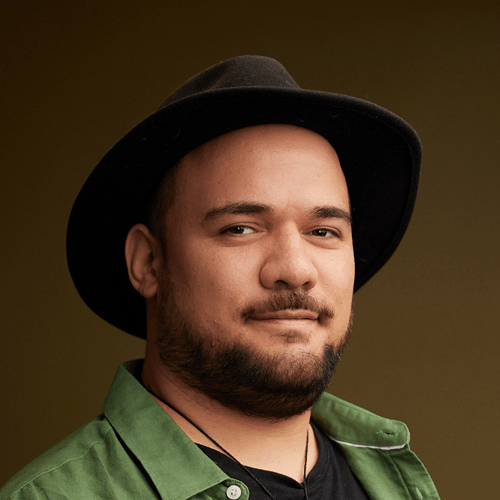


A cemetery search, a toddler, and a family tree that is far from simple.
There we are, trodding through the long, yellowing grass of the Roman Catholic Division at Waikumete Cemetery in west Auckland. My toddler son is chasing his dog through the rows of crumbling headstones, while his mother and I desperately search for plot number 49 of the second row.
“Get off there,” I yell at my dog as he runs towards a grave covered in weeds and missing a headstone.
I felt a bit uneasy about bringing him into the cemetery – it’s certainly not common practice for our urupā back home – but this isn’t one of those kinds of urupā. Besides, the dog needed a walk and because we had the exact plot number we were looking for, I thought we mightn’t be here too long. Also, there was a sign at the entry saying: “Keep your dogs on leash,” so I figured they were welcome here.
After searching back and forth between the two rows closest to the road for around half an hour in the warm afternoon sun, I tell my fiancée to forget about it and that we’ll come back another time. It’s too hot, I’m too full, our toddler is tired, and there’s pavlova to be eaten at home.
“It’s a shame the Catholics haven’t maintained their graves as well as the Jews next door, eh?” I cheekily remark to my fiancée as I start the car.
Patrick James Doolan and Margaret Clifford Doolan are the people we were searching for. They’re my fourth great-grandparents on my mother’s side, and likely a large reason she felt comfortable giving me a strong Irish name like Liam. They were both born in Ireland in the early 19th century, were married in Quebec, and eventually migrated to New Zealand.
Three generations later, my mother Natalie Mary Shaw was born. She would go on to meet my Māori father, and eventually I was born. The son of a third-generation New Zealand European woman and a staunch Māori man with only a speck of non-Māori blood in him. It made for an interesting upbringing.

Growing up, I had a strong affiliation with my Māori side. There are a few reasons for this, but mostly it was because after the passing of my mother when I was four years old, my dad became solely responsible for my care. He made sure I was connected to my turangawaewae and helped shape my identity as a young Māori male. Unfortunately, it also meant that I was disconnected from my Pākehā whakapapa.
In the last six months though, I’ve been on a journey of discovery regarding my mother’s side. A lot of my interest has come from the fact I now have a young child of my own. While I can trace our Māori lineage back dozens of generations, I have long had a massive gap of knowledge on the other side. That’s now changing.
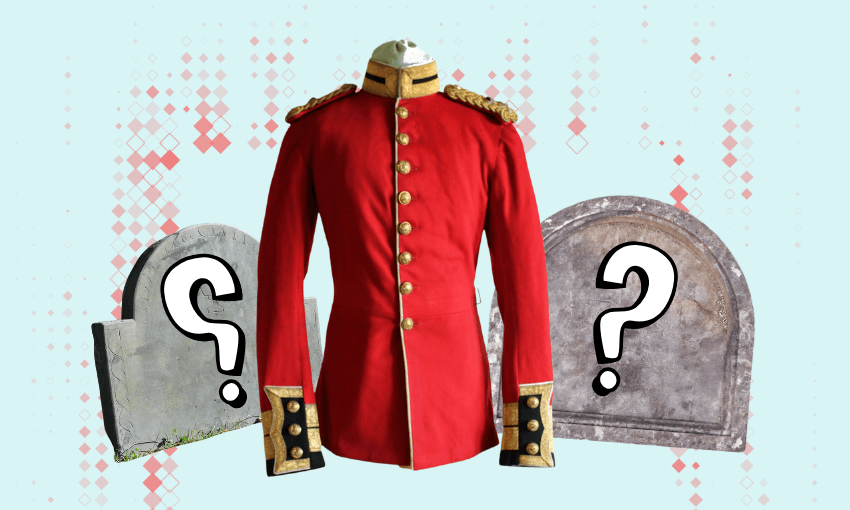
With the skills I have gained from decades of research on my Māori genealogy, I have started to unravel more of my mother’s whakapapa. It’s made for some eye-opening discoveries, and a few mild moral dilemmas. One of the most interesting findings so far is that Patrick Doolan, the man whose grave we’ve been searching for, was a member of the British army and served in the 65th Regiment here in New Zealand, which had the distinction of being the longest-serving British infantry regiment in New Zealand and played a key role in the invasion of the Waikato during the mid-19th-century Land Wars.
It took me a while to come to terms with this discovery. On one side, I am a descendant of people who fought against the British and colonisation of Aotearoa, while on the other, I am descended from the very people they were battling. I know I am not alone, but I haven’t really seen much discussion on how to deal with this dilemma.
Since finding this out, I’ve constantly been weighing up what it means and how I might come to terms with it. Do I need to apologise to Waikato-Tainui for the actions of my forefather? Should I care for his grave in the same way I have for my Māori tūpuna? What should I tell my son about his fifth great-grandfather? How might he have felt about the fact he has grandchildren with Māori ancestry? I still haven’t figured it out.
Another interesting part of the journey has been discovering where some of my ancestors lived and are now buried. Jessie Evelyn Steven, Patrick Doolan’s granddaughter and my second great grandmother, is buried at the Māngere Lawn Cemetery, just minutes from my home. I recently found her grave and decided it needed a clean and fresh lick of paint. It’s incredible to know that she has been there all this time, yet I never knew until discovering it myself.

Similarly, I’ve found out I have a bunch of ancestors buried around Auckland and beyond. Another interesting fact I’ve uncovered is that some of my ancestors were responsible for the settling of the Cape of Good Hope in South Africa, which is now part of the wider Cape Town area. One of them became a miner in the Northern Cape of South Africa. I’ve got Scottish ancestors buried as far afield as Kimberley, South Africa. A couple of them came to Aotearoa aboard the SS Māori. In a way, it’s another one of my waka, though it might take a while before it features in my pepeha.
While I can’t say for certain what my colonial ancestors would have thought about having descendants like me and my son, I like to think they would have loved us just as much as any other of their descendants.
The journey of embracing my British ancestry is ongoing and something that is taking some reckoning. I’m still trying to figure out how to accept the fact that I am the coloniser and the colonised and what it means about how I live my life. For now, I continue to walk in both worlds, attempting to accept who I am, and forgiving myself for stumbling along the way. It’s sort of like just quickly wearing your shoes inside the house, or putting your kai on the passenger’s seat while you drive. It’s a collision of tikanga, worldviews, perspectives, and truths – neither of which are wrong or right, just different.
I will be back at the cemetery again some time soon, searching for the Doolans, and planning on how to fix their graves, even if they were responsible for some pretty horrendous things.