How an old Māori song became the anthem of the Pacific

All of these musicians have found success with their versions of E Papa Waiari. (Design: The Spinoff).
Alongside a plume of cannabis smoke and 50 shades of red, gold and green, there is almost always one other certainty at a New Zealand reggae concert: The crowd singing ‘E Papa Waiari’ – but why?
There I was, scrolling through my socials, watching the dozens of posts from people at the Maoli concert in Auckland. As the night progressed and the sun set, the crowd got drunker, higher, and eventually – almost like clockwork – they all sang ‘E Papa Waiari’. It made me ponder just why we all love singing this song so much, where it began, what the song is actually about, and if we’ll ever find something else to sing instead.
“For Fiji,” read one the captions on the videos at the Maoli concert, referring to the Fijian singer George Veikoso, who passed away last year. Veikoso was a legendary reggae artist and hugely popular with reggae fans around the Pacific. He also recorded his own version of ‘E Papa’, which he was renowned for singing at his concerts. Although Veikoso is credited with bringing the song to the Pacific – I once even saw him perform it in the Cook Islands – its roots are firmly placed in Aotearoa.
While the exact origins of the song are debated, it’s commonly accepted that ‘E Papa’ is an “old river song” from the Whanganui area. According to some, it was composed in the late 19th century following the battle of Moutoa on May 14, 1864. Māori in the area had begun embracing the Pai Mārire (Hauhau) faith as a response to land loss, but some saw it as a threat to iwi mana. An upriver party led by Mātene Te Rangitauira sought to attack Whanganui, but was blocked by downriver chiefs Hōri Kīngi Te Ānaua and Hoani Wiremu Hīpango, who defeated them at Moutoa Island, resulting in significant casualties on both sides.
In one account of the battle, Waiari Te Patu was a rangatira from the Whanganui area who was killed in the battle. While there are stories of other people named Waiari from around that time – and a river near Te Puke called Waiāri too – it is said the death of Waiari Te Patu became the inspiration for the waiata, which is effectively a lament for his death.
The oldest written mention of the song is from June 16, 1934, when it appeared in papers around the country on the radio schedule for the day. That evening, a version of the waiata sung by the Puketeraki Māori Concert Party was broadcast on the 3YA Christchurch station of the Radio Broadcasting Company of New Zealand.
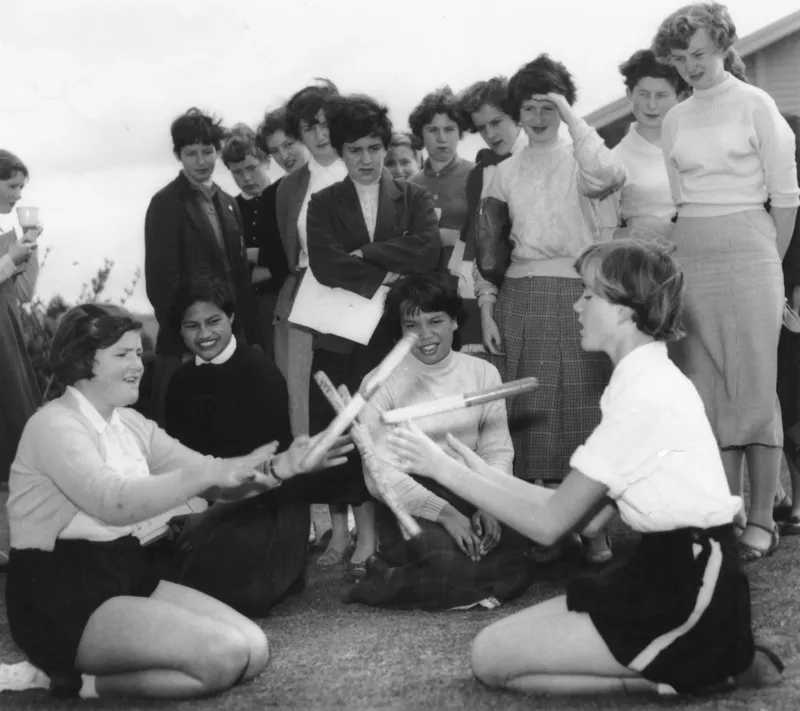
Over the next five decades, the song continued to gain popularity, particularly through its use as a waiata for tī rākau, stick games popular in Māori communities. Many Māori groups and choirs performed and recorded their own version of the song, including the St Joseph’s Māori Girls College and Turakina Māori Girls’ College. However, the first recording by a pop artist came in 1985, with the Pātea Māori Club releasing a version as a 7-inch single which peaked at 41 on the New Zealand charts.
Two years later, ‘E Papa’ was the opening track on the Herbs album Sensitive to a Smile; band members Fred Faleauto and Dilworth Karaka had also appeared in the Pātea Māori Club recording. Sensitive to a Smile would go on to be certified platinum, win album of the year at the 1987 New Zealand Music Awards and reach the top 10 of the New Zealand album chart, spending 30 weeks in the charts in total. The whole country was now familiar with ‘E Papa’.
In 1996, Veikoso released his second studio album Born and Raised, featuring his version of ‘E Papa’, titled ‘Chant of the Islands’. From there, the song gained popularity throughout the Pacific and became a setlist mainstay in Veikoso’s concerts – a large proportion of which were in New Zealand. As many New Zealanders were already familiar with the waiata, crowds would often sing along. ‘E Papa’ soon became a cornerstone of his famous crowd interaction.
The ‘E Papa’ concert singalong continued up until Veikoso’s passing last year. In September, at a tribute concert for Veikoso in Honolulu, Hawai’i, the 30,000-strong crowd sang ‘E Papa’, serving as an emotional climax for those in attendance. Four months later, over 21,000 people gathered at Victoria Park in Auckland and sang ‘E Papa’ in honour of Veikoso, perhaps not realising that they were also honouring the memory of Waiari Te Patu, the battle of Moutoa, and all the artists who helped make ‘E Papa’ the chant of the Pacific.
Liam Rātana
Liam Rātana (Ngāti Wairupe/Ngāti Kurī) is editor of The Spinoff's Ātea section. He is passionate about indigenous and minority issues. Liam enjoys cooking, poetry, photography, and exploring the outdoors.


