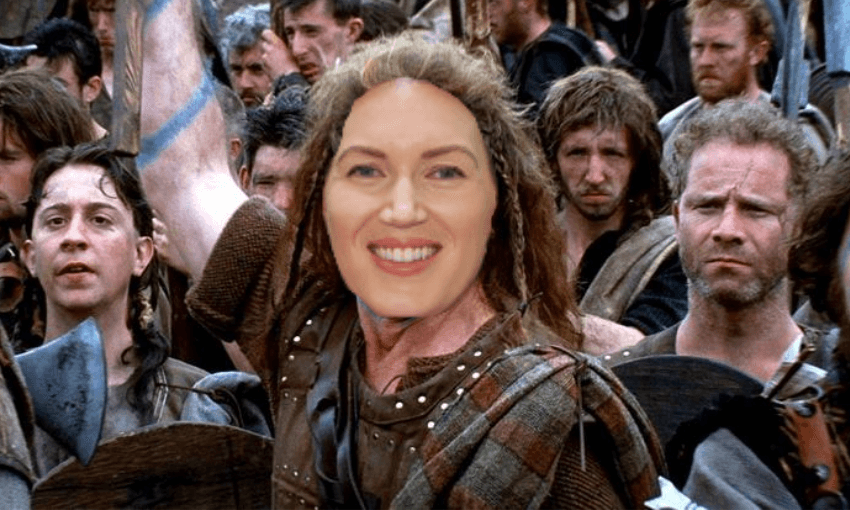



Is te Tiriti a ‘simple nullity’, a living covenant, or an immovable mountain? Until Aotearoa answers that question, the argument will never end.
Recent political events such as the Treaty Principles Bill, disestablishment of Te Aka Whai Ora and the review of Treaty clauses in law have reinforced the impasse that the nation faces in Treaty discussions. This stalemate is based not only on our opinions of what the Treaty says, but most significantly upon our thoughts of what the Treaty is. As a nation, we must collectively discern what the Treaty is before understanding what it says.
So what is the Treaty of Waitangi? The prevailing response to this question has the power to strengthen or weaken its influence in 21st century Aotearoa. Perceptions range from a high view to a low view of our founding document.
The late jurist Moana Jackson (Ngāti Kahungunu) held a high view. In an interview, he once described the Treaty as a mountain which would never move:
“When I was young, my koro took us to our mountain, our Maunga Kahuranaki. Every now and again, he’d say: ‘Turn around and look at the maunga.’ I’d turn around and look at the maunga and, yes, it was still there. Half an hour later: ‘Look at the maunga’, and it was still there. It took me a while to figure out what he was trying to say. I realised that every time I looked at the maunga, it had changed. It was different. The sun had moved in the sky, so the shadows were different, clouds had moved across the sun, so there were shadows across the mountain. The change was immutable, but the mountain hadn’t moved. That to me is the Treaty challenge; the Treaty is the mountain which will never move. How do we catch the change to give effect to what that means?”
Catching the change
Jackson’s imaginative descriptor portrays the Treaty an immovable mountain in a changing environment. Many dark clouds and shadows cover the mountain. However, glimpses of the sun continue to rise upon it. These rays represent commitments to honour the Treaty regardless of the challenges.

The perception of a lofty mountain fuels a stubborn optimism among many regarding te Tiriti, despite the current political headwinds. The present government – who under the 1840 compact have been charged with a duty of care towards Māori, and the entire country – have neglected this duty. Exacerbating an already dismal Treaty record, recent legislative changes and the debacle of the Treaty Principles Bill means confidence in the government has been seriously eroded. But despite the dark shadows, hope in the Treaty as an immovable mountain remains.
Some hapū and iwi have established strong economic bases on the back of Treaty settlements and are now seeking constitutional reform. Many non-Māori have discovered the Treaty is not just for Māori. It gives them a place to stand – a tūrangawaewae – and a moral identity of belonging as tangata Tiriti. This term has gained traction since being coined by Eddie Taihakurei Durie in 1989. A variety of organic alliances between tangata whenua and tangata Tiriti have developed – allies holding a high view of the Treaty who combine to uphold its mana.
A high view
The Matike Mai Aotearoa report published in 2016 takes a high view of te Tiriti. It posits that the Treaty endures regardless of the political landscape and proposes major constitutional change is necessary to ensure a faithful adherence to the original agreement. The report proposes a constitutional model with three spheres: a rangatiratanga sphere (Māori authority), a kāwanatanga sphere (governmental authority) and a relational sphere where the two converge.
The Waitangi compact has provoked much discussion and contention over the past 186 years. The current coalition government displays a low view of the Treaty. Their ideas have found expression in careless rhetoric and a variety of legislative changes that opponents argue denigrates the integrity of the Treaty. These statutes have not occurred in an historical vacuum – they represent their ideas on what the Treaty is before they propose what it says.
These convictions contribute to many of the clashes that are regularly witnessed in parliament, and they are not new. The Pacific and Europe first collided over three centuries ago and the roots of those early collisions continue to influence our current Treaty discussions.
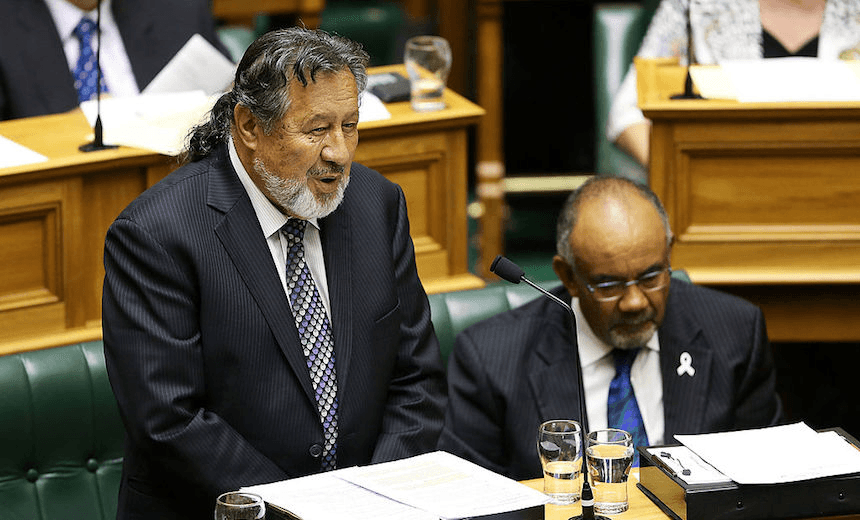
During a speech in 2006, former government minister Pita Sharples quoted Nelson Mandela, saying: “It is difficult to negotiate with those who do not share the same frame of reference. If we are able to recognise and have a shared view of this political document called the Treaty of Waitangi as our shared frame of reference, then and only then can we perhaps say: ‘he iwi kōtahi tatou’.”
In 1877, Chief Justice James Prendergast declared the Treaty of Waitangi a “simple nullity”, dismissing it as legally meaningless. He made no attempt to interpret its articles, holding that any authority the Treaty might have could only derive from recognition by a sovereign state. For Prendergast, law and morality were separate domains, with the state itself determining what carried legal force. The tension between these imported legal doctrines and indigenous tikanga continues to reverberate today.
Treaty as a covenant
The concept of the Treaty as covenant has been handed down through the generations and is now regularly used by many when referring to the compact, including present governor-general Cindy Kiro. This covenantal view of the Treaty can be likened to a marriage between individuals who maintain their respective identities and autonomy, but are merged into a union to make them one. A covenantal kotahitanga or unity – he iwi tahi tātou.
There have been competing visions for this land proposed by a variety of protagonists. They are our ancestors, and we have inherited some of their frames of reference. Many of our political and legal debates about te Tiriti rest on distinct understandings that echo the different world views enunciated by the likes of early settlers like Henry Williams and Edward Gibbon Wakefield.
The latter has a political doppelganger in deputy prime minister David Seymour. Led by Seymour, the Act Party espouses some of the foundational ideas of Wakefield’s New Zealand Company, influenced by the same classical liberal political philosophers.
The debate over the Treaty is not merely a disagreement on translation or words. It is a tension between rival metaphysical, moral and legal grammars: The Treaty is either a simple nullity, or an immovable mountain. It is either a pragmatic contract with a limited lifespan, or a sacred covenant that should endure like the Magna Carta. Understanding these tensions helps clarify why issues of history, justice, and reconciliation remain unsettled here.
We have been disadvantaged by political ambitions, and a collective historical amnesia – a willful forgetting exacerbated by seemingly irreconcilable worldviews. The Treaty was a visionary attempt to reconcile and unite these different worlds in a season of conflict. Tangata whenua and tangata Tiriti becoming he iwi tahi tātou, committed to finding a way forward that satisfies the needs of both peoples.
The rediscovery of our Treaty as a covenantal mountain would give us a stable foundation to work through our differences of interpretation. Wisdom and patience are needed to strengthen this cooperation. Like a troubled marriage which draws upon its historical commitment and shared foundations, we can persevere knowing that the mountain will never move.