After ‘70 fucking bloody years’, Tāme Iti is ready to tell his story

Made possible by


The iconic activist, artist and kaumātua has just published his autobiography Mana, an inside look at the life and lessons of Aotearoa’s most interesting geezer.
Writing an autobiography is something that’s been suggested to Tāme Iti many times over the years, but distilling decades of activism into words always felt too mammoth and difficult a task. But with the release of Mana, Iti reckons “I’ve got it – after 70 fucking bloody years, I’ve got it. I can feel the vibration.”
The vibration being the realisation that hits when Iti looks at his mokopuna: the Ngā Tamatoa kaupapa, the Māori Language Petition, Dame Whina Cooper’s land march and countless other mahi led him this far. Written with the aid of his son Toi Kai Rākau Iti and journalist Eugene Bingham, the 73-year-old doesn’t want you to think this is simply “the Tāme Iti book” – really, he’d prefer if you thought of it as a book by and for the people.
“I had many attempts to [write this book], it took me a long time. Lucky, my boys, my whānau, they were the ones … [who] captured these moments, put them together, and made me see there’s a future to it,” Iti tells The Spinoff. “We didn’t just go through it: we felt it, saw it, smelt it, ate it, slept it, all of that.”
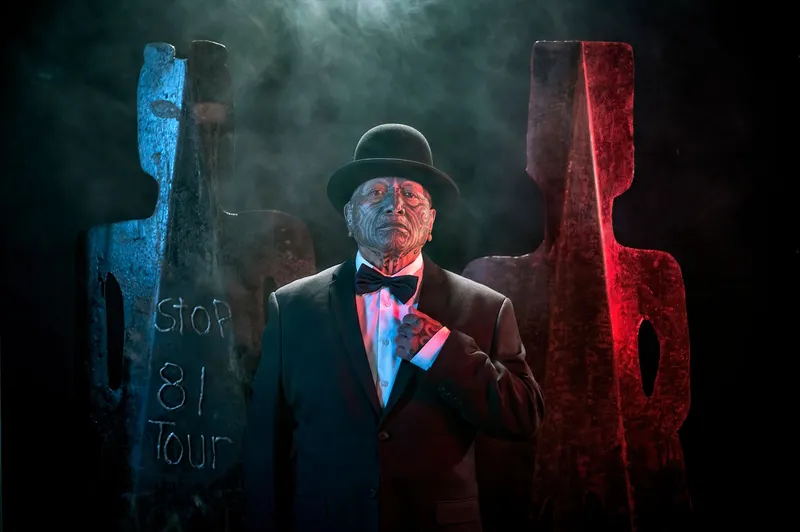
From Iti’s birth on a moving train to a childhood as a tamaiti whāngai in Ruatoki, to an adulthood lived in the public sphere – whether in a tent on the parliamentary lawns, or in a highly-publicised jail cell – Mana is the finished product of many attempts to tell a life story. And more than Iti’s life, it’s a book about – of course – mana: a concept inherent in all of us, but one which sometimes takes a lifetime to fully understand. Though, in Iti’s eyes, it’s still only a “glimpse” of the lessons learned from his several decades on this whenua.
There are stories within the book that many will already be familiar with, like Iti’s work with Ngā Tamatoa, the Urewera raids, protests against the Vietnam war and the 1984 Springbok tour. But it’s the small insider details sprinkled throughout which gives a new edge to these anecdotes – like the moment Iti first spotted his dad’s tent when his father came to stay with him in Christchurch, how he later slept in it on the parliament lawns as a member of Ngā Tamatoa, and how his father (also named Tāme) never forgave his son for shaming the family name, but mostly for not returning his tent (a relation sold it to a museum instead).
“[My father] was a railway worker, and that was his God: working for the government,” Iti says. “The effects of 100 years of colonisation for that generation, they became afraid. They would have died for king and country, that was the power of colonisation. I think that’s how we got the idea we needed a face [for the movement], and we ended up with Whina Cooper to catch people like my father … but it took me a while to understand that dynamic, and let go of it.”
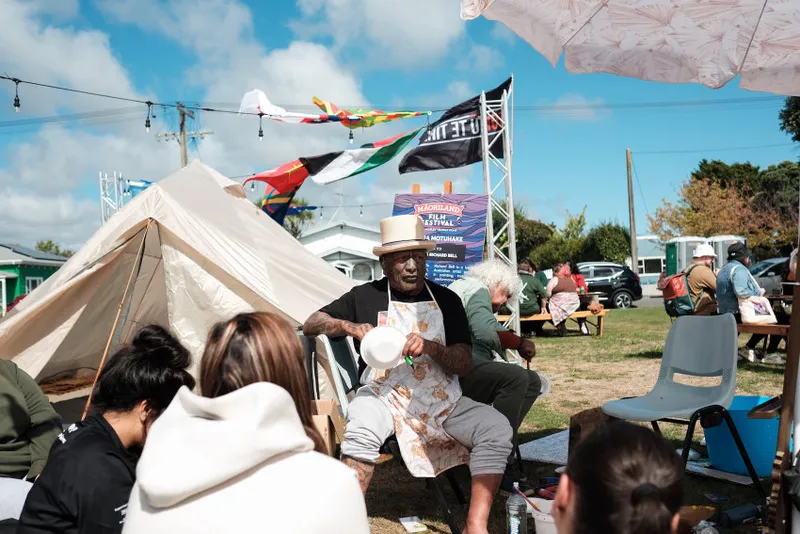
And in writing the book on it, Iti illustrates how his mana, and the mana of others, was strengthened or diminished throughout his life. He was only 16 and had just moved to Christchurch when he first experienced blatant racism – not that boring systemic racism, like being told you can’t speak Māori on the school grounds – the kind that only saw your complexion.
“I never saw or experienced that kind of racism in my life, where people make judgements about the colour of your skin, or there’s always some kind of excuse about why you’re not allowed to enter into their space,” Iti says. “The biggest challenge [in writing this book] was how we maintain our mana in our space, in our creativity, so we’re not being construed to be locked into being a slave to someone else’s ideology.”
The book explores the personal violence within Iti’s life, touching on his experience of being sexually assaulted as a child by a whānau member, and as a teenager by an older man. In the chapter “fighting the bullies”, Iti recounts being in 30s when he finally spoke about those assaults, while another whānau member who had the same lived experience “carried that taumahatanga with him until he died”. Iti writes: “the abuse impacted me in lots of ways … It affected my relationships, especially with women … On the emotional level it made me question, ‘what is love?’”
It was violence which saw the breakdown in his first marriage, too. So, how do you restore your mana after diminishing someone else’s? “You learn that you’ve been picked on, and you’re slightly traumatised by it,” Iti says. “I ended up dealing with myself, dealing with that physical abuse, and then learning from my own attitude, who I am and how it affected me and my mental existence … We have to maintain our own mana in order to heal ourselves, then deal with the causes of the pain.”
Living as tangata whenua in a post-colonial country, there are countless opportunities to have your mana diminished, whether it be “hardcore indoctrination” through the education system (“you look at it [like]: what the fuck, you know? What the hell were we talking about?”) or the prison system. If jailing Iti for nine months was supposed to open his eyes to his own supposed wrongdoings, it only further exposed the corruption of colonialism – and the holistic antidote to it.
“The slave mentality, when they [imprison] you, you have to let go of that,” Iti says. “I used to think that was just being Māori, and then I realised, it’s fucking not even. I used to think my enemy was blonde hair and blue eyes. I had to rephrase my thinking: the enemy is within, it’s in myself. So you have to figure out how to let go of the enemy within – and then you deal with the enemy out there.”
Mana by Tāme Iti ($50, Allen & Unwin) is available to purchase from Unity Books.
The Spinoff Books section is proudly brought to you by Unity Books and Creative New Zealand. Visit Unity Books online today.

Lyric Waiwiri-Smith
Lyric is an award-nominated politics reporter at The Spinoff. She covers parliament from the press gallery, pens the weekly column One MP, One Pint and is endlessly curious about what makes our decision-makers tick. Off the clock, Lyric loves a live gig, a cold brew, and being a Wellingtonian (on a good day).


