‘Books are escape hatches’: Serie Barford’s reading life

Serie Barford is in hospice care. Her final book of poetry was released in September.
Made possible by
Welcome to The Spinoff Books Confessional, in which we get to know the reading habits of Aotearoa writers, and guests. This week: Serie Barford, author of Standing on my Shadow, her final book of poetry.
The book I wish I’d written
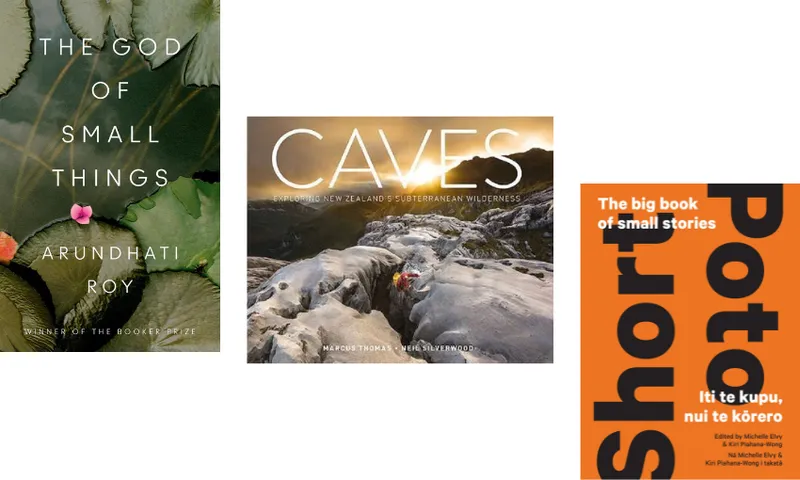
The God of Small Things by Arundhati Roy. It resembles an archaeological dig. It’s an example of exquisite fieldwork and careful excavation. I wish I could assemble myth, history and biography into an equally compelling novel! Entice readers to sharpen their minds like a pick. Carefully uncover strata with a trowel. Expose fragile artefacts. Reveal small things.
Arundhati Roy deftly reveals domestic issues, moments and objects. They are “small things” that symbolise “big things” in life such as: love, upheaval, obligation, preservation, social organisation and death. This work encourages me to reflect upon households as building blocks for communities and nationhood. To consider how the small things we uphold, cherish and transmit can potentially preserve or transform our communities of belonging. Rattle the global stage. Impact our planet.
Meanwhile, the following quote from Arundhati Roy is attached to my fridge with a magnet. It flutters beneath a hospice 24-hour helpline number, where small things meet big things on a silver door.
“The only dream worth having is to dream that you will live while you are alive, and die only when you are dead. To love, to be loved. To never forget your own significance. To never get used to the unspeakable violence and vulgar disparity of the life around you.”
The book everyone should read
Short | Poto: The big book of small stories | Iti te kupu, nui te kōrero, edited by Michelle Elvy and Kiri Piahana-Wong because it’s contemporary, representative and relevant to people inhabiting the islands of this nation.
Flash fiction is a dynamic genre, a form of writing that succinctly reveals diverse themes and perspectives on life in a micro form. We can’t live each other’s lives, but we can increase our awareness of fellow citizens by exploring the heart of a story, investigating the mosaic of human experiences surrounding us, and immersing ourselves in rivers of language.
This bilingual anthology (English and te reo Māori) showcases established and emerging writers and their lived experiences in Aotearoa New Zealand.
The book I want to be buried with
I’d like to be buried with Caves – Exploring New Zealand’s Subterranean Wilderness by Marcus Thomas and Neil Silverwood plus The New Zealand Speleological Bulletin Numbers 17 & 18 (1956), because they link me to my father’s adventurous spirit and our mutual love of the natural world.
My father is mentioned and quoted in the Bulletins. His abridged description of an exploration of Lucky Strike includes a reference to losing his helmet and lamp at the top of a 10-foot waterfall and relying on his buddy, Len, for light. The helmet was discovered months later when Len noticed reflector tape glowing under water. By then Dad had given up caving. My mother had panic attacks just thinking about caves.
I took Dad to meet Thomas and Silverwood at the 2017 Going West Writers Festival. He became animated while talking about caving and shared memories of his friend, Peter Weaver, who’d visited my parents before departing on his fatal caving exploration of Harwood’s Hole.
I used to wear my father’s caving helmet when I played dress-up as a child. I struck poses in witches britches and a bridal veil, topped by a caving helmet with a functioning lamp.
The first book I remember reading by myself
The House at Pooh Corner by A. A. Milne. I’d read School Journals by myself, but this was a chapter book, a precious possession from my father’s childhood. It was 1968, my mother had dutifully taken me to a “measles party” (as you did in those days) and I’d obediently contracted measles. I can’t remember whether it was the German or English variety.
My mother brought me comfort food and smothered me in calamine lotion. She encouraged me to read but didn’t enjoy reading herself. She was educated in Western Sāmoa under the New Zealand education system, which forbade her speaking Sāmoan or German – the only languages she knew. She was punished whenever she uttered a non-English word. It took a while for Mum to learn English. She never developed a love for the written word. But Dad loved reading. And Pooh Bear!
I still have this book. The cover is faded blue and battered. There’s a stain from a blood nose in between drawings of Christopher Robin and Pooh. One of my sons is called Christopher and he loves animals. I’ll pass the book on to him.
The book that haunts me
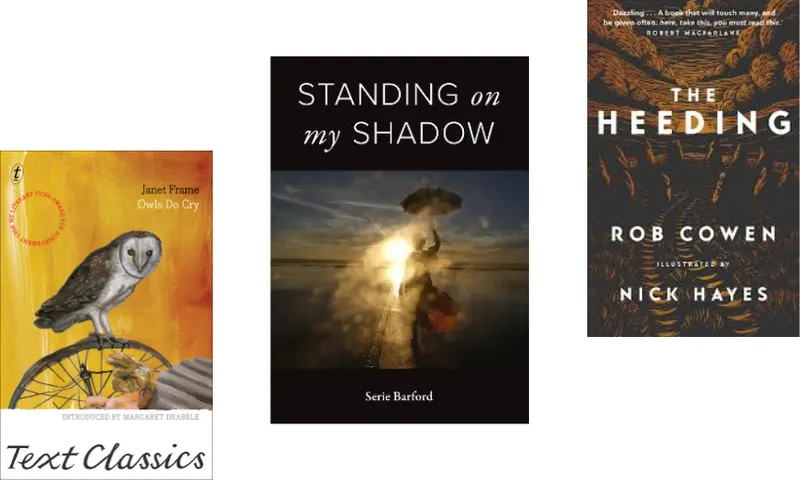
Owls Do Cry by Janet Frame has haunted me since secondary school. I was amazed by the concept of dual narratives. How pages faced each other. One side in normal type. The other in italics. Who would’ve thought to do that? And the book candidly revealed painful, shameful issues that were “out of bounds” discussion topics for many families in the 1970s and beyond.
I ached for the family. I lived in a working class neighbourhood. My parents worked in factories. I played bullrush. Knew people in other parts of the city looked down on our neighbourhood because real estate agents advised well-heeled people to buy elsewhere. And I collected treasure from the tip. It was a joyful place. Not at all like the waste management system we have these days. I also wrote poetry and declared, “I’ll be a poet but I won’t go mad!” References to madness linked me to Oakley Hospital, the intimidating building at the end of the motorway near my home, where neighbours were occasionally institutionalised. It wasn’t prison – yet it was.
The book I pretend I’ve read
The Lord of the Rings. I’ve attempted to read this book several times, but get bogged down and stop turning pages. I’m not sure why.
Encounter with an author
In August 2011 Joy Harjo, an indigenous American poet and member of the Muscogee (Creek) Nation, gave a public reading at Auckland Central City Library, where she was presented with a Tapa Notebook by Selina Tusitala Marsh. A group of Pasifika poets, including Albert Wendt, attended the reading and accompanied Joy to dinner afterwards.
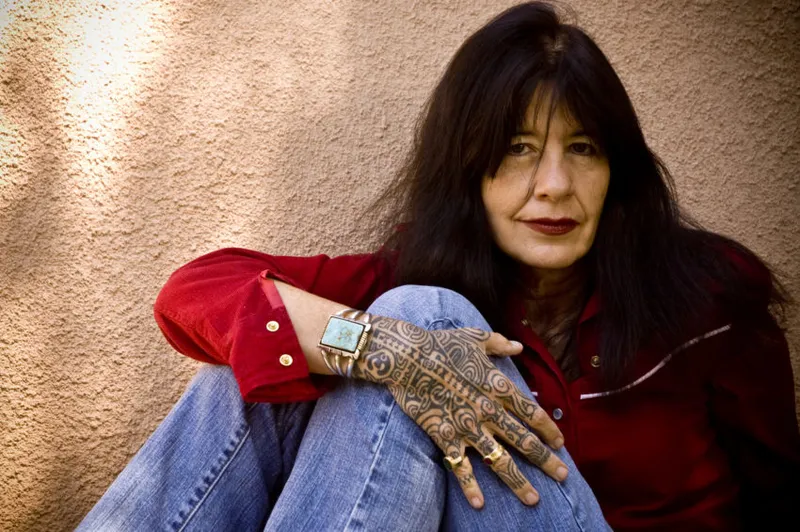
It was such an enjoyable evening. The discussion was wide-ranging; touched on personal and political issues and concerns. I was inspired by Joy’s passion for justice, love of the Arts, connection to her cultural roots, and her academic achievements. Joy played saxophone and other instruments, and considered her voice an instrument. This was a eureka moment for me. I came from a family of storytellers who held audiences spellbound with their voice. I couldn’t understand why some poets wrote amazing verse but delivered poems as if they were ordering a pizza. I understood that my voice was part of my poetry toolbox. That poetry became oratory once it left the page.
I also learned that night to keep my life “wide”. That in order to drive our passions in life we need to feed them. That poetry intersects with music, photography, film-making, gardening, dance, riots, ceremonies, a leaf falling from a tree, a factory, a gun and a feather. That there is possibility in everything. In everyone. Life is a story. An epic poem.
Best thing about reading
Books are escape hatches from conventional temporality. They are portals. Flight co-ordinates to elsewhere. The best thing about reading is turning pages to unlock minds and worlds. Reading takes me on journeys where I encounter the familiar and the unimaginable. It transports me beyond my geographical location, but can also ground me in my neighbourhood – in its history, fauna, flora.
These days I access information via the internet. But not a day goes by when I don’t pick up a book. Read a bit – or a lot. I love the feel of books. Holding worlds in my hands. Exploring them. I suppose it’s like entering a cave. There are passages leading toward and away from light. One must tread carefully. Consider possibilities. Be mindful of where you’re going. Where you’ve been.
Fiction or nonfiction
I’m not a proponent of the Dewey Classification system. It was created in the 1870s and is based on a system that classifies knowledge according to Western perspectives and cultural bias. It doesn’t accommodate interdisciplinary subjects or emerging fields. What I consider nonfiction might be shelved in the fiction section of a library. I just enjoy books.
What I’m reading right now
I usually have several books on the go because I read different genre at different times of the day. At the moment I’m reading The Book of Guilt by Catherine Chidgey, Braiding Sweetgrass – Indigenous Wisdom, Scientific Knowledge, and the Teachings of Plants by Robin Wali Kimmerer, The Heeding by Rob Cowen, and Broken by Karin Slaughter.
Standing on my Shadow by Serie Barfood ($30, Anahera Press) is available to purchase at Unity Books.
The Spinoff Books section is proudly brought to you by Unity Books and Creative New Zealand. Visit Unity Books online today.

The Spinoff Review of Books
A smorgasbord of books thoughts and formats by The Spinoff.


