


Want to feel better about your own family? Take comfort in the fact they probably aren’t as shit as the ones Jane Austen wrote.
Northanger Abbey (1799)
Would you want General Tilney to be your daddy? Young clergyman Henry Tilney may look confident to naive 17-year-old Catherine Morland in the Bath assembly rooms, but he quakes in his boots when his intimidating bully of a father is around. General Tilney only invites Catherine to Northanger Abbey (a bit of a McMansion if you read closely) on the (mistaken) assumption that she is an heiress who would enrich the Tilney coffers. When he finds out that she doesn’t have a fortune at all, he turfs her out, leaving her to find her (long) way home on borrowed money from his frightened daughter Eleanor. In a rare act of “filial disobedience” (the final words of the novel) Henry stands up to his father and marries Catherine. Catherine now has General Tilney for a father-in-law. Happy days.

Sense and Sensibility (1811)
The father of sisters Marianne and Elinor Dashwood fails to provide for them properly upon his death and abandons them to their well-meaning yet silly mother who now depends on the charity of distant relations in the far reaches of Devon. When Marianne falls in love with bounder Willoughby her mama encourages the very public flirtation, leaving Elinor to worry about Willoughby’s motives. As is the case with many Austen heroines, the parenting is delegated to the most responsible child who sacrifices her own happiness for the sake of reputation. Marianne ends up marrying Colonel Brandon, a decent bloke but a substitute father of sorts. Elinor does land her love, Edward Ferrars, who’s disinherited by his evil, greedy mother in the process. Elinor now has Mrs Ferrars for a mother-in-law. Oh joy.
Pride and Prejudice (1813)
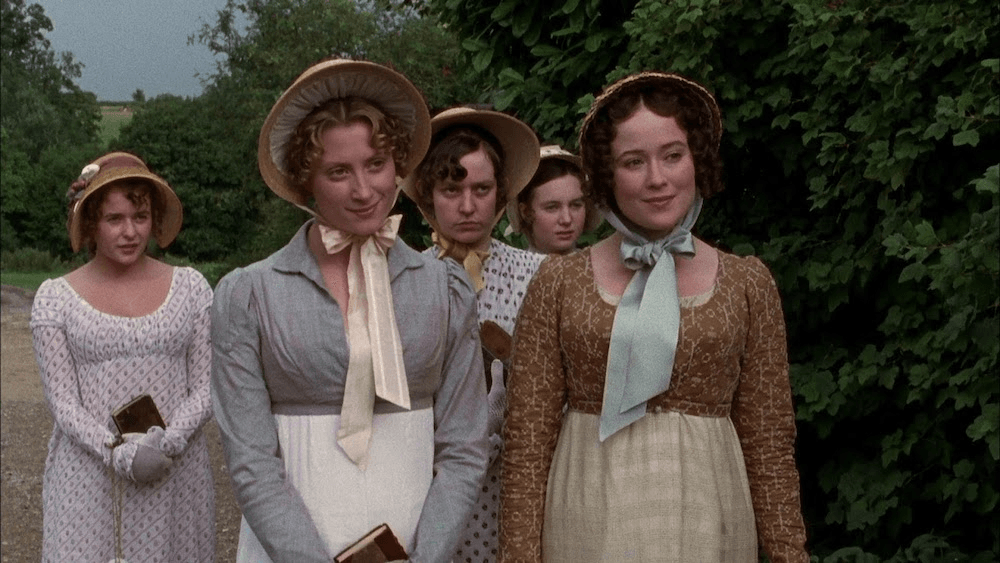
Mr Bennet hides in his library, not giving a toss about the fact he’s squandered his wife’s dowry despite the fact that he has five daughters and his Longbourn estate is entailed to the slimy Mr Collins. He has no excuse not to know better. Mrs Bennet is anxious about marrying off her daughters but, deprived of education and common sense, has no clue on how to deal with any situation. Mr and Mrs Bennet are spectacularly ill-matched and their daughters are left to fend for themselves. Mr Bennet has favourites (most Austen parents do): Jane and, most of all, Elizabeth. Mrs Bennett has favourites too: Lydia and, down a far second, Kitty. Nobody gives a fuck about Mary who tries to homeschool herself on bits and pieces from Mr Fordyce’s Sermons to Young Women.
Lydia runs off with Mr Wickham and ends up a bride at 16 with a very dodgy soldier who’s been bribed by the hero of the story, Mr Darcy, to put a ring on it. A few years earlier Wickham had tried to snare Darcy’s 13-year-old sister Georgiana who, orphaned, was under the care of a wicked governess. Many of Austen’s characters have no parents. Mothers in particular tend to disappear early on, with childbirth being the number one killer for younger women if the Gentleman’s Magazine statistics are anything to go by. Fathers often can’t be bothered to pay attention to their children.
Mansfield Park (1814)
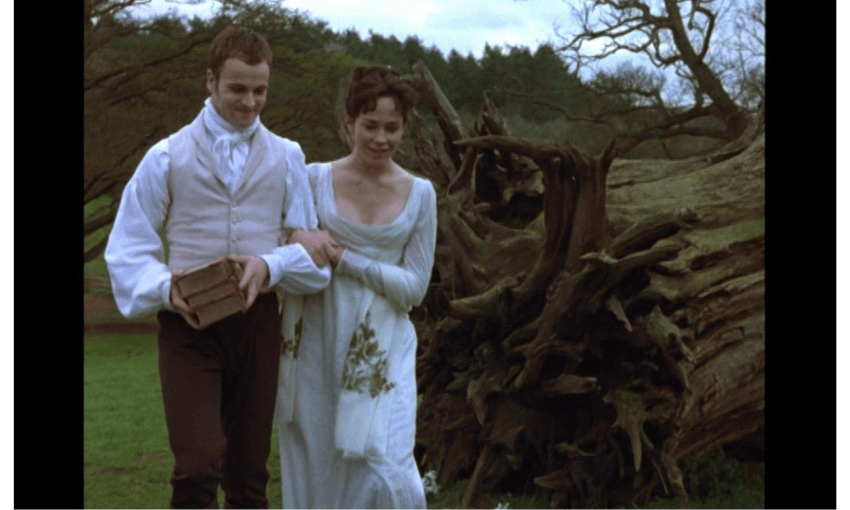
Fanny Price has the dubious privilege of being raised in her rich Aunt Bertram’s family at the instigation of her meddling Aunt Norris. When Fanny returns to her own family in Portsmouth after being away for a decade she reluctantly admits to herself that her own mother was “a partial, ill-judging parent, a dawdle, a slattern, who neither taught nor restrained her children, whose house was a scene of mismanagement and discomfort from beginning to end, and who had no talent, no conversation, no affection towards herself; no curiosity to know her better, no desire of her friendship, and no inclination for her company that could lessen her sense of such feelings”.
Her father is a seedy, braggart drunk. The Bertrams are slave owners, and while Sir Thomas is away from Mansfield Park sorting out his plantations, Fanny is enslaved, on a genteel scale, to the indolently tyrannical Lady Bertram and her stupid, exploitative sister. Fanny marries the only person who is nice to her in that prison – her clergyman cousin Edmund. In order to extricate herself from Lady Bertram, Fanny ropes in her sister Susan as “the stationery niece” who “could never be spared”. And so the cycle of domestic slavery continues.
Emma (1815)
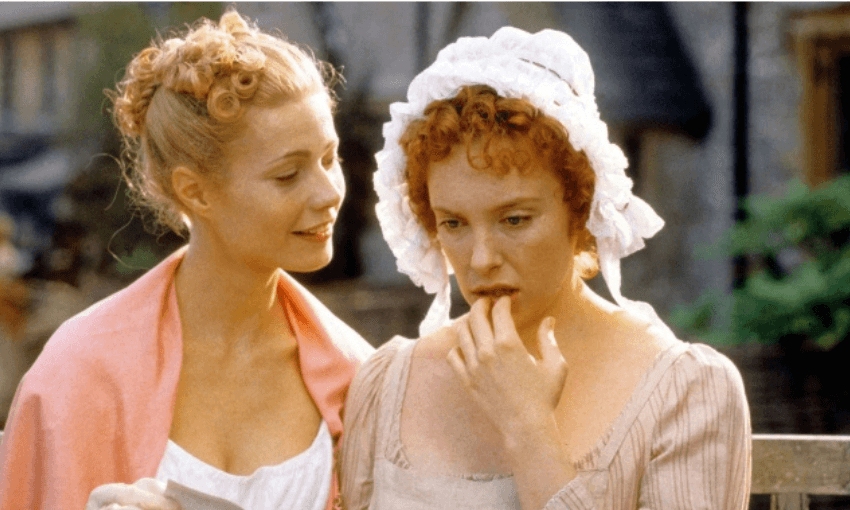
Motherless Emma Woodhouse spends a lot of her time catering to the petty wishes of her father, a hypochondriac egotist who sucks the oxygen out of any room he’s in. She’s jealous of the orphaned Jane Fairfax who had a taste of the high life with a rich friend. But when said rich friend got married, Jane returned to her aunt and grandmother in Highbury and may have to become a governess, a polite term for raising someone else’s children for no thanks and very little money. Emma herself was raised by a governess who greatly indulged her and who was almost prevented from marrying herself by Mr Woodhouse who didn’t want to lose an underpaid ersatz parent for Emma. Emma takes a great interest in parentless Harriet Smith, a child raised in a school, and almost destroys Harriet’s chance for a good marriage with Robert Martin. Emma indulges in mischief with Frank Churchill who, not unlike her, also grew up motherless, adopted by a domineering aunt.
Both Emma and Frank display a breezy callousness in their dealings with others which points to a lack of empathetic responsibility due to minimal parental guidance. Jane Fairfax marries Frank Churchill, and I’ve always felt sorry for her. Emma, like Marianne Dashwood, marries a substitute father figure, Mr Knightley, who’s been keeping her on the straight and narrow all along. We are supposed to understand the magnitude of Mr Knightley’s love for Emma in his consent to move in with the old patriarch.

Persuasion (1817)
Anne Elliot is also motherless, cast largely in the role of mothering her demanding sister Mary and her children. Her father, Sir Walter Elliot, is despicably ridiculous. Vain, stupid, deluded and entitled, he is a nasty piece of work who has mismanaged his own estate Kellynch Hall and who needs to be cajoled into being “important” in Bath as opposed to going completely broke in London. Anne’s elder sister Elizabeth, arrogant and superannuated, is Sir Walter’s favourite and together they gang up on Anne. Enter, again, the dashing Frederick Wentworth, to whom Anne had been briefly engaged seven years earlier. Captain Wentworth had no fortune at the time and Anne gave up the engagement, persuaded by Lady Russell, a family friend whom she loved and trusted. Tellingly, her father never actually supported or advised her; he “gave it all the negative of great astonishment, great coldness, great silence, and a professed resolution of doing nothing for his daughter”. Anne is older and wiser than Austen’s other heroines, and manages to regain Wentworth’s love.
Of all matches in Jane Austen, the one between Anne Elliot and Frederick Wentworth is the most adult: compatible, equitable (sort of), and not an exercise in parental substitution. The novel also contains a perfect example of a warm, companionable marriage: Admiral and Mrs Croft, who rent Kellynch Hall, and who used to sail the seas together. They are inseparable and enjoy each other’s company. They put the plethora of looking glasses in storage, because, unlike the narcissist Walter Elliot who had them dotted all over the place, they look at other people with kindness and generosity. They are happy and they have no children.