As National hits 28% in new poll, is Christopher Luxon’s leadership at risk?

(Photos: Hagen Hopkins/Getty Images)
A terrible, horrible, no good, very bad week for the prime minister gets worse, and puts the spotlight on the National Party’s future.
It’s worse than the 29% figure which saw Simon Bridges dethroned in 2020, and it’s enough to send shivers down the spines of even the deepest loyalists. With the National Party hitting 28.4% in the latest Taxpayers’ Union/Curia poll, whispers that Christopher Luxon’s prime ministership is in existential crisis have returned – but is it enough to reignite the December coup-that-wasn’t?
It’s the party’s worst poll result since it regained power at the end of 2023; its lowest until now was 29%, which came in an October 2025 Curia poll. The poll – conducted by the same research company that does National’s internal polling – sees just one tiny win for a single party in the coalition: the Act Party (at 7.5%) has managed to swallow the 0.8 points lost by NZ First (at 9.7%).
But on the whole, the right bloc has slumped. Assuming the latest Curia poll is reading the tea leaves with precision, National would drop from its current 49 seats to 36 after the election. Now six points ahead, Labour would be able to form a left-bloc government.
The dire poll comes after a particularly tough week for Luxon. The prime minister was at his career worst while attempting to tip-toe around questions on the US-Israeli bombardment of Iran earlier this week, before putting both feet in his mouth by suggesting the government supported “any action” taken to prevent Iran from possessing nuclear arms. He later had to concede he “misspoke”.
MPs and staffers from various parties were made aware of the poll results on Thursday night, and by Friday morning, senior ministers were on the defensive. Judith Collins (who’s due to leave her post in a few months) reminded the NZ Herald that it was “tough” being prime minister. Paul Goldsmith told Ryan Bridge Today there was “no need to panic”, though the words hit like a flashing sign warning to keep calm while the plane’s going down.
One of Luxon’s fiercest loyalists, his finance minister Nicola Willis, gave a more scathing read of the situation. “If that was the number National got on the actual election, that would not be an acceptable result. We have to do better than that,” Willis told Newstalk ZB. “I am not happy with that number. I don’t think our National Party team would be happy with that number. I don’t think the prime minister would be satisfied with that number.”
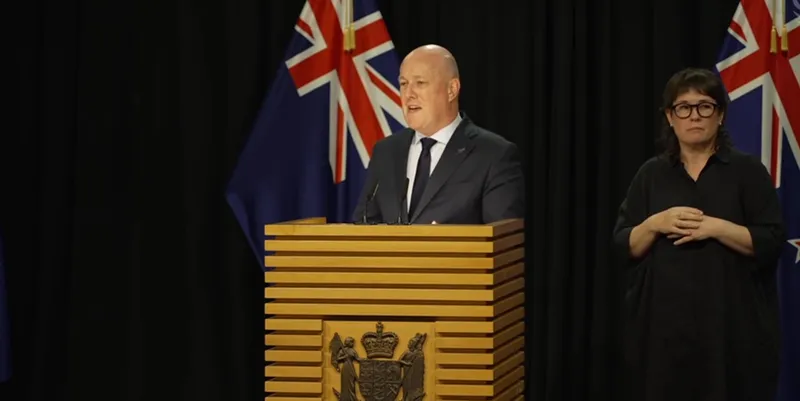
What has always appeared more stable than the party’s polling is the caucus’s loyalty to its leader. Sure, members might admit in private that the prime minister has fumbled here and there, that some have had to suck it up and smile through the gaffes, but many still wear the battle scars of the party’s shocking 2020 election result that came after a series of leadership changes. While it’s tempting to change course when the waters get choppy, putting a new navigator in charge doesn’t always save a sinking ship. It’s rare to get a Jacindamania moment, as was seen when Jacinda Ardern took over from Andrew Little as Labour Party leader six weeks out from the 2017 election.
But what if they tried? The most obvious replacement for Luxon is undoubtedly transport and housing minister Chris Bishop, who it was rumoured tried to organise a coup in late 2025. Sunday Star-Times reporter Andrea Vance wrote in November 2025 that Bishop failed to inspire even a third of the caucus to support him as a challenger. Bishop’s role in Todd Muller’s 2020 coup may have something to do with the lack of confidence (Muller, if your brain has blocked it out, managed just 53 days as leader).
Bishop will be missing from the party’s next caucus meeting on Tuesday, having boarded a flight to India on Friday. And the public likely won’t hear Luxon’s take on the results until parliament returns on Monday, by which time the talking points will hopefully be better rehearsed than the lines he was given on Iran.
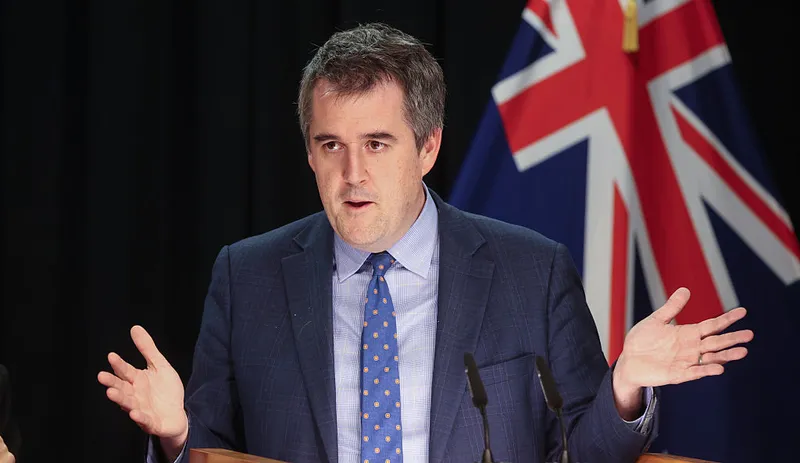
But with Bishop away, there’s still a chance of change. Luxon could bow out, rather than wait for someone to roll him – for real this time. But does he have the humility to do it? He’ll know that one bad poll isn’t a death knell for sitting prime ministers, but, still, sustained discontent from the public can be. Luxon, however, often appears bemused when confronted by the idea that many New Zealanders don’t see their realities reflected in his promises that the country and its economy are getting back on track.
That’s probably why the prime minister has given up on that line altogether. It’s not unusual for a politician to feign ignorance of some concerns, but at this point, the public seems desperate for someone who could at least feign care.
Then there’s the rest of the coalition. The latest Curia results are not good for the right bloc as a whole. Peters has previously hinted that the party’s internal polling shows NZ First hitting significantly higher numbers than it achieved at the last election, and the party shares with Act ambitions to hit double digits – levels not reached since 2002 in NZ First’s case, and never for Act.
Luxon remaining at the helm of National, despite the right-bloc’s falling numbers, could be in Act and NZ First’s best interest, because it could allow the smaller parties to wield more power in coalition talks and give them a shot at nabbing some of the bigger ministerial portfolios. That is as long as those lost votes don’t make way for a Labour-led government. That looks like a real risk for the coalition right now – and only one party in the coaltion (hint: its led by Winston Peters) could realistically make the switch to working with Labour by the end of 2026.

Lyric Waiwiri-Smith
Lyric is an award-nominated politics reporter at The Spinoff. She covers parliament from the press gallery, pens the weekly column One MP, One Pint and is endlessly curious about what makes our decision-makers tick. Off the clock, Lyric loves a live gig, a cold brew, and being a Wellingtonian (on a good day).


