New Zealand’s petrol supply is terrifyingly fragile

An example of how oil might get from the UAE to New Zealand.
How can New Zealand protect its energy independence in an era of war?
As I extracted the nozzle from the fuel tank of my trusty Mazda Demio and turned to return it to the pump, something caught my eye. Sitting right on the end of the spout, dancing, almost, a perfect droplet of orange-brown. In slow motion it detached itself. Falling, falling, to the grey concrete below. In its final moment, it caught the light of the setting sun and reflected it back to me. A brief wink, as if to say goodbye.
I wouldn’t usually notice, but the rising price at the pump and the fears of supply shortages due to the war in Iran make any bit of wastage feel particularly painful right now.
That drop of petrol had come so far, crossed so many borders, and gone through so many chemical processes, to end its journey on the petrol station forecourt.
The petrol arrived at the Mobil in a tanker truck which was dispatched from the Wiri Oil Terminal in South Auckland. It arrived in Wiri via a 170km pipeline from Marsden Point in Whangārei, the largest oil importing terminal in New Zealand.
The petrol arrives at the Marsden Point fuel storage facility in oil tankers such as the STI Lilly, which can hold 120 million litres of petrol.
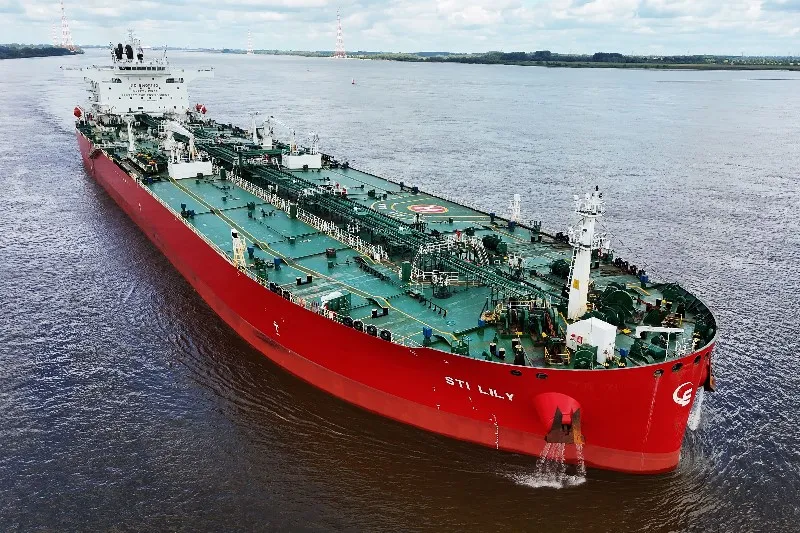
The oil is shipped from a refiner, such as Jurong Island Refinery in Singapore. New Zealand gets more than 70% of its refined oil from just three countries: Singapore, South Korea and China.
The oil arrives at the refineries in the form of crude oil. It is carried by some of the largest ships on the ocean, the appropriately named Very Large and Ultra-Large crude carriers, which can carry up to 300 million litres of oil.
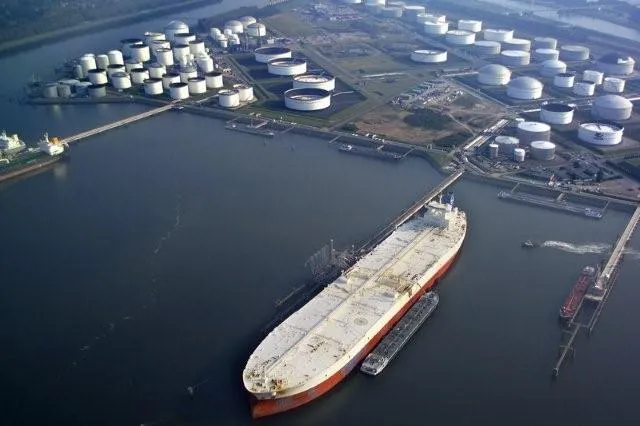
The ship was most likely loaded up from somewhere like Fujairah Port in the United Arab Emirates, a large export facility which is connected to the Habshan inland oil fields by pipeline.
About 65% of all oil processed by Asian refineries originates in Persian Gulf countries: Saudi Arabia, the United Arab Emirates, Bahrain, Qatar, Kuwait, Iraq and Iran.
Almost all of that oil has to pass through the Strait of Hormuz, a narrow shipping channel which is the only thing connecting the Persian Gulf to the rest of the world. (Saudi Arabia can export through the Red Sea but only in limited quantities).
The Strait of Hormuz is effectively under Iran’s military control. Since the US bombing campaign began in February, Iran has responded by closing the strait and attacking merchant vessels – though some allied nations are still being allowed through. Some recent reports suggest Iran has laid mines in the strait. Fujairah Port has been hit by drone strikes, disrupting operations.
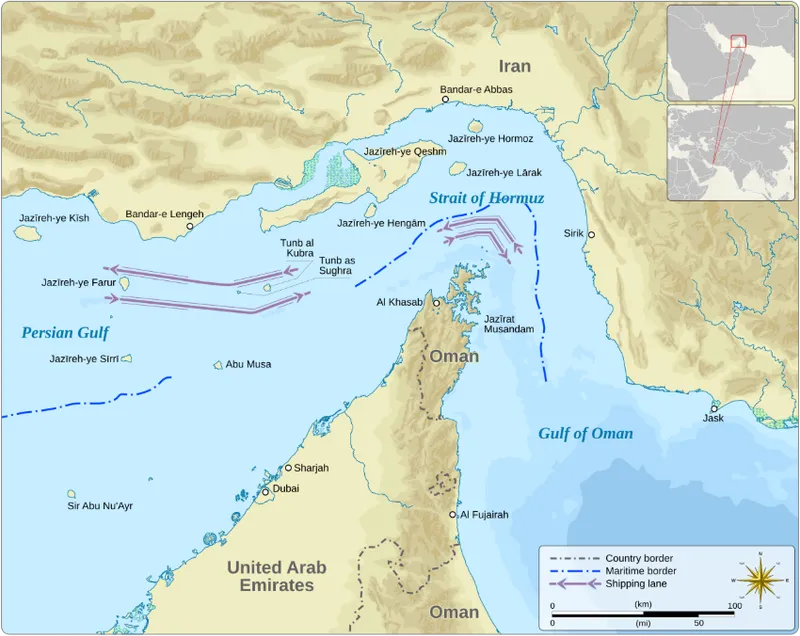
The closure affects about 20% of the world’s oil shipments. As an isolated island nation, New Zealand has always been susceptible to supply shocks. But this instance demonstrates just how reliant we are on a single link in an incredibly tumultuous region we have no control over.
The fact that finance minister Nicola Willis is doing Covid-style 1pm briefings should tell you how seriously the government is taking this fuel crisis. New Zealand’s economy is highly reliant on oil and if we don’t have enough of it, everything grinds to a halt.
What can New Zealand do about it?
As we enter an age of hostile geopolitics, it’s going to require a strategic rethink about how New Zealand can protect itself if and when this happens again.
One option is to diversify our suppliers by buying oil from other countries. That would be a decision for private companies, but the government could introduce some form of regulation or subsidy to incentivise them to spread their purchases around. However that wouldn’t do much to protect us from supply shocks that affect the global commodity price. Oil is always in high demand and any significant change to supply causes markets to freak out.
Another option is to produce more oil locally. While this could play a role in our energy independence, New Zealand is unlikely to ever produce enough oil to supply the entire domestic market. Local oil fields only produce about a tenth as much oil as we import, and annual extraction volumes have been decreasing for years – though some politicians, particularly Shane Jones, think there are more oil fields to be found and blame the previous Labour government for stopping new offshore and oil gas exploration permits.
The Marsden Point Refinery, which was closed in 2022 and has since been dismantled, is a lightning rod in the politics of energy. Opened in 1964, it was New Zealand’s only oil refinery and processed mainly imported crude oil into petrol, diesel and jet fuel. The closure was a decision by owners Refinery NZ in response to large operating losses. However, some have argued that the government should have stepped in to keep it open in the interests of national energy security.
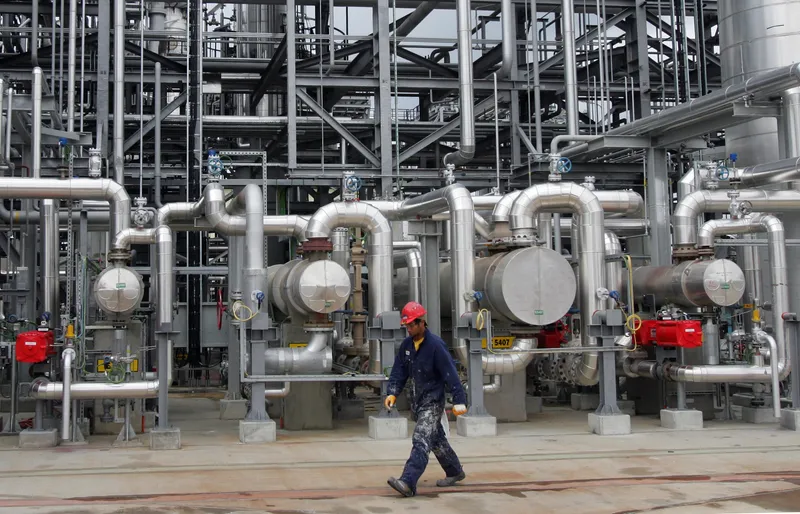
However, it should be noted that the Marsden Point refinery wouldn’t actually make any difference to the current situation. There’s no issue affecting the supply of refined oil from Asia to New Zealand; the problem is getting the raw product of crude oil from the gulf states to the refineries.
Then there’s the issue of the national fuel reserves. As of Sunday, New Zealand’s five bulk fuel importers have enough petrol in the country to meet normal demand for nearly 33 days and enough diesel for 27 days, plus 25 days’ worth of petrol and 22 days’ worth of diesel on ships bound for the country.
New Zealand doesn’t have strategic oil reserves the way the US does, but it is a member of the 32-country International Energy Agency, which agreed unanimously last week to release 400 million barrels of oil from its reserves to tackle soaring prices. For New Zealand, that was about six days of supply.
Every country is required to own at least 90 days of oil supply at all times but this can be in the form of contracts, it doesn’t have to be physical storage. This crisis will likely kickstart a conversation about whether New Zealand should have larger strategic reserves to deal with similar problems in the future.
In the long run, the best way to protect New Zealand from oil supply shocks is to reduce New Zealand’s reliance on foreign oil by electrifying the economy – a sort of green economic nationalism.
Political and economic commentator Bernard Hickey has called for “a war-styled decarbonisation of our economy, starting with rapid and massive importation of electric cars, trucks and buses, along with shiploads of solar panels and batteries from China to install over any roof facing north.”
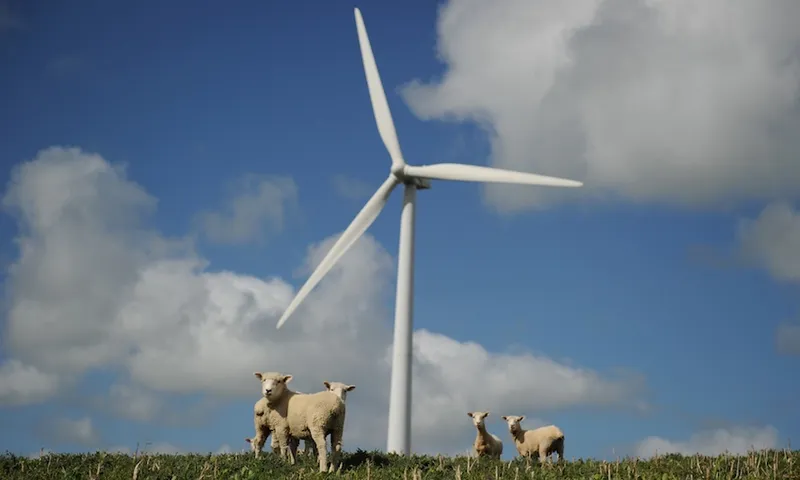
The great thing about electricity is that it is fuel agnostic. It can be generated from wind, solar, hydro, gas, or coal, which makes the supply more stable and diversified. This is part of the reason for the government’s plan to build a liquid natural gas (LNG) terminal in Taranaki. New Zealand produces natural gas locally, but the terminal would allow companies to store more imported LNG, which can be used to supplement energy generation during dry seasons. However, LNG supplies have also been impacted by the closure of the Strait of Hormuz, leading to criticism by the opposition that relying on imported LNG is shortsighted.
There will always be some demand for speciality fuels, especially in industrial processes, but the more of the economy is electrified, the less New Zealand is at risk of economic disruption from a single source of imported fuel. With the rise of electric cars, high-powered batteries, and the increasing compute power demanded by AI and data centres, New Zealand’s demand for energy is certain to increase – and our future could depend on how we get it.

Joel MacManus
Joel MacManus is a senior writer for The Spinoff. He previously worked at RNZ and Stuff, and began his career at Critic Te Ārohi. His writing explores the political, economic and cultural systems that underpin modern New Zealand. He won the 2025 Voyager Media Award for Best Columnist, Opinion or Critique.


