Why I (mostly) left The Spinoff to start music platform Lume

Duncan Greive
The Spinoff’s founder explains why he has seemed so unproductive lately: he has co-founded a music platform.
When I resigned from running The Spinoff, the idea was simply to write. It was my first love, still how I thought of myself in my head, and when things got hard as an editor or running the business (which was almost constantly), I would console myself that writing was there, waiting as a prize at the end.
Then when I got the prize, it turned out I didn’t want it. The stories I wrote after leaving the big chair were fine, but the feeling wasn’t there. With hindsight I was catastrophically burned out, but at the time I just couldn’t figure out why writing didn’t feel so satisfying as it once did.
In part it might have been to do with another part of my job: hosting The Fold, a podcast which my colleague Calum Henderson notes as having a comically overbroad definition of “media”. That has at times included everything from Roblox developers to the CEO of Te Papa. It also meant that a significant part of any given year was spent cataloguing layoffs and collapses, watching as local branches of publishers withered, festivals fell apart and whole newsrooms were vapourised.
In many ways, media jobs were the least of it – the most profound problem was the damage inflicted on our democracy. But as someone who (after a few years as a postie) spent most of their working life in media, that was the part which I felt most viscerally.
Through the seven years I’ve hosted The Fold, I built up a working theory of what was driving this persistent destruction. It wasn’t the fact of moving online from legacy distribution like newspapers and television. It was about the absence of restraint from those platforms, and the fact that so little of the vast sums they generated ultimately filtered down to people who created content for them.
That was particularly true for social platforms: Facebook, Instagram and TikTok, which made enormous sums from advertising yet distributed only crumbs to those who made work for their platforms. But even YouTube (which typically pays out 55% of ad revenue to creators) and Spotify (roughly 70%, but trending down) seemed to have complicated relationships with those who built livelihoods on their platforms.
In all honesty I was probably spending too much time dwelling on this, and it definitely made me poor company. But I remember watching the rise of Substack with something like hope. Here was a pipe which distributed closer to 90% of revenues to its creators, and seemed to want to tightly align its interests with those of its writers. It made me wonder whether it was possible to build a better pipe.
The place I ended up thinking about most of all was music. Long before The Spinoff, I was a music critic, and then a music magazine editor. I still think no form has brought me more joy, made me feel more, than music. But I hated what streaming had done to me as a listener. The seductive promise of access to all the music ever recorded for one low price had mostly realised itself as me listening transactionally to a series of playlists. The deeper and more profound relationship with albums was mostly gone. And finding new music felt bizarrely difficult – partly because the magazines and blogs I used to devour were gone or shadows of their former selves, but also due to deliberate choices the streamers had made.
It became something I talked about a lot with my friend Justin Warren, then head of strategy at Universal Music. We started to imagine a different kind of platform. One built around albums, not songs and playlists. One which replicated some of the properties of records and CDs, while retaining the real advantages of digital media. Most of all, one which properly compensated artists and their partners.
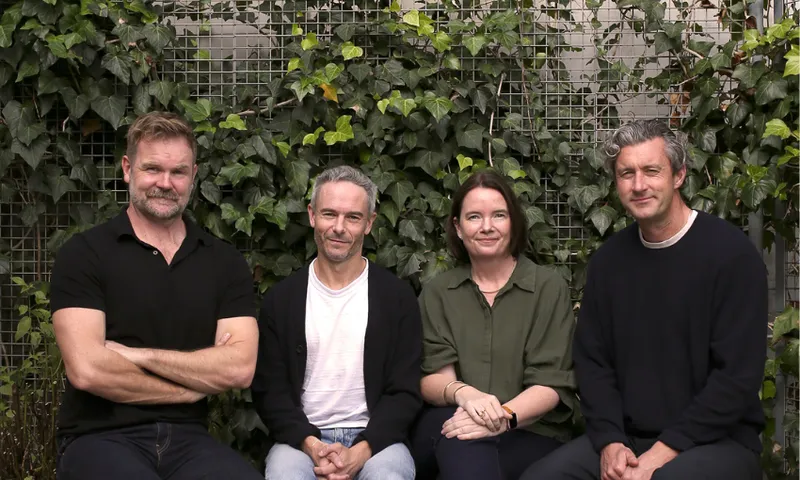
We discussed the idea with a bunch of people – friends at labels, people in startups and artists. Typically music people clocked the idea right away, while others often couldn’t see the problem. Eventually we found, in Tim Harper and Sacha Judd, two others who believed in the idea too. Tim had made The Great New Zealand Songbook, one of the last great product successes of the CD era, while Sacha wrote and spoke about fans on the internet, while working for a major investor as a day job.
We honed the idea until we were satisfied with it: an expanded definition of the album, with extra audio made up of demos, live tracks or instrumentals. Behind-the-scenes content like photography, video or handwritten lyrics. And unit sales over subscriptions, matched to the cadence of albums (while that might seem crazy in a post-Spotify world, ebooks and video games are still almost always sold rather than subscribed to, and films often rented).
About a year ago, we decided to go ahead and try and raise money. It did not go well. Many professional investors thought there was no problem to solve. Streaming was great for them as consumers, and if artists were hurting, well, maybe they just weren’t very popular. The thing we kept coming back to was how blunt an instrument streaming was. The rate was the same whether you were listening to the algorithm’s choices at the gym, or if this was the best moment of your week. It just didn’t measure passion in any meaningful way.
So we kept at it, and were buoyed by a growing sense of dissatisfaction with streaming as the only solution. The publication of Liz Pelly’s devastating book Mood Machine unleashed a volley of questions about the world streaming made, and by the end of last winter we were intrigued to see Tiki Taane join a number of major artists in leaving Spotify.
By then we had raised just enough from friends and family to hit go and launch a company called Lume. With the exception of Tim, none of us had worked in an investment-backed startup before, but we recruited a few people who had, in Jade, Drian and Giovanni, and got The Spinoff’s sister agency Daylight to help us with design, brand and UX. At the start of the year, we introduced ourselves to the local industry, and to artists, and have mostly been overwhelmed by the response.
It’s not been uncomplicated, but when we tell the story to artists in particular, irrespective of stage or scale, they nearly always see it and believe in it. Not as a replacement for streaming, but as a missing piece of the puzzle. Ultimately, they’re the ones who make the magic, and seem to have been most poorly served by streaming as (close to) the only solution. It’s them we keep top of mind, and their response which matters most of all.
Today we’re officially announcing the launch of Lume and you’ll see its story in a bunch of different places. It’s a big swing for all of us, and it’s no exaggeration to say that we’re scared shitless. But it feels wildly exciting to work on something so creatively and financially ambitious for something we all love so much.
This piece is also a way of explaining why longtime readers of The Spinoff might have noticed my byline becoming increasingly infrequent. I’ve been away, willing Lume into being. Today we tell the world. Soon enough we’ll start to know whether it will work.
Lume launches in June.

Duncan Greive
Duncan Greive is the founder of The Spinoff, along with the agency Daylight and music platform Lume. He also hosts The Fold, a podcast which features interviews and analysis about the media sphere in New Zealand.


