If AI is about to upend everything, where’s all the AI policy?

The Luxon-led government has taken a ‘light-touch’ approach to AI regulation. (Composite image: The Spinoff/Dave Rowland/Getty Images)
So far, the only party to release any AI policy for the 2026 election is the Greens.
When prime minister Christopher Luxon addressed the crowd of the Rotorua business chamber last weekend in a now-infamous speech, he urged them to use Claude and Claude Code because “you have to disrupt yourself aggressively before you get disrupted by global events”. When finance minister Nicola Willis announced the government’s intention to cut another 8,700 public service jobs, she was optimistic that artificial intelligence would help to make up for the reduced numbers with greater efficiency.
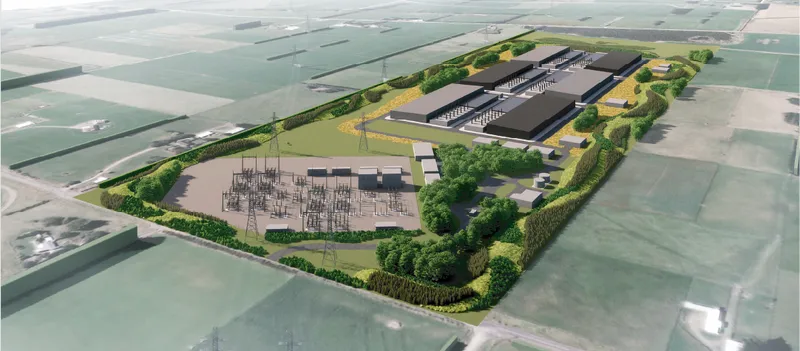
Invest NZ, the government agency responsible for attracting foreign capital, is going all-in on AI-capable data centres as New Zealand’s next big economic opportunity. It’s actively recruiting support from New Zealand energy, utilities and construction companies and co-ordinating visits with international hyperscalers and hardware giants such as Nvidia and Microsoft.
Artificial intelligence is a technology with significant potential benefits and risks for every country, and New Zealand is likely to see more change than most. We have significant industries in software and film production and New Zealand has the capacity to host a lot of data centres thanks to cool temperatures and capacity to increase renewable energy generation.
And yet, amidst all the hype of economic potential and fears of environmental, social and educational harm, there has so far been little actual policy proposed by any political parties about how exactly New Zealand is going to handle this enormous force that is invading our lives.
In July 2025, the government announced a national strategy for artificial intelligence, though this was a “light-touch” approach which focused on encouraging small and medium businesses to adopt AI in their workflows and encouraged international investment. It did not include any regulations.
According to Andrew Lensen, a senior lecturer at Victoria University of Wellington specialising in artificial intelligence, New Zealand “continues to fall behind on regulation”.
“It’s almost a reputational thing. When you look at our trading partners they all have some version of AI regulations because the public is sceptical, or they see there is a risk to be managed. It’s a soft power risk if we don’t have something similar. We look out of touch, like someone you don’t want to trade with,” he said.
To date, the only party to release any AI policy for the 2026 election is the Greens, which last week called for a one-year moratorium on new consents for data centres. Greens co-leader Chloe Swarbrick told The Spinoff the party intended to release further AI policy but had prioritised the data centre issue because it was “physical infrastructure that has immediate impact on communities”.
She described the moratorium as “breathing room” that would give the government time to develop new regulations for consenting.
“There very clearly is opportunity here but we need to have control over it and the impacts it will have economically, because right now the government seems to be taking a very agnostic approach,” she said. “We are sleepwalking into the biggest industrial revolution at the fastest pace I can think of. Do we want to be in charge of this thing or just let it happen to us?”

Labour’s science and technology spokesperson, Reuben Davidson, said the party would release an AI policy ahead of the election and wanted regulations ensuring that data centre operators “be legally required to underwrite new renewable electricity generation so they do not add scarcity or push up power and resource costs for households”.
Data centres are subject to the same permitting requirements as any other new building, meaning local councils or a fast track panel are responsible for granting resource consents.
Internationally, two of the most salient concerns around data centres are water consumption and electricity use. In Ireland, data centres consumed 23% of all metered electricity in 2025, leading directly to higher costs for households.
Industry leaders at the Invest NZ summit in July waved those concerns away by pointing out that new closed-loop cooling systems consume far less water than older systems and that long-term electricity supply contracts from data centres is exactly the assurance that energy generators rely on to fund new solar and wind developments. However, there are no specific regulations requiring developers to adopt closed-loop systems or ensure that their power usage doesn’t affect the domestic grid.
A National spokesperson said the party has “aimed to reduce barriers to AI adoption, provide clear regulatory guidance, and promote responsible adoption,” and would have more to say on AI during the election campaign. Act refused to confirm or deny whether they would release any AI Policy. NZ First did not respond to requests for comment.
Do we need an office of AI?
The problem with AI regulation as a category is that it is enormously broad. The technology touches almost every industry, government service and aspect of society.
Australian prime minister Anthony Albanese announced in July that he was setting up an “Office of AI” which sits in the Department of Prime Minister and Cabinet. He said this would allow a whole-of-government approach to regulations as opposed to the status quo of “issue-by-issue, sector-by-sector” regulations.
Lenson said establishing an equivalent office in New Zealand was an “obvious” move. “It’s an easy win that doesn’t cost a lot, and it gives you some infrastructure to think about what must be done.”
He cited Laura McClure’s deepfake bill as the kind of harm New Zealand’s regulations needed to address, alongside rules related to medical rights, misinformation, democracy, intellectual property and data sovereignty.
“There is a huge potential win in being aligned with one of our partners [such as Australia or the EU, which have implemented similar regulations]. We can copy their homework, and it would be easier for big tech companies to comply with those laws. But we also have unique considerations around data sovereignty, obligations under Te Tiriti, and different demographics which could be affected by bias and discrimination.”Gehan Gunasekara, an associate professor at the University of Auckland specialising in information privacy law, seconded a call for a government office of AI to help develop regulations. “There is a precedent for this. New Zealand’s first Privacy Act in 1991 created an office of the privacy commissioner, but the act didn’t come into force until 93. The office preceded the actual rules,” he said.
He wanted to see parliament appoint a high-level task to consider AI regulations, seek public input and get the ball rolling. “At the moment we’re getting ad hoc legislation about whatever might win votes and that’s not the way to make policy.”

Joel MacManus
Joel MacManus is a senior writer for The Spinoff. He previously worked at RNZ and Stuff, and began his career at Critic Te Ārohi. His writing explores the political, economic and cultural systems that underpin modern New Zealand. He won the 2025 Voyager Media Award for Best Columnist, Opinion or Critique.


