Luck on Labour’s side as party eyes up small business ‘partnership’

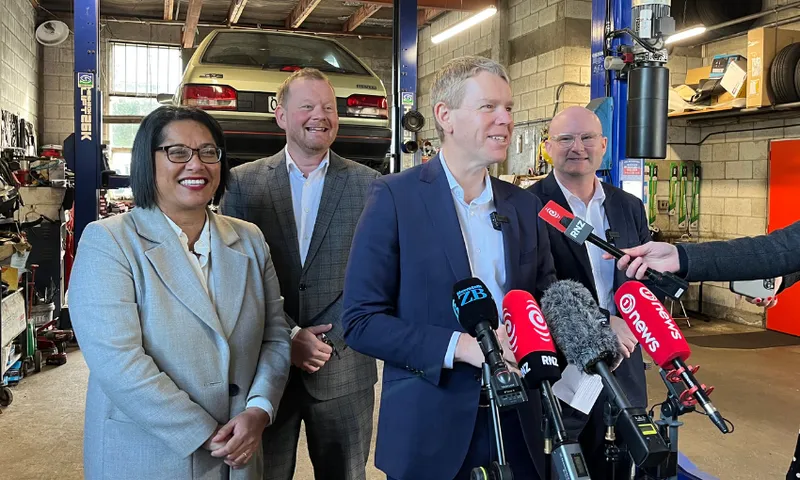
From left, Labour’s finance spokesperson Barbara Edmonds, Wellington Bays candidate Craig Renney, leader Chris Hipkins and small business spokesperson Dan Rosewarne.
Amid a falling out between the National Party and small business, it’s a better time than ever for Labour to try to woo a constituency that has never been theirs.
It was hard for Labour leader Chris Hipkins to contain his grin. For “several weeks” the party has been plotting the announcement of its Small Business Action Plan, a relatively niche piece of policy designed to replace the current Investment Boost scheme. It might have flown under the radar, had Christopher Luxon not handed the opposition the opening it needed.
It was a rare decision on the prime minister’s part to make an apology in the first place. But criticism over comments Luxon had made over the weekend at the Rotorua Business Chamber, where he criticised the “parent-child” mentality between small business owners and the government, have resulted in near week-long backlash.
“I didn’t sit there in Chicago and say, ‘I wonder what the government thinks? I wonder what they’re going to do to help me with my business?,” said Luxon, previously a Unilever vice president for deodorant in North America, to a group of regional business owners.
They’re awkward comments from the party purporting to be the most business-friendly, to say the least. Telling anyone “who cares what the government is going to do” is a hard thing to sell years into a cost of living crisis. Especially if you’re also trying to sell the idea that you’re the country’s daddy.
But in the fallout, a surprise ally to the small business owners has emerged. Enter: the Labour Party, buoyed to Opportunity Island by the SS Luxon. It was just plain dumb luck that their latest policy announcement – a plan that aims to speed up the rate at which small suppliers are paid back by big firms – has landed at the best possible time for the party to align itself with a non-traditional voter base.
The Small Business Action Plan will effectively slim down current thresholds in the Investment Boost scheme – the focal point of last year’s budget. The tax write-off on assets (such as equipment and tools) will be lifted from $1,000 to $10,000, and the GST threshold would rise from $60,000 to $80,000.
“Sometimes you get lucky in politics, and your opponents demonstrate the need for a policy very clearly before you announce it,” Hipkins told The Spinoff. “Christopher Luxon’s mischaracterising and insulting of small business… has highlighted why the National Party is no longer the party of small business in New Zealand, but the Labour Party is.”
Them’s fighting words. So, if not something akin to parent-child, what kind of relationship does Hipkins want a future Labour government to have with small business? The answer is a “partnership”, Hipkins said, with the hope of helping “small business to thrive”.
This stance may put the party at odds with big business, but maybe that’s the point. Many of National’s flagship policies – including Investment Boost, foreign investment reforms and fast-track consenting – have tended to provide more opportunities for growth for larger-scale firms with the resources to invest in big projects. Other policies, like the recently announced KiwiSaver overhaul, would effectively raise operating costs for small business.
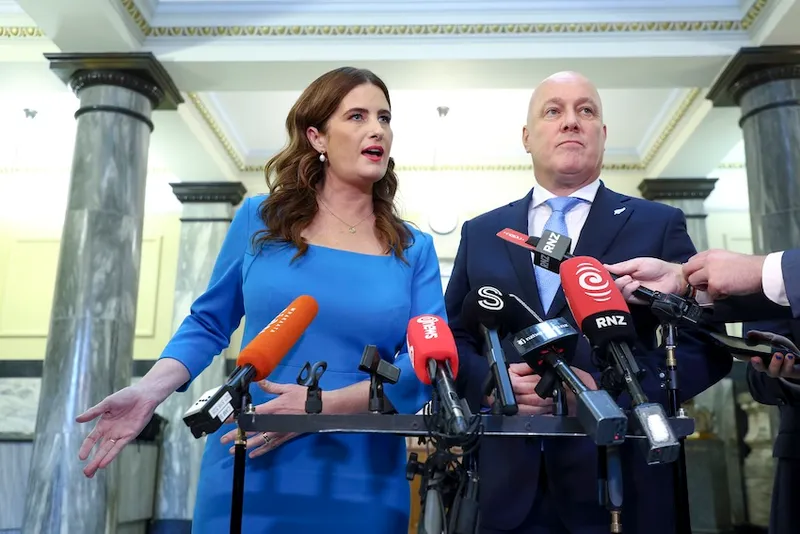
Funnily enough, Labour didn’t have a problem with Investment Boost until recently. Labour’s finance spokesperson Barbara Edmonds has previously supported the scheme, calling it a “good business initiative” – it was essentially the only nice thing the party had to say about the 2025 budget on the whole.
That tone has since changed, with Edmonds telling reporters that a survey from IRD had shown the party that 53% of small businesses said Investment Boost had made “no difference” to their choice to purchase an asset. “Only 7% said it was significant. By changing the low asset value threshold, you know that up to 600,000 businesses will be able to access that, if they’ve got a turnover of 10 million or less,” Edmonds said.
In the background, businesses continue to do it tough. Almost a week on from Luxon’s now infamous comments, the Rotorua Daily Post reported on Thursday morning that three local businesses – Hello Stranger Cafe, Ambrosia Restaurant and Bar, and Piccalo Cafe – have closed within days of each other. A social media post from Hello Stranger cited the pressure of increased operating costs as the catalyst.
The scene has been set, but whether Labour can convince voters to abandon daddy is another question. Political loyalties are rarely secured with a single policy. If Hipkins is hoping to weave luck into a genuine partnership, they’ll need to offer more than good timing.

Lyric Waiwiri-Smith
Lyric is an award-nominated politics reporter at The Spinoff. She covers parliament from the press gallery, pens the weekly column One MP, One Pint and is endlessly curious about what makes our decision-makers tick. Off the clock, Lyric loves a live gig, a cold brew, and being a Wellingtonian (on a good day).


