Regulatory Standards Bill hearing, day one: Former PM says ‘no chance’ of bill working

Geoffrey Palmer and Darleen Tana were two of the submitters on the first day of oral hearings into the Regulatory Standards Bill.
The bill dubbed the sibling to the controversial Treaty principles bill gets a whole week in parliament to have submissions heard.
Read our explainer on the Regulatory Standards Bill here and our reporting on the urgent Waitangi Tribunal hearing on the bill here.
A new day, a new controversial piece of legislation under scrutiny. After attracting a reported 150,000 public submissions, the Regulatory Standards Bill is having its week in the select committee, with all-day hearings from Monday to Thursday knocking out 30 hours’ worth of oral submissions. Whatever the finance and expenditure committee hears could influence changes to the bill, but the passing of it is already a promise made in the National-Act coalition agreement.
The inside of select committee room four was a ghost town on Monday morning, with all MPs on the committee’s panel opting to join the hearing via Zoom, and most submitters doing the same. Lawyer Ani Mikaere was one of the first speakers of the day, and had some choice words about the bill and the government at large: “National and NZ First currently face the spectre of this parliamentary term going down in history as the period when the Act Party governed – as coalition partners, you have been completely upstaged.”
Adam Currie from 350 Aotearoa, who appeared via Zoom link, told the committee the bill can “get in the compost heap” – then panned his camera over to his own compost heap for visual effect. “Thank you Adam, very succinct,” committee deputy chair and National MP Ryan Hamilton replied.

Former prime minister Geoffrey Palmer, who submitted against, labelled the bill the “strangest piece of New Zealand legislation I have ever seen”, and that there was “no chance” of it working. Palmer argued that regulation is necessary in many instances – like when he worked as a young lawyer on night clothes regulations, so that young children wouldn’t be set alight by heaters while they slept.
“The idea that you would not allow parliament to protect the public from danger is just unreasonable,” Palmer said.
Lawyer Sonja Cooper of Cooper Legal, which represents survivors of abuse in care, said she opposed the bill as it would allow abuse to continue. Cooper said she was concerned with the bill’s principle that all are made equal under the law – her clients have a “very distinct and urgent set of needs” which wouldn’t be addressed if they were treated as “equal”, and with many of them being Māori, the bill’s omission of the Treaty was a “refusal to accept the needs for policies which may need to treat people differently to achieve equality”.
When Act Party MP and committee member Mark Cameron questioned whether Cooper was telling the committee that laws should allow people to be treated unequally despite all people being “created equal”, Cooper replied: “It’s a nice thought that everyone is born equal, but that’s not the reality.” Their back and forth made Palmer whisper “oh, god” and at the end of it, he and Cooper just threw their hands in the air in disbelief.
Human resources expert Chris Till supported the bill, but didn’t support his “undemocratic” five-minute submission time. After arguing that iwi have too much power over freshwater resources, and that the RSB would fix this “racist, tribal and anti-democratic” system, Till continued to argue with Hamilton about his lack of time, so his submission was called off slightly early. Cameron, who had been waiting to ask a question, just gritted his teeth.
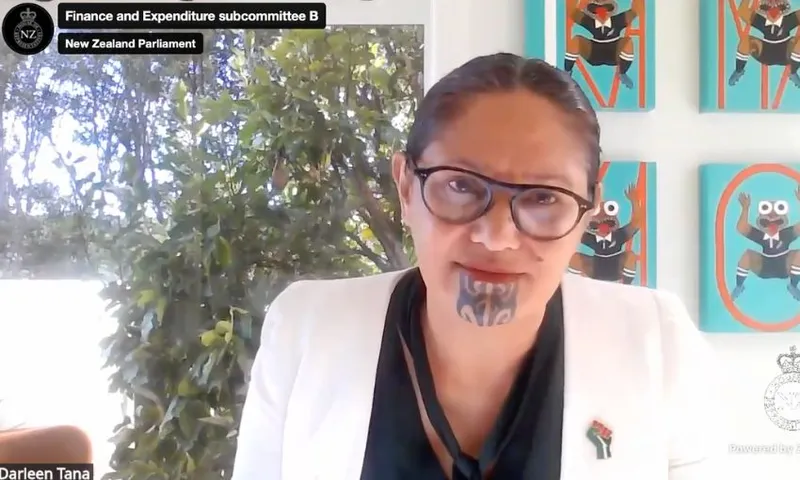
Later, former Green Party MP Darleen Tana submitted against the bill, with the argument that it would “constrain future governance, restrict public investment and sets up a narrow economic lens”. Also submitting against, Dunedin City Council’s in-house lawyer Karilyn Canton said the council was concerned that the bill’s omission of the Treaty would make it at odds with council obligations under the Local Government Act.
She also highlighted the bill’s requirement for review of secondary legislation (such as council bylaws, of which DCC administers about 40), and argued the Local Government Act already has sufficient provisions to the creation of these laws. Canton said it’s also still unclear what falls into the scope of “secondary legislation”, and whether the likes of a district plan – which has the force and effect of a regulation under the Resource Management Act – would fall into this category. “So the risk is that it creates disputes, creates costs and it creates uncertainty,” Canton said.
Health Coalition Aotearoa’s chair Boyd Swinburn opposed the bill, and told the committee the sector’s already existing “regulatory chill” – the absence of regulations which could protect young people from the likes of alcohol marketing – could turn into a “regulatory freeze” if the bill passed. Swinburn pointed to the Australian government’s years-long court case with tobacco giant Phillip Morris over plain packaging for cigarette cartons, which the company argued violated their property rights by confiscating property (their trademark) without compensation.
“It’s very naive to think that the industry would not weaponise the privileging of its private property and rights,” Swinburn said.
Far North district councillor Hilda Halkyard-Harawira began her submission against the bill by chucking on a pair of sunglasses, and letting the committee know that up in Northland, if someone speaks to you with their shades on, it’s because you’re telling a “whole bunch of lies”. She said the bill amounted to “historical amnesia”, and said the uplifting of personal, economic and property liberties over collective rights was like experiencing a flood in your neighbourhood, and only having the local “vape store” owner be saved.
Raewyn Moss and Jo Mooar of Transpower, which controls the nation’s energy grid, highlighted their concerns with clause eight of the bill, which highlights 12 principles of responsible regulation, including an emphasis on property rights. 93% of Transpower’s overhead lines run on statutory rights under the Electricity Act, the committee heard, and Moss said there was concern that a review of the Act will result in Transpower paying compensation to permit them to use and maintain the land their grid rests on.
They were also concerned that protections for these lines under the Resource Management Act would be overruled and ignored for new housing and developments, which could “have a big impact on public safety”.
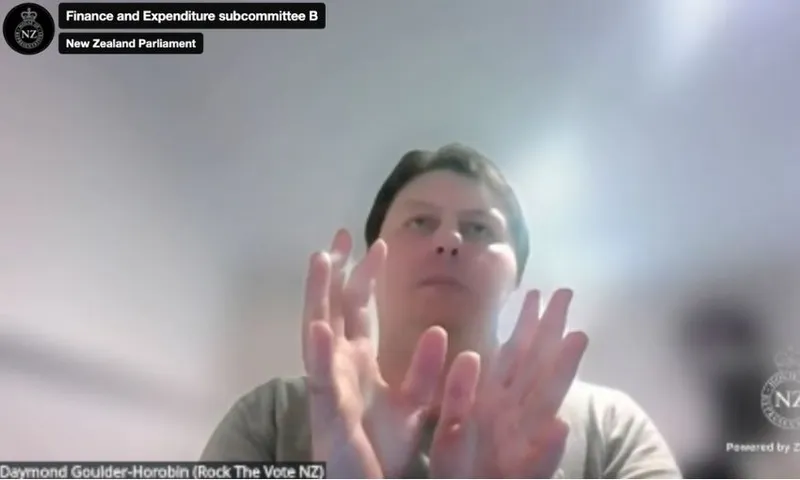
Rock the Vote NZ deputy leader Daymond Goulder-Horobin said the party largely supported the bill, but they had some suggestions. For “better optics”, regulations minister David Seymour should share appointment powers of the regulatory standards board that will be born from the bill with other parties, so that the committee is “balanced”.
“Every party is beneath 50% of the vote, so democratic legitimacy is always vested on [the voting of a bill],” Goulder-Horobin said. “This does not have to be a bill that antagonises the left.”
The finance and expenditure committee will resume oral hearings into the bill today at 8.30am.

Lyric Waiwiri-Smith
Lyric is an award-nominated politics reporter at The Spinoff. She covers parliament from the press gallery, pens the weekly column One MP, One Pint and is endlessly curious about what makes our decision-makers tick. Off the clock, Lyric loves a live gig, a cold brew, and being a Wellingtonian (on a good day).


