Labour plots its next move – but still no sign of any policy

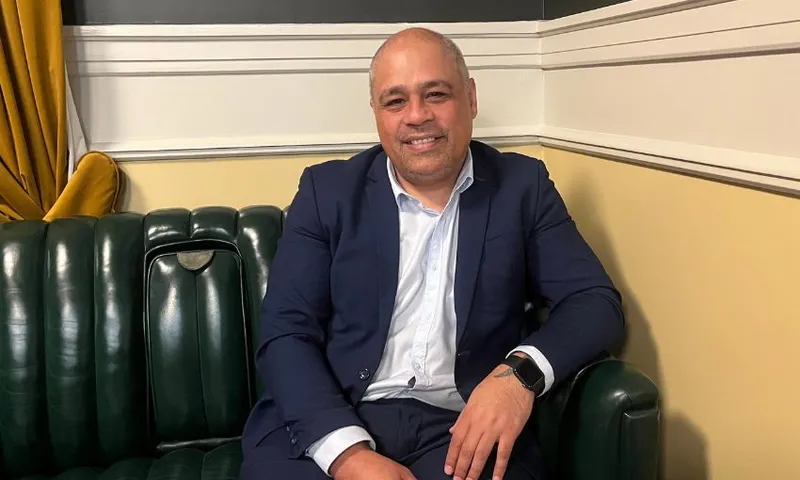
Chris Hipkins speaks to the media, flanked by MPs Megan Woods, Carmel Sepuloni and Tracey McLellan (Image: Shanti Mathias)
With the government not exactly coasting, spirits were high as Labour MPs converged on Christchurch for their caucus away day.
In one sense, Labour has been in campaign mode for the 2026 election ever since the party lost in 2023. Labour’s 2024 conference made a big pitch to Auckland, and New Zealand’s biggest city clearly remains a focus.
But the focus switched south for a caucus away day in Christchurch today, Friday August 8, which was preceded by MPs making visits to Dunedin, Queenstown and Nelson too. “Our three key priorities are jobs, health and homes,” said party leader Chris Hipkins as the gathering kicked off at a hotel conference centre. After some comments about the National-led government’s failure to act on any of these priorities, Hipkins referenced the policy that Labour has, by and large, not announced since they left government. “We give [New Zealanders] not just a reason not to vote for the current government but a really compelling reason to vote for us,” he said.
“We’re gathered today to get ourselves in winning shape for the next election. We start that by winning the Tāmaki Makaurau byelection,” Hipkins continued. Peeni Henare, who is campaigning to regain the seat he lost by 42 votes in 2023, looked up from his seat.
Thus concluded the public part of the gathering, and the handful of journalists left the room. No major policy announcements, just a quiet conviction that, as Hipkins said, “the next election could see New Zealand’s first one-term National government”.
While MPs were reluctant to comment on any specifics of policy discussed, the mood was optimistic; laughter and clapping could be heard coming from the conference room where they were holed up. This could have something to do with the governing coalition not exactly riding high in the polls or in public sentiment currently. At a morning tea break, most MPs made a beeline for their phones, which had been left outside to keep the meeting secure. Hipkins, meanwhile, was handed a Diet Coke can by a Labour staffer.
At a midday stand-up, Hipkins weathered questions about whether Labour was committed to bipartisan policy-making, following reporting that the party’s education spokesperson Willow-Jean Prime hadn’t engaged with requests from education minister Erica Stanford to discuss NCEA reform. “Willow-Jean Prime indicated that she wanted to meet with the stakeholder groups before meeting with the minister. I don’t think that’s unreasonable. I did indicate to her, though, I think it would have been better if she’d gone back to the minister and told her that that was what she was doing,” Hipkins said, simply laughing in response to David Seymour suggesting that Prime should be sacked.
Hipkins also refused to make a commitment about when Labour’s 2026 tax policy would be announced and whether a capital gains tax would be part of that policy. This was perhaps unsurprising, but a comment made in a speech to Queenstown Business Chamber the day prior hinted at the possibility: “We have an overemphasis on the housing market,” said Hipkins. “We can’t get rich as a country just by buying and selling houses from one another, we need to invest in the productive economy, and our over emphasis on the housing market as our primary source of investment has meant that we haven’t been.”
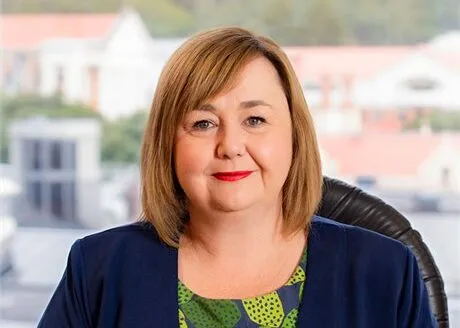
On other law, though, Labour has indicated that it wants to cooperate with the government. “We want to work with the select committee to make the big RMA reform as stable as it can be,” said Rachel Brooking, Dunedin MP and Labour’s environment spokesperson. “If it goes where Act want that will be impossible, but if you go where some of the expert advisers [want], that’s possible. We want to work in good faith and stop the flip-flopping – we won’t be precious about it.”
Overall, though, Brooking said that the National-led government’s track record on the environment, especially issues like freshwater pollution, was disappointing. “Everything is very short-sighted, it’s about getting rid of red tape rather than ‘what are the health impacts of not being able to swim in a river? Or have clean drinking water?’ There are costs associated with that.”
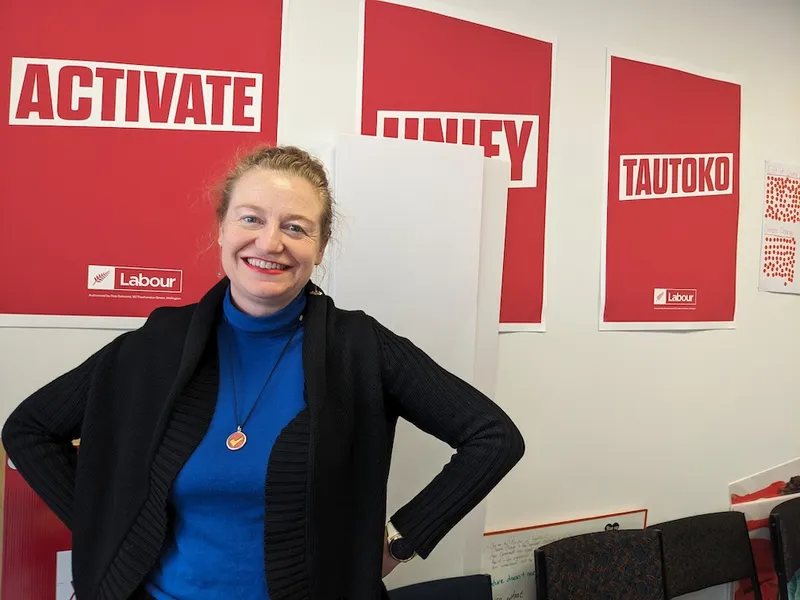
Duncan Webb, Christchurch Central MP and Labour’s spokesperson for the Natural Hazards Commission, said that National’s economic plans didn’t make sense. “We believe in productivity. For this government, productivity means driving down wages, but we want higher wages and better-value products coming out of New Zealand services.” Positioning mining and resource extraction wasn’t a solution, either. “We cannot have a carbon-based economy in the future.”
While Labour might not have any definitive policies they’re taking to the next election just yet, the party is not shy about stating what they would do differently to the current government. The Spinoff asked Megan Woods, a senior MP, what she made of the wave of submissions against the Regulatory Standards Bill, the Fast-track Approvals Bill and the Treaty principles bill, with volumes exceeding that of most previous legislation. “If the government is going to try and pass unpopular laws, then people are going to want to have their say,” she said. When facing that volume of submissions, she said it was essential for select committees to have more time to hear from people, but that consultation had to be broader. “If some of that happens before you drop a bill on people, there’s actually conversations which can happen,” she said.
While Labour lost many marginal seats in the South Island at the last election, it’s clear the party is trying to position itself as a party for the bigger island. “The South Island has been feeling neglected under this government for some time,” said Hipkins at his stand-up. He didn’t have any South Island-specific policies to share, although Labour MPs had been attending events in Queenstown, Nelson, Christchurch and Dunedin prior to the caucus retreat.
“Christchurch has always been important for the Labour Party,” said Webb. The party is affiliated with local election ticket The People’s Choice. “I think they have a really robust selection process – there should be some tussles in Christchurch Central [the council ward] with five candidates.”
Woods, who is the MP for Wigram in south-west Christchurch, said she’d been getting involved with The People’s Choice. “I’ve been out there putting up billboards and door knocking and enrolling voters to support those candidates.”
What all MPs were keen to emphasise was that the biggest problems in New Zealand, south or north, were best tackled by Labour. What exactly are those problems? No surprises there. “The cost of living issue is a critical piece,” said Woods, and Webb, and Hipkins. A June poll saw Labour move ahead of National in terms of who New Zealanders consider best placed to tackle the cost of living for the first time since 2021. Clearly the party wants to keep beating the butter drum, all the way to the 2026 election.

Shanti Mathias
Shanti is a contributing writer at The Spinoff with a focus on Christchurch and the South Island. Email her at shanti@thespinoff.co.nz


