RIP RMA: Government prays for economic boom with new bills

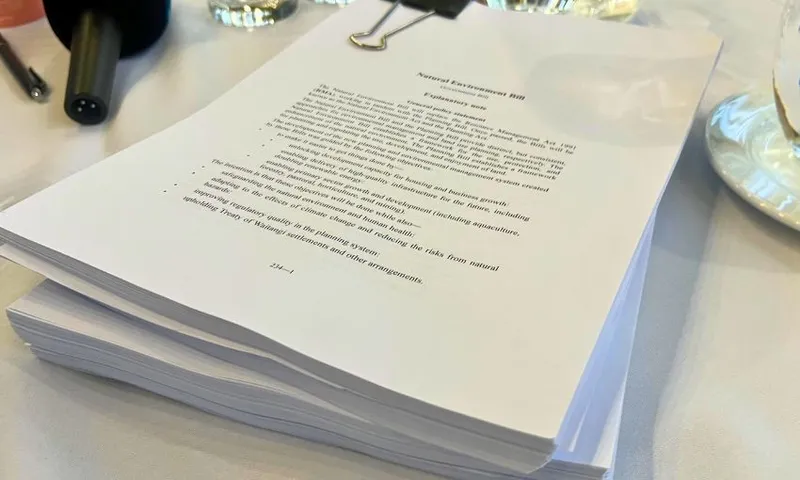
RMA reform minister Chris Bishop holds the Planning Bill and Natural Environment Bill.
The Planning Bill and Natural Environment Bill will replace the controversial Resource Management Act by 2029, ushering in an era of speedier consenting and, the government hopes, ‘a decade filled with prosperity’.
Nearly two years after the Labour government’s split-in-two overhaul of the Resource Management Act (RMA) was repealed, the coalition has dealt its own Ernest Rutherford-style chop to the RMA. By 2029, the law which governs our use of land and how we develop it will take on two new forms: the Planning Bill and the Natural Environment Bill.
It’s one of those seriously unsexy things that the government and news media have failed to make appealing to the general public, but the Resource Management Act (RMA) is essentially New Zealand’s tenancy agreement. It makes sure everyone in the flat (developers, farmers, iwi and basically anyone with an interest in using/protecting land) gets along; but, as most tenancies go, it hasn’t always been peaceful living for everyone.
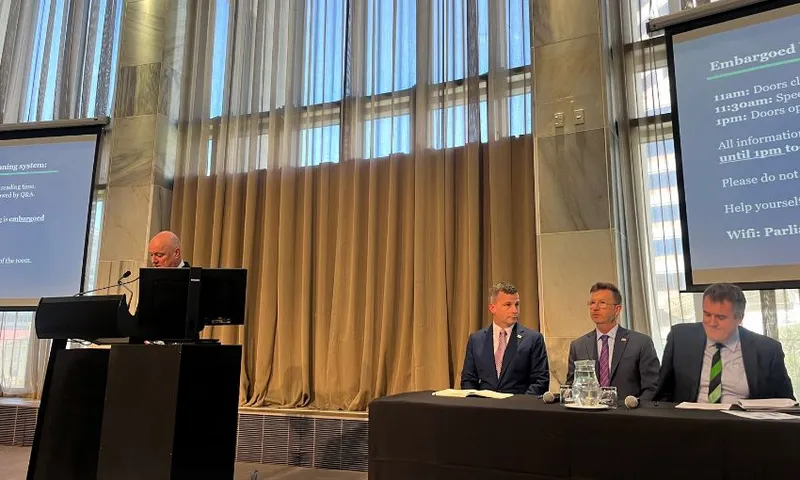
The announcement came on Tuesday morning alongside scones and T2 sachets at parliament’s Banquet Hall, with more than 20 tables of journalists, councillors and specialists sharing single copies of the bills between them. The cost of printing out one for everyone would have rivalled the current $1.29bn yearly spend by developers to consent projects, so even Wellington mayor Andrew Little – who headed straight for RMA minister Chris Bishop after the event – had to share his resources.
Prime minister Christopher Luxon labelled the overhaul a “once-in-a-generation opportunity to finally unburden ourselves from the millstone weighing down our country”. Deputy prime minister David Seymour patted himself on the back for pushing for an overhaul of the “difficult, detailed and technical” RMA since he entered parliament as a solo Act MP in 2014. Gone are the days of “every Tom, Dick and Henare” being “empowered by the Resource Management Act to get in the way” of consenting, Seymour told the room.
Minister Bishop lauded the reform’s championing of property rights, regulatory relief and economic growth, and a press release included in the handouts focused entirely on benefits to farmers. The new bills come with standardised consenting and a wider scope of what is deemed permissible, and a promise of clearer consenting rules alongside a new Planning Tribunal to resolve disputes “quickly and cheaply”.
What isn’t included in the planning system are rules around “visual amenity” like the colour of your house, which way your front door faces, what your facade looks like or whether it’ll annoy your neighbour. What’s more, landowners will be able to receive compensation – which could include cash payments, lower rates or no-fee consents – from their local council if the likes of Significant Natural Area (SNA) controls impact on their ability to develop their land. This “regulatory takings” provision is likely to be the most controversial aspect of the reforms, and Labour leader Chris Hipkins has said it’s an aspect his party would find hard to support.
“The RMA has corroded away Kiwis’ number eight wire mentality,” RMA under-secretary and Act MP Simon Court said. “Giving everyone a chance to say ‘no’ for any reason is the microcosm of the culture we must change.”
The new bills also require new national policy directions and standards – the national instruments – as the ones included in the old RMA were “confused”, Bishop said. Where the bills set out the rules for how land can be developed while the environment is protected, the national policy directions lay out the goals, while the standards provide directions. Councils can retain responsibility for local plans and consenting, though these must align with the national instruments.
The government is currently developing the national standards, which will be rolled out in stages and will include input from iwi. For the Planning Bill, these standards may include housing growth targets, standardising zones, identifying natural hazards and ensuring “regulatory relief” – ie payments for intrusions on property. For the Natural Environment Bill, these may consider environmental limits, freshwater standards and indigenous biodiversity standards. These will be unveiled in two stages, in late 2026 and in 2027.
The reforms do not ask to give effect to the Treaty, but require recognition of the Crown’s responsibilities. Bishop assured the room that the bills do not weaken Māori rights, but rather give more detail as to how these rights can be upheld. The national instruments will supposedly include clearer directives for considering Māori interests and treaty settlements, and councils will be required to consult mana whenua when developing the likes of spatial plans.
The RMA reforms follow major local government reforms which will see regional councils shift to “combined territories boards” (CTBs) led by mayors. Under the new bills, regional policy statements, more than 100 district plans and 1,175 zones will also be scrapped and replaced with regional combined plans which will consider spatial, land and environmental planning. The CTBs will be tasked with developing these plans.
Urgent legislation passed this year will extend current consents or those due to expire before the new bills are passed. Bishop called for buy-in from councillors, planners, lawyers and consultants to back the “culture change” which he said could save over $13.3bn in the next 30 years. There had been “extensive” conversations with Labour and Greens to ensure broader buy-in from parliament, Bishop confirmed.
“It’s a system that fixes the basics and builds for the future,” Bishop said, echoing the National Party’s unofficial 2026 slogan. “There is no reason that the 2030s can’t be New Zealand’s decade, a decade filled with prosperity and higher living standards.”

Lyric Waiwiri-Smith
Lyric is an award-nominated politics reporter at The Spinoff. She covers parliament from the press gallery, pens the weekly column One MP, One Pint and is endlessly curious about what makes our decision-makers tick. Off the clock, Lyric loves a live gig, a cold brew, and being a Wellingtonian (on a good day).


