Why Christopher Luxon thinks Ikea could win him the election

Christopher Luxon at the opening of Ikea on Thursday, December 4 (Photo: Phil Walter/Getty Images)
National’s strategy in 2026 will be all about grand openings and major events.
“Three… two… one… Woooooo!” Christopher Luxon beamed as he cut the big blue ribbon with his little white scissors, officially opening New Zealand’s first Ikea store. As the nation marked this historic moment, the public reaction swung from excitement to deep embarrassment. There were rumblings of cultural cringe. The prime minister showed up to the opening of a furniture store? How parochial.
Luxon didn’t just attend Ikea’s opening day. Back in September, he showed up for the announcement of the opening day. He seems to have done everything he can to tie his brand to the Swedish big-box retailer. (Appropriate, perhaps, for the prime minister whose cabinet came with historically complicated assembly instructions.)
National won the last election on the back of a tanking economy and public frustrations with Labour. Immediately afterwards, the odds of re-election looked pretty good: whether due to the government’s policies or just global economic trends, it felt like a near certainty that the economy would be better in 2026 than 2023. That turnaround has been slower than expected. Vibes are bad, especially in cities. (Rural areas are doing all right thanks to high farmgate milk prices and a massive windfall payment for Fonterra farmers.)
The government needs those vibes to turn around by election day. Luxon is doing everything he can to highlight signs of the long-prophesied green shoots. Ikea is a perfect example; a big new store with cheap prices and good vibes.
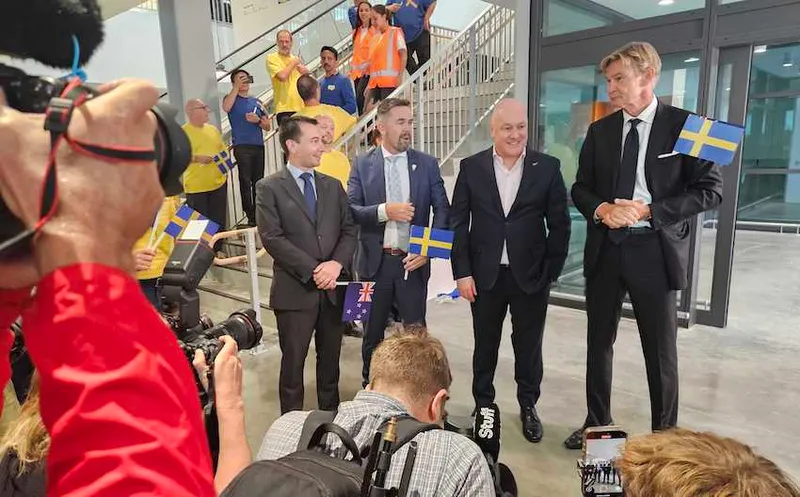
There will be more major openings in 2026, in all three of New Zealand’s largest cities. City Rail Link and the New Zealand International Convention Centre in Auckland, Te Matapihi Central Library and Te Ngākau Civic Square in Wellington, and Te Kaha stadium in Christchurch.
Luxon can frame every major opening as representative of his government’s vision for fast-tracked construction and international investment. With the government’s new major events strategy, every Ed Sheeran or Linkin Park concert becomes part of the economic recovery narrative.
None of these projects started under Luxon’s government. Nor did Ikea, or the Amazon Web Services data centre Luxon “announced” in September (which had already been announced four years earlier.) But you can expect to see him at every opening ceremony cheesing for the camera.
These events are where Luxon shines. He’s at his best when working the room, chopping it up with business executives and taking selfies with the public. He has huge social energy, a jovial attitude, earnest enthusiasm and immunity to cringe. He is a natural extrovert who genuinely loves small talk. That’s a rare and valuable trait.
These are the “soft skills” of politics. Where Luxon struggles is the “hard skills”. He isn’t super details-oriented, struggles in hard interviews, and often only survives in parliamentary debates due to backup from his front bench and coalition partners.
It’s not that he’s terrible at those things, he just isn’t at the level we’ve come to expect from prime ministers. Leaders are usually their party’s best or second-best performer in the house. Luxon wouldn’t even crack the National Party’s starting five.
That’s an overlooked aspect of the long-running rumours that he could be rolled by Chris Bishop, Erica Stanford, or whichever other minister has grabbed the attention of the chattering class this week. It’s not just about ideological differences; it’s the awkwardness of having a captain who isn’t the best player on the team. Luxon is a compromise candidate who managed to hold the party and coalition together, but no one looks to him for ideological or strategic leadership.
The coup talks won’t die down any time soon. If National loses, Luxon will be gone, but even if the government clings onto a second term he could be at risk. The political calculus will change from a party just trying to hold on to power to one that wants to leave a legacy. There will be serious questions about whether Luxon is the man to achieve this.
There are several senior ministers with big brains and bigger ambitions who think the prime minister isn’t on their intellectual level. That may be true when it comes to hard skills, but his soft skills shouldn’t be underestimated.
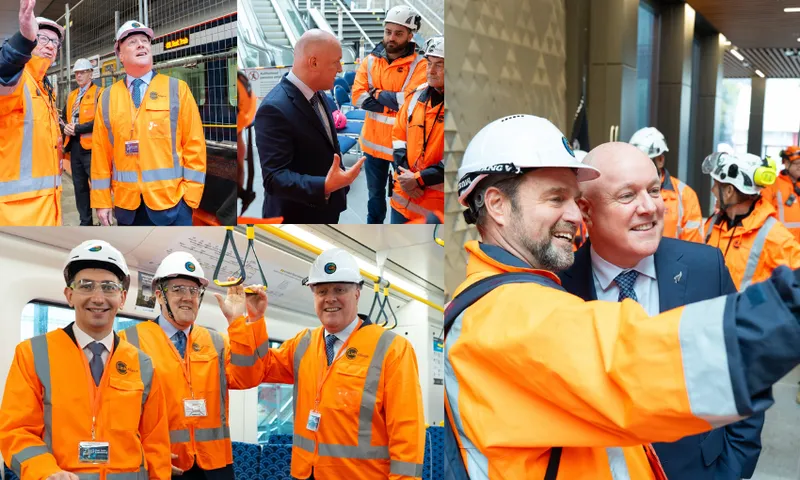
For now, National MPs have apparently made the calculation that a new leader wouldn’t significantly improve their odds of winning the election. There isn’t enough time for the government to pursue a different strategy; they have to play the cards they’ve been dealt. The only thing to do now is sell, sell, sell.
For all his flaws, Luxon – once the global director of Unilever’s deodorant and grooming category, who spent a billion dollars a year selling soap – might be the perfect man for the task at hand. For the next 12-ish months, he’ll be a full-time cheerleader; travelling the country, shaking hands, filming TikToks, and doing everything within his power to pitch the narrative that things are on the up and up. The question is: will voters believe him?

Joel MacManus
Joel MacManus is a senior writer for The Spinoff. He previously worked at RNZ and Stuff, and began his career at Critic Te Ārohi. His writing explores the political, economic and cultural systems that underpin modern New Zealand. He won the 2025 Voyager Media Award for Best Columnist, Opinion or Critique.


