Rates rises are due to people voting against rates rises

Yell all you want but the broken pipes won’t fix themselves
We ignored our crumbling infrastructure for decades. But having to pay to fix it made people mad. Now it’s time to ignore our crumbling infrastructure for decades again.
Nicola Willis didn’t muck around with niceties when asked to justify the government’s plans to cap council rates rises on RNZ. “Councils don’t always do a great job of spending your money like you would spend it. There are wasteful projects – there is evidence of that,” the finance minister said, before ending with a devastating own. “There will be pushback because when you take candy away from kids in a candy store, they don’t really like it. But at the same time, we are on the side of ratepayers.”
In other words, we’re doing this for the people who think councils are pissing their hard-earned cash up against a gold-plated bike lane. Willis is far from alone in her sentiments. Calling local government wasteful and profligate is a reliable go-to if you want to lure spittle-flecked callers to a talkback station or red-faced men to the local Facebook community page. It’s been at the heart of hundreds of mayoral campaigns. Recently Ray Chung has tried harnessing the anger, launching a campaign for the Wellington mayoralty centred around a pledge to freeze rates for three years by scrapping “wasteful projects” and spending smarter.
But when you ask for specific examples from these waste disposers, many of them start to founder. Questioned by RNZ’s Corin Dann on what he’d cut to make up for the revenue loss caused by his rate freeze, Chung pointed to the council’s ballooning staff numbers. “Our staff numbers have just gone up exponentially and really, I have no idea what a lot of these people do,” he said. Dann moved on, but RNZ went back to fact-check later. It found staff numbers had been mostly static at Wellington City Council for several years, and actually went down in 2024.
This is a common theme. The Post has run stories freaking people out about the cost of Wellington’s new bike network. Newstalk ZB’s Heather du Plessis-Allan has criticised it for spending on a bike lane in Karori, and has repeatedly brought up a single $84,000 bike rack. Wellington council could get rid of everything they’re complaining about and still not save the average ratepayer enough for a single extra bag of sour coke lollies per annum. Cycling spending, including pedestrian and bus improvements, accounts for 1% of its investment over the next 10 years, and 0.17% of its recent 17% rates rises, or roughly 72c per ratepayer.

The primary culprit for Wellington’s rates rise is less wasteful spending and more a long-shirked repair bill. Politicians put off investment in Wellington’s pipe network for decades, until eventually it started alternating between leaking and spraying human excrement on passersby. Thanks to her tightwad predecessors, the current mayor Tory Whanau has had to spend tens of millions of dollars to stop the citizens of our nation’s capital being drowned in a huge poonami.
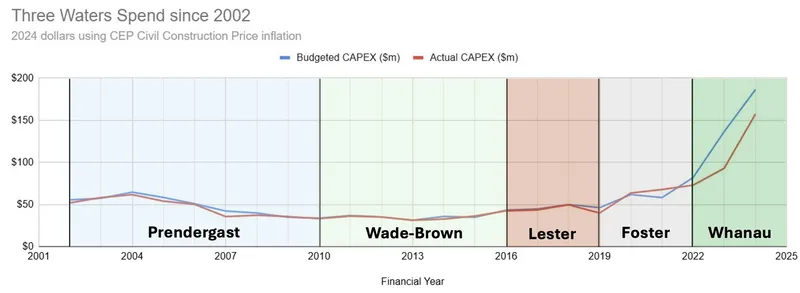
It’s the same story almost everywhere. Councils have underinvested in core services for decades in an effort to keep rates artificially low for the Willises and du Plessis-Allans of the world. Local government rates, as a percentage of the economy, have stayed relatively static for more than 100 years, while central government tax has grown from under 10% to more than 30% in the same time. Meanwhile, pipes, roads, and public buildings have been left to decay.
Now the bill has come due. Just fixing the nation’s water infrastructure is estimated to cost between $120 and $185 billion over the next 30 years. Council balance sheets are already groaning under the strain. When Auckland councillor Richard Hills first got voted in eight years ago, Watercare’s annual budget was $250 million. It’s now $1.3 billion. Ten-year transport spending was $20 billion. It’s now $63 billion, most of which goes to roads and public transport.
As this is happening, the same ratepayers and politicians that benefitted from burying their heads in the sand are complaining they’re going to have to pick up some of the tab they’ve been running up for years. Local government NZ chairman Sam Broughton describes a kind of doom spiral, where politicians who are upfront about the costs facing council get voted out by the people who want to keep kicking the can down the road, preferably until after they’re dead and it’s someone else’s problem. “And so then someone saying ‘we’re going to keep rates low’ gets elected, and you just end up going round and round without dealing with the real issue, which is basic infrastructure needs to be invested in.”
The best argument against councils isn’t that they’re spending too much; it’s the opposite. They’ve failed to provide necessary infrastructure and housing growth for at least the last 50 years, in deference to an ill-informed, unrepresentative voter base that still complains their undercooked investment plans are extravagant. Now, as the pipes spit poo particles, they’re having to play catch up. But delaying investment is like not going to the doctor to check your weird-looking mole. The cost, when it arrives, is far greater. It’s making the people who’ve always been mad at spending even more mad. They’re talking to National MPs. They’re heading to the polls in October. Buckle up, we’ve got another bill to pass on to the next generation.

Hayden Donnell
Hayden Donnell is a senior writer for The Spinoff. He previously worked at RNZ, TVNZ and the New Zealand Herald, alongside other media companies that have since closed down or been renamed. His primary passions are local politics and the Big Fresh animatronic fruit and veggies.


