Wayne Brown will never stop texting the CEO of AT about road cones

Wayne Brown is the only person in the country who still has a road cone hotline. (Image: Tina Tiller)
We have another trove of the Auckland mayor’s texts to Auckland Transport chief executive Dean Kimpton. If anything, they’re getting angrier and more cone-based.
The road cone hotline died as it lived: quietly. A press release announcing its immediate shutdown was sent out on December 17, with workplace relations and safety minister Brooke van Velden claiming the pilot programme was no longer needed, having done “exactly what we needed it to do”. Though the news would have been a disappointment to the tens of people that called the number to report suspicious cones, there wasn’t much wailing and gnashing of teeth.
The lack of public outrage could add credence to Labour’s theory that the scheme was an “absurd waste of public money”. But unpopularity may not have been the only factor in play. The cone hotline could have gone silent because the man who would have been its most high-profile and outspoken superuser had another personalised outlet for his multitudinous cone complaints.
Back in March 2024, The Spinoff exclusively revealed Auckland mayor Wayne Brown had been peppering Auckland Transport chief executive Dean Kimpton with texts whining about road cones. “WTF is this. Dugan St,” he’d messaged in a council lunch break. “This is outside Countdown in Wiilamson Rd , Ponsonby,” he said during what was likely a trip home: “Who approved it? How much did AT charge, answers please, Wayne. PS we need a meeting soon.”
Now, 22 months later, The Spinoff can also exclusively reveal the texts haven’t abated. A new trove of messages obtained under the Local Government Official Information and Meetings Act shows that if anything, they’ve become more insistent. Brown’s simmering cone rage is starting to boil over and the studiously polite man on the receiving end at last seems to be launching a fightback.
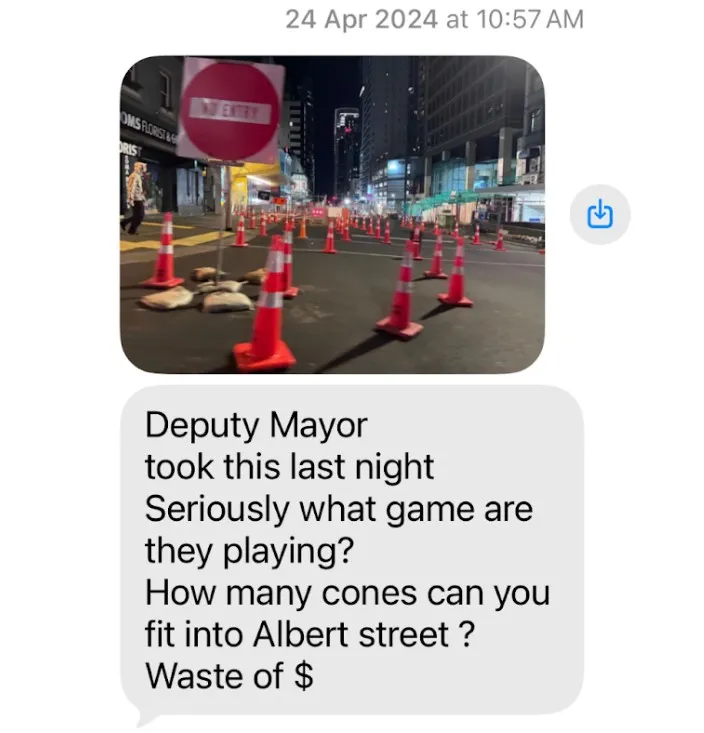
The new texts start where the old ones left off. In April 2024, Brown messages Kimpton a picture of Albert Street littered with cones. “Seriously what game are they playing? How many cones can you fit into Albert street ? Waste of $,” he writes. “If it’s Albert St it’s CRL,” Kimpton replies.
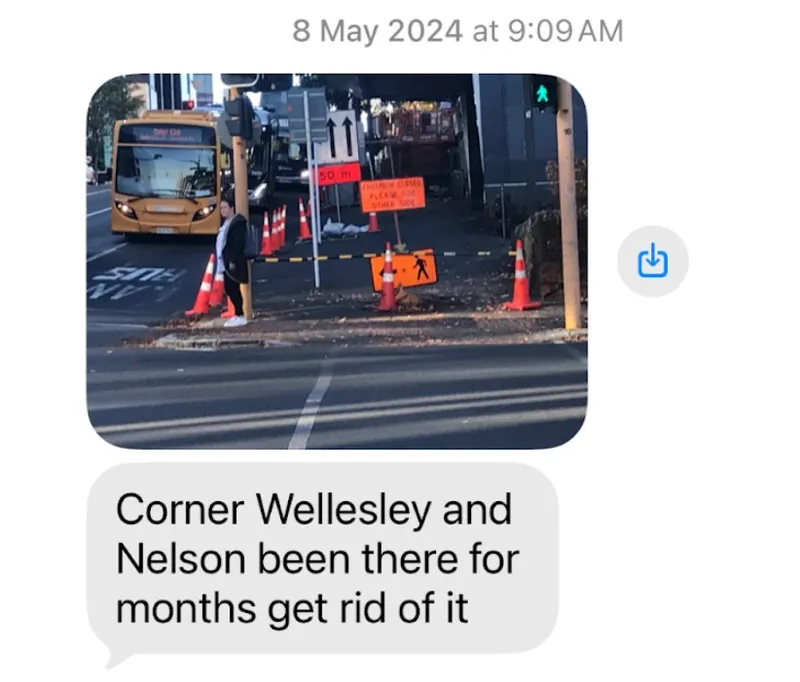
The pictorial evidence keeps piling up in Kimpton’s phone. “Corner Wellesley and Nelson been there for months get rid of it,” the mayor texts, along with a picture of cones, a few weeks later.
The dynamic is almost always the same. Brown is blunt and grammatically creative. Kimpton is formal and impassive. It’s encapsulated in an exchange a month later. “You need to walk to work with me to see how AT could do better, Wayne,” texts the mayor in June 2024. “That would be a great idea! How does this Friday or next Monday morning suit? Is 7.30am a good time or earlier?” comes Kimpton’s enthusiastic reply. Brown doesn’t appear to have texted back.
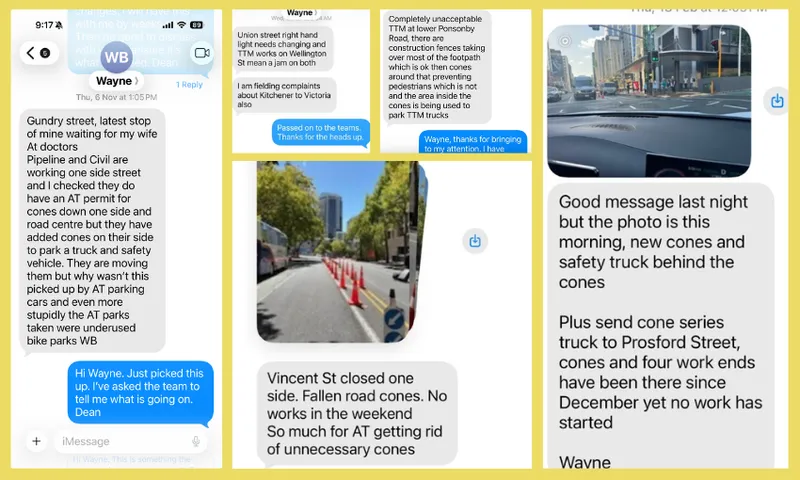
Instead the conversation returns to familiar ground. “Completely unacceptable TTM (temporary traffic management) at lower Ponsonby Road,” begins a rebuke from the mayor from later in the year. Kimpton’s appeasements reduce the ire, but never quell it completely. “Good message last night but the photo is this morning, new cones,” says Brown on February 13, 2025. It’s unclear what message Brown is referring to, as nothing from February 12 was included in the cache released to The Spinoff.
Texts keep coming in a play-by-play commentary on the city centre’s snarl-ups. “Union street right hand light needs changing and TTM works on Wellington St mean a jam on both.” “They have now blocked up the left lane. Cars bank up on Victoria St.” “Vincent St closed one side. Fallen road cones. No works in the weekend. So much for AT getting rid of unnecessary cones.”
As this goes on, something seems to break inside Kimpton. In January 2025, the mayor grouses about works outside the Sky Tower on Victoria Street, concluding that “not doing a lot of their recent stuff would save capex and salaries that could go to better things or stay in ratepayer pockets”. Kimpton responds with a long message defending AT, arguing it generally delivers good value for money and noting it benchmarks well against other transport agencies including the NZTA. “Overall, I think we do pretty well, notwithstanding we can always improve,” he says.
Maybe Kimpton’s drunk on the intoxicating elixir of AT’s impending doom, but there’s a hint of defiance to his messages after that first rebuke. By March, he’s lost the mayor’s number.
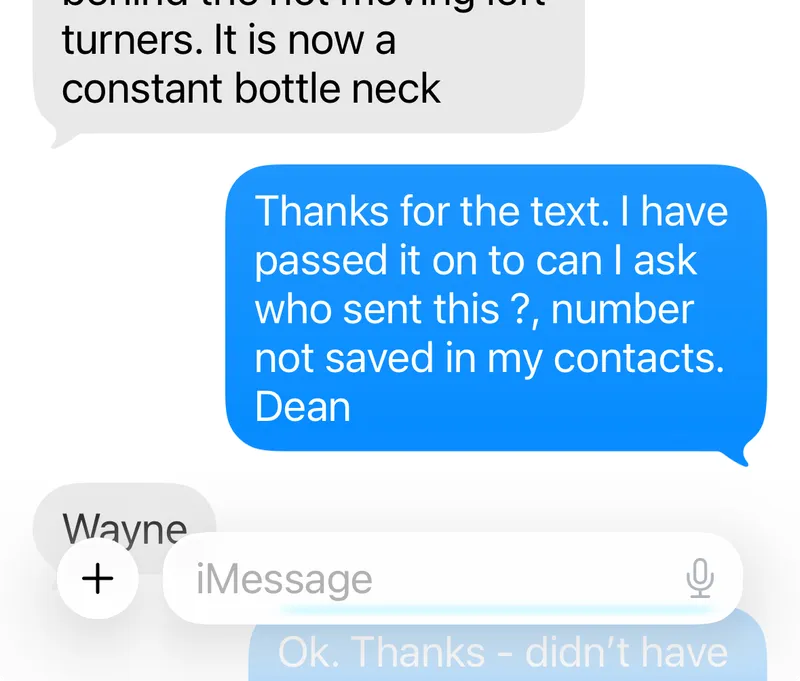
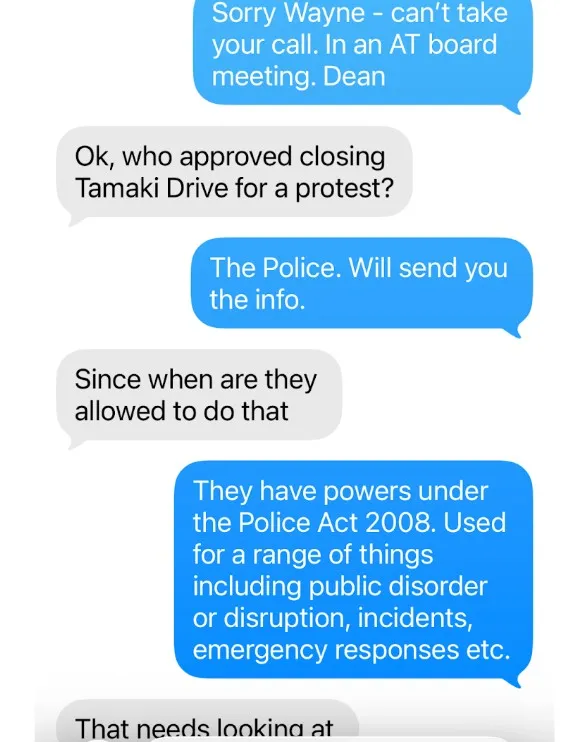
“Hi Wayne, we never promised to solve all in an instant,” begins a response to another complaint. Then finally, an exchange over a hīkoi supporting workers’ rights on Tāmaki Drive launches with Kimpton not picking up Brown’s call, then explaining that police have powers to close roads.
AT is set to lose most of its powers at some point this year, retaining only its responsibility for running public transport. Kimpton has been tight-lipped on what he plans to do next, only telling The Spinoff his role is fundamentally changing and he’s considering his future. But if he’s writing a pros and cons list for staying versus going down with the ship, it’s easy to imagine “diminished volume of cone complaints” occupying a high ranking when it comes to the potential benefits of a new role. With him gone, the mayor will likely need a new pressure valve for his bouts of rage. Something specially designed to field his most burning complaints. You could call it a hotline.

Hayden Donnell
Hayden Donnell is a senior writer for The Spinoff. He previously worked at RNZ, TVNZ and the New Zealand Herald, alongside other media companies that have since closed down or been renamed. His primary passions are local politics and the Big Fresh animatronic fruit and veggies.


