When Chlöe met Corbyn – and Varoufakis and Piketty and Polanski and Mazzucato and…

Chlöe Swarbrick with, clockwise from top left, Manon Aubry, Jeremy Corbyn, Thomas Piketty, George Monbiot, Zack Polanski and Yanis Varoufakis (Photos: Instagram; design by The Spinoff)
On her recent European trip, the Greens co-leader met everyone there is to meet on the political and intellectual left. So what did she learn – and how will she apply it at home?
It was, one of her Instagram followers declared, “a tour of legends”. Another described it as “a full bingo card”. And it does look as if, on her recent European trip, Chlöe Swarbrick met everyone there is to meet on the political and intellectual left.
The list of figures the Greens co-leader encountered during two weeks in September was imposing. Former Labour leader Jeremy Corbyn. Newly appointed UK Greens leader Zack Polanski. Mariana Mazzucato, one of the world’s most-cited economists. Fellow economic superstar Thomas Piketty and his wealth-tax offsider Gabriel Zucman. YouTube sensation Gary Stevenson of Gary’s Economics. Manon Aubry, the leader of the European Parliament’s Left bloc. Economist, ex-politician and left-wing idol Yanis Varoufakis. Guardian columnist George Monbiot. Influential economist Daniela Gabor. And plenty more.
Although primarily in Europe to attend an insurance conference, Swarbrick seized the opportunity to meet these leading figures – and think about how to apply their insights back home. She arrived at a “pretty crazy” time, she tells me when we meet at parliament: 100,000 British far-right supporters were mounting anti-immigration protests, the latest UK left-wing political venture, Your Party, was descending into internecine warfare, and Zucman’s wealth-tax proposals were being bitterly attacked by France’s richest man, Bernard Arnault.
Swarbrick’s encounters covered a vast intellectual terrain, taking in “technofeudalism” with Varoufakis, state capacity with Mazzucato, the carbon transition with Gabor, and wealth taxes with, well, pretty much everyone. Front of mind was the growing evidence that widened material disparities – and the resulting economic insecurity – are the key driver of the public’s growing disenchantment with political institutions. “Pretty much everybody was talking about that interconnection between inequality and democratic decay.” And, consequently, the need to give ordinary people greater control over their economic situation. “Democratising the economy was a very strong thread of all of that [discussion].”
One of her key meetings was with Polanski, a self-described eco-populist who, since becoming leader of Britain’s Greens, has nearly doubled the party’s polling (from 8% to 15%) and membership (from 65,000 to 120,000). The “phenomenal” Polanski, Swarbrick says, has realised that “you cannot get people to care about the end of the world … if they cannot afford to put food on the table at the end of the week”. (Polanski, meanwhile, has returned Swarbrick’s admiration, telling the Guardian that she is the living person he most admires, someone “demonstrating the bold leadership that I look to do every single day”.)
Another highlight of her trip came from meeting Mazzucato, who has been hired by multiple countries wanting to know more about her idea that governments should pick national “missions” to drive economic development. The Italian-American economist’s key insight, Swarbrick says, was the need to break the intellectual “deadlock” in which “the right are going ‘Shred the bureaucracy,’ and then the supposedly left-wing argument is, ‘We will keep the bureaucracy.’” The bigger question, as Mazzucato puts it, is, “What is the function of the bureaucracy?” While Swarbrick’s discussions with Mazzucato, Gabor and others took in specific policy ideas (national investment banks, for instance), all were adamant, she says, about the more general need to rebuild state capacity after decades of disrepair.
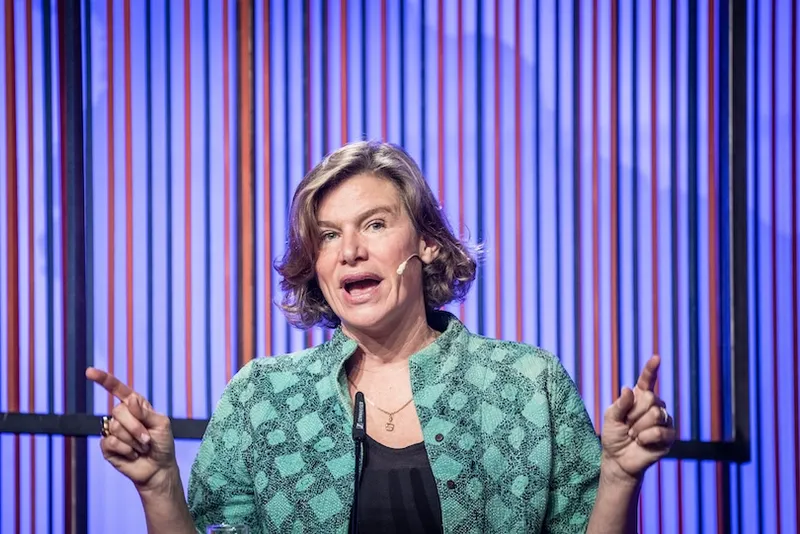
It wouldn’t, of course, be a Swarbrick trip without at least one “really nerdy breakthrough”, which came courtesy of Piketty, whose 2014 book Capital in the Twenty-First Century restored wealth disparities to their central place in political debate. As much a data nerd as the “economic rock star” he is sometimes labelled, Piketty somehow knew that New Zealand councils levy rates. He pointed out, Swarbrick says, that this means New Zealanders “actually do have exposure to a wealth tax … and isn’t it unfair that that applies only to property and not to financial assets?” That sparked a “hah!” moment in which Swarbrick asked herself, “Why have we not talked about it from this perspective?”
Her meeting with Varoufakis, at one point the intellectual “poster boy” for the European left, was equally memorable. Is he, I ask, as intense as everyone thinks? “Yes,” says Swarbrick, laughing heartily. “He is. But it was honestly really, really cool.” The two talked about the banking system, the military-industrial complex, and potential new forms of international relations. That said, he didn’t appear to her as an oracle, Greek origins notwithstanding. With all these figures “who I have admired for a long time”, Swarbrick says, “you’re sitting in front of them and [you realise] it’s just guys, you know? At the end of the day, we’re all just guys – just people – trying our best!”
Earlier in the interview, she had said, bluntly: “Nobody has all the answers.” And this was her point about Varoufakis – and indeed the other economists she met. Each of them “was able to answer with a huge amount of detail on their specific areas of expertise. But when I would ask them about the crossover and the cross-pollination and what the new economic paradigm looks like, they said that they didn’t feel comfortable, necessarily, to give that answer … They could answer for their part in that, but not necessarily the whole.”
If, in short, Swarbrick had hoped to be handed an economic blueprint, she would have been disappointed. Instagram clips from her encounter with Polanski show him acknowledging she has “a better answer” than he does on the global economy, while her appearance on Gary’s Economics starts with Stevenson asking her for advice about “how to influence [the] politics” of wealth taxes.
Did she, I ask, travel to Europe hoping to be schooled by its political leaders and instead end up schooling them? Swarbrick laughs uproariously, then sensibly pivots to talking about the task ahead. As she sees it, some 40 years after the advent of the market-fundamentalist, hyper-individualist ideology sometimes known as neoliberalism, a new overarching left-wing narrative remains to be written. “We are very much now in a place [where] we have to build the new house we want to move into. And we know what some of the foundations and some of those building blocks look like. But there are a lot of decisions we have to make about design.”
And for all that the figures Swarbrick met on her trip were left-wing heroes, they were also united by another characteristic: none had ever won power. (Except Varoufakis, who was part of the Greek government in 2015 – but even he was famously unenthused by the experience, jumping ship after just six months.) Does it worry Swarbrick that she didn’t meet any outright electoral winners? She laughs again, and says: “I think nobody so far has done what we want to do.”
She was, however, heartened by hanging out with Stevenson in London and “just watching regular people come up to him and be like, ‘Tax wealth!’, and for that to be such a normalised conversation in the UK.” Meanwhile, Piketty and Zucman were “feeling good” despite – or perhaps because of – being assailed by the French elite. “They understand that having entrenched power attack you, because you are speaking truth to that power, provides you with a platform. And if you can stand calmly in that space, can continue to hold that mirror up and speak that truth, then that cuts through in a way that resonates with people.”
For all that, the forces currently taking power across Europe come from the far right, not the radical left. But Swarbrick still believes victory is on the way – if the left can build a big enough volunteer army.
At this point, a conversation ostensibly about ideas becomes one about political organisation. “I think we’ve got very good academic and economic credibility for our arguments,” Swarbrick says. “But translating that into the real world, building trust in people’s belief that there is possible [change], and then actually enacting that … is a very different proposition.”
This, she says, “is where organisation is still the big missing piece – organisation on the ground”. She points to Polanski’s success in boosting the British Greens’ membership, to the point where it has reportedly surpassed that of the centrist Liberal Democrats and even the “natural party of government”, the Conservatives. (On her trip, Swarbrick also met the two leading figures behind Your Party, Jeremy Corbyn and left-wing firebrand Zarah Sultana, but is unsurprisingly more guarded about those encounters, noting only that the nascent party’s internal fighting is “rough as guts”.)
In New Zealand as elsewhere, it tends to be centre-left Labour and Democratic parties that have the strongest ground game. So could the Greens really surpass them? “Over time, yes,” Swarbrick says. One central task is “building coalitions” with faith groups, community organisations and the union movement, although the latter’s historical ties to Labour means any relationship with the Greens “will look different”.
The task for politicians, as she sees it, is to “think beyond electoral cycles” and generate public trust by being less opportunistic. “People, when you talk to them on the ground, don’t just want politicians to turn up when it’s election year and times are easy and they’re cutting ribbons. They want you to turn up when they’re having a bad day and stuff is hard. That process of constant accountability – that is where you build trust.”
This insight serves, in fact, as Swarbrick’s “major takeaway” from her trip. “I think we have … a really good diagnosis of the problem, we have clarity on a number of the tools that are necessary to move forward. But the gap that we have to bridge is trust.”

Max Rashbrooke
Max Rashbrooke is a senior research fellow in the School of Government at Victoria University of Wellington. www.maxrashbrooke.net.


