The warning signs for New Zealand in England’s ‘back to basics’ school reforms

Lines from England’s recent curriculum review (Image: The Spinoff)
A newly released review of England’s decade-old curriculum shake-up, which inspired Erica Stanford here, finds many positives – but it also serves as a cautionary tale on the dangers of rigidity, writes Max Rashbrooke.
New Zealand education minister Erica Stanford’s controversial curriculum reforms are not without precedent. Around a decade ago, a right-wing English education secretary, Michael Gove, instituted a sweeping set of changes designed to make instruction – in a phrase now deeply familiar to Kiwi teachers – “knowledge-rich”.
Stanford and Gove have, unsurprisingly, met and shared notes, and the former has been explicit about the inspiration she takes from England’s experience. So it should concern us that a landmark review of the latter’s reforms has just found that, alongside some notable successes, they created exactly the kinds of problems that Kiwi teachers worry will crop up here.
Like Stanford, Gove was driven by a core belief that teaching had become too focused on developing broader competencies and thought processes, and insufficiently attentive to imparting core facts and knowledge. He sought to set out a clearer list of exactly what children “should” learn, privileging a “core” curriculum while invoking ideas of rigour and structure.
None of these ideas is inherently unhelpful. But Gove was – and is – a famously complex person; despite being known as “Mike the polite” for his old-school courtesy, he was also capable of the most vicious backstabbing imaginable. And that duality can be seen in his curriculum reforms.
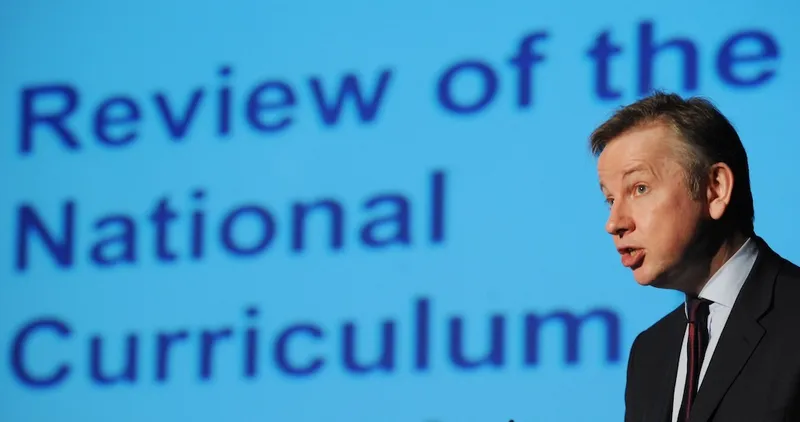
Last week’s review, commissioned by the current Labour government and staffed by experts, feels comprehensive, nuanced and thoughtful, a world away from the political hatchet jobs that often result from such exercises. So it is important that the review finds Gove’s reforms “have had a positive impact on attainment”. English 15-year-olds perform above the developed-country average in reading, maths and science, while 16-19-year-olds do “substantially better” than average in literacy and problem-solving, having made “significant improvements” since 2012.
Given New Zealand’s well-publicised slide down the developed-country rankings, these results will be music to Stanford’s ears. The rest of the review, however, bears many cautionary tales.
The first is that the gap in achievement between poorer and richer pupils “remains stubbornly wide”, and those with special educational needs struggle. Some gaps “are widening rather than narrowing”. This is less a criticism of curriculum reforms, of course, than a reminder of their limitations.
As educationalists constantly point out, but the public struggles to comprehend, most of what affects students’ marks happens outside the school gates. Socioeconomic factors – poverty prominent among them – account for 60-80% of the variance in children’s test scores. The failure of Stanford’s government to tackle poverty will always be a roadblock to her potential success.
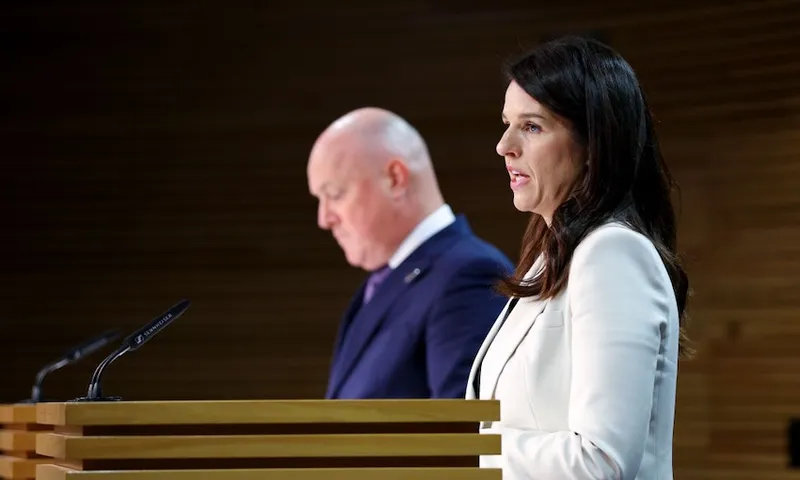
Gove’s reforms, by emphasising a “core” curriculum, have also narrowed the learning experience. That “core”, extending as it did to languages, history and geography, was thankfully less narrow than our own government’s borderline obsessional focus on English and maths. Nonetheless the review finds that England’s curriculum measures have “unnecessarily constrained students’ choices”.
Predictably, the arts and other enrichment activities have been badly hit. Theatre-related content has been “significantly reduced”, the review concludes, and student numbers are sharply declining. The same story broadly holds in music and dance. And these subjects are not nice-to-haves: the arts are fundamental to the human experience, a crucial source of beauty and understanding, and cannot be sidelined without great damage.
Nor is that the end of the problems identified by the review. It highlights an obsession with tests and exams, which in England are administered at twice or even three times the volume of other high-performing countries such as Ireland and Canada.
Critics have also stressed the rigidity of Gove’s reforms, their unyielding belief that people holding power can dictate a minutely detailed list of facts that pupils “must” acquire. The review finds “a disproportionate focus on rote learning to pass exams”, impeding students’ efforts to comprehensively understand their subjects and acquire the skills needed to grapple with the real world.
Most history teachers want the level of prescribed content “reduced significantly”. In maths, meanwhile, too many terms are rapidly introduced and then rigidly drilled, again at the expense of a deep engagement “with foundational mathematical concepts” and “non-routine problem-solving”. This leads to “only a superficial understanding of the fundamentals” and limited ability to apply knowledge to real problems.
It is a similar story in English, where the curriculum reflects Gove’s obsession with teaching grammatical terms like “fronted adverbials”, resulting in instruction that is overly theoretical, unengaging to pupils, “and, crucially, does not help them to write well”. In art, meanwhile, works by ethnic minority artists are seldom used. Young people, presumably including many from non-white backgrounds, told the review panel that not seeing people like themselves in curriculum materials was demotivating – a point that the review panel noted was supported by wider evidence.
Given the above rigidity, it is not surprising that the review echoes concerns – often expressed by England’s teaching profession – that an overly prescriptive curriculum can sap motivation or simply prove unworkable. The review notes that the curriculum must ensure “the professional autonomy of teachers”, adding that those teachers should be able “to bring the curriculum to life … to reflect their students’ lives and experiences”.
In all this, the resemblance to Stanford’s proposed reforms is unmistakable. Although there has been substantial goodwill among New Zealand educators to fix some of NCEA’s shortcomings, there is now also a substantial backlash against a new curriculum that, like Gove’s, can seem at times old-fashioned, overly narrow, and too focused on western “classics” at the expense of everything else. The review does not argue that Gove’s reforms have been an outright disaster, as some claim. Many aspects, it says, “are working well”. But it also lays bare the all-too-real dangers of a rigid curriculum.

Max Rashbrooke
Max Rashbrooke is a senior research fellow in the School of Government at Victoria University of Wellington. www.maxrashbrooke.net.


